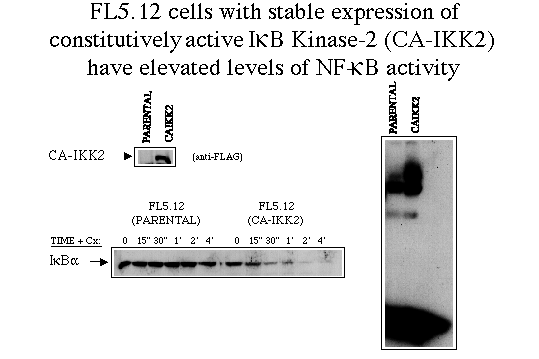
Basic characterization of cell lines:
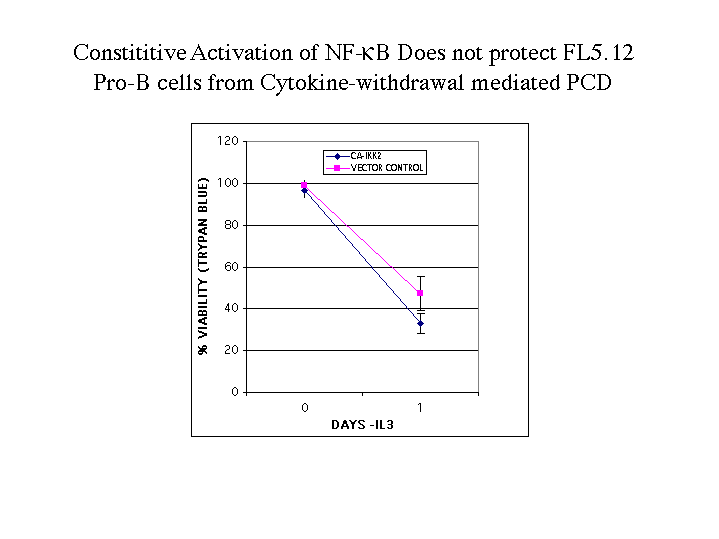
PCD following IL3 withdrawal: expected result (based on USS data using delta-Npp40 lines):
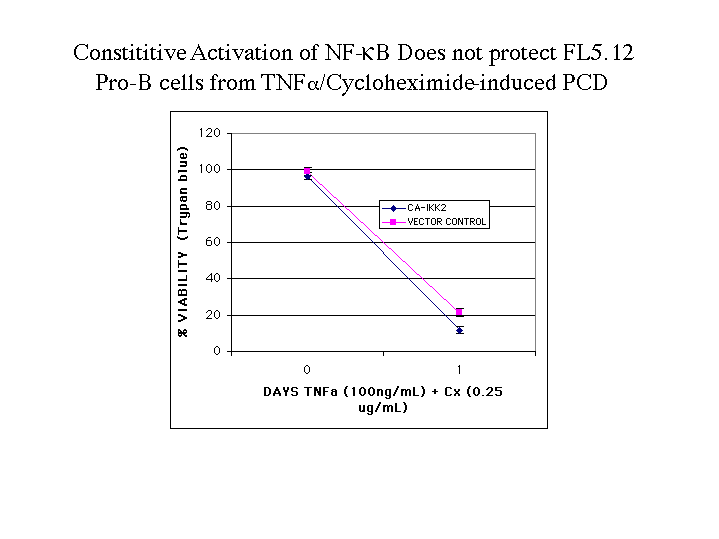
PCD following addition of TNFa, Cx: UNexpected result (based on USS data using delta-Npp40 lines):
Shiv: how confident are you that your delta-N pp40 clones were expressing? What solid data other than the differential effect on cell death?
Shiv: How to explain this? Ideas on where to look for a phenotype that is influenced by NFkB?
Maybe I've just added too much Cx for NFkB to be able to protect. Next experiment: Parental, CA-IKK2, vector control: titration of Cx from 0.25 down; see if I can find a concentration where cells die a little more slowly, more along the lines of the parentals in your figure
Perhaps I wouldn't expect CA-IKK2 to have a protective effect on TNF/Cx-induced PCD, since TNF will stimulate kB anyway in the vector control or parental control lines.
IL3 withdrawal timecourse: I should look at earlier timepoints (say, 12 h, 18 h) to try to see a more dramatic phenotype. Agree?
Controls to add: vector control in characterization figure; parental control in death curve experiments; Oct1 control in EMSA; loading control (actin) in both westerns in characterization figure.
Usefulness of doing RPA looking at PCD genes in parental control, vector control, CA-IKK2, delta-N lines?