10.
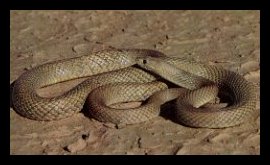 Name : Western Brown Snake - Pseudonaja Nuchalis
Size : To 1.5M
Distribution : Most Of Australia Except Extreme SW And Se
Habitat : From Forests To Grasslands , Gravelly Plains And Deserts
Food : Small Mammals And Reptiles
Breeding : Egg-Laying
Appearance : Narrow Black Head And Black Neck Or Many Narrow Dark Crossbars , Colors Light Brown To Black Or May Have A Series Of Lighter Bands Around The Body
09.
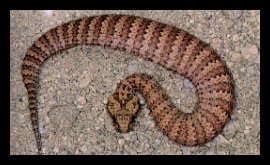 Name : Death Adder -
Acanthophis Antarcticus
Name : Death Adder -
Acanthophis AntarcticusSize : To 40-50Cm
Distribution : Most Of Australia Except Central Desert Region
Habitat : Dry , Rocky , Or Scrubby Places
Food : Small Mammals , Birds And Reptiles , It Uses The Tip Of Its Tail To Lure The Prey To Within Striking Distance
Breeding : Live-Bearing
Appearance : Broad , Triangular Head , Short Tail , Colors Grey To Brown Or Red , It Has A Number Of Irregular Crossbands Over The Body
08.
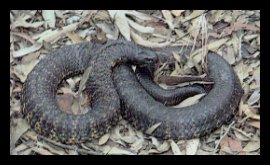 Name : Black Tiger Snake - Notechis Ater
Size : To 1.2M
Distribution : Australia : Tasmania , Islands In The Bass Strait
Habitat : Rocky Places , Dunes , Beaches , Tussock Grass
Food : Small Mammals , Frogs , Seabird Chicks
Breeding : Live-Bearing
Appearance : Large Body , Usually Black Sometimes Has Traces Of Lighter Crossbands , When Alarmed It May Spread Its Neck
07.
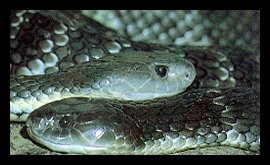 Name : Tiger Snake - Notechis Scutatus
Size : To 1.2M
Distribution : Australia : The Eastern Side Of Australia
Habitat : Forests , Open Grasslands
Food : Frogs
Breeding : Live-Bearing , Usually 30 At Onetime
Appearance : It Can Be Olive Or Even Reddish And Usually Has A Series Of Lighter Crossbands , It Flattens Its Neck When It Is Angry
06.
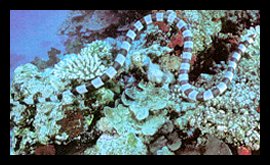 Name : Sea Kraits - Laticauda Colubrina
Size : To 2M
Distribution : NE Australia
Habitat : A Marine Species
Food : Fish , Eels
Breeding : Egg
Appearance : Wide Head , Some Species With Bands
05. And 04.
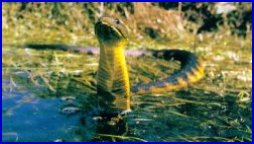 Name : MainLand & Eastern Tiger Snake
Size : To 2M
Distribution : Australia
Habitat : Forests , Open Grasslands
Food : Small Mammals , Birds
Breeding : Live-Bearing
Appearance : These 2 Tiger Snake Species Are Worlds Most Venomous Tiger Snakes
03.
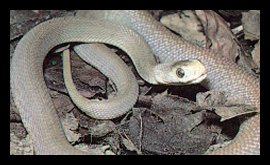 Name : Taipan - Oxyuranus Scutellatus
Size : To 2M
Distribution : NE And Extreme North Australia , New Guinea
Habitat : Forests , Open Woodlands
Food : Small Mammals
Breeding : Egg-Laying
Appearance : Lightly Keeled Scales , Light Or Dark Brown Fading To A Paler Shade On The Sides And Underside . Head Is Usually Lighter In Colour
02.
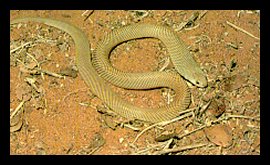 Name : King Brown Snake - Pseudechis Australis
Size : To 2M
Distribution : Whole Australia
Habitat : Forests To Deserts
Food : Frogs , Small Mammals
Breeding : Live-Bearing
Appearance : Dark Reddish To Brown Colors , The Colors Become Paler On The Sides And Undersides
01.
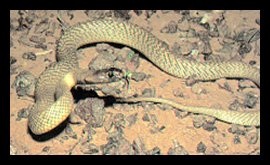 Name : Inland Taipan Or Fierce Snake - Oxyuranus Microlepidotus
Size : To 2M
Distribution : Central Australia
Habitat : Dry Plains And Grasslands
Food : Frogs , Small Mammals
Breeding : Egg-Laying
Appearance : Brown Or Olive Colors , Black Markings On The Head Or Uniformly Black Head
World's Number 1 Venomous Snake