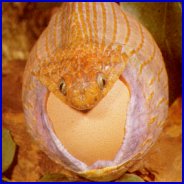
Defining Snakes : What makes a snake different from amphisbaenians and lizards? This is not quite such a ridiculous question as it may seem . In fact , it is not too easy to come up with a definition that includes all the snakes but excludes other members of the Squamata . Firstly , snakes have no legs - but neither do some lizards nor any of the amphisbaenians . Snakes have no external ear opennings - again , neither do some lizards nor any amphisbaenians . We can however use a combination of characteristics that will get pretty close to defining snakes . All snakes have a backbone (They are vertebrates) but lack limbs , eyelids and external ear openings . In addition , snakes have a specialized row of scales along the underside of their bodies , the ventrals , whereas lizards have various patterns of scales but never a single row . The scales of amphisbaenians are peculiar in that they are arranged in rings around the body , so that small species superficially resemble earthworms . On the question of legs , even those lizards that have lost their legs retain vestiges of the limb girdles , as do the amphisbaenians , whereas , although some families of snakes do retain vestigal pelvic gridles none of them have pectoral girdles . Finally snakes have unique skulls - the bones of their upper jaws are not united at the snout but are free to move away from one another , so allowing the passage of larger prey items than would otherwise be the case . This arrangement is not found in lizards or amphisbaenians . In the hand , snakes are supple and muscular whereas legless lizards tend to be more rigid.
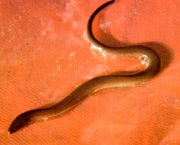
Is It A Snake? : Snakes are long , slender vertebrates without legs . This definition is not enough to separate snakes from some other groups of animals , through . Eels , for instance , are also long and slender and have no legs , but their scales are very small and they breathe through gills , which can plainly be seen just behind the head . It is not o easy to separate legless lizards and amphisbaenians , from snakes . All are reptiles , their bodies are covered with scales and they all breathe through lungs . We make a table to show you how to separate snakes from other legless lizards .
Snake , Lizard Or Amphisbaenian?
1a.Animal has four legs.......................Lizards
1b.Animal has no legs.........................Go To 2a
2a.Scales arranged in rings around body.......Amphisbaenian
2b.Scales overlapping and tile-like...........Go To 3a
3a.Eyelids present............................Legless Lizards
3b.Eyelids absent.............................Go To 4a
4a.Single row of wide ventral scales..........Snake
4b.Several row of small ventral scales........Legless Lizards
Natural History Of Snakes And Evolution Of Reptiles : Snakes are reptiles and branch of zoology that deals with this class of animals is known as 'Herpetology' . The word herpetology is derived from the Greek word herpeton , which means 'a creeping thing' . In the early days of zoology all lowly animals such as amphibians and reptiles were lumped together in this group of 'creeping things' and the word 'herpetology' was coined to encompass all of them .
The reptiles form a class of vertebrate animals intermediate between the fishes and amphibians on one hand and the higher vertebrates (the birds and the mammals) on the other . Modern reptiles include the crocodilians , the turtles , the lizards , the amphisbaenians , and the snakes - not forgetting the lizard like Tuatura , a single species that has an order all to itself . Snakes , lizards , and amphisbaenians are closly related and belong to a single order , squamata , with three suborders .
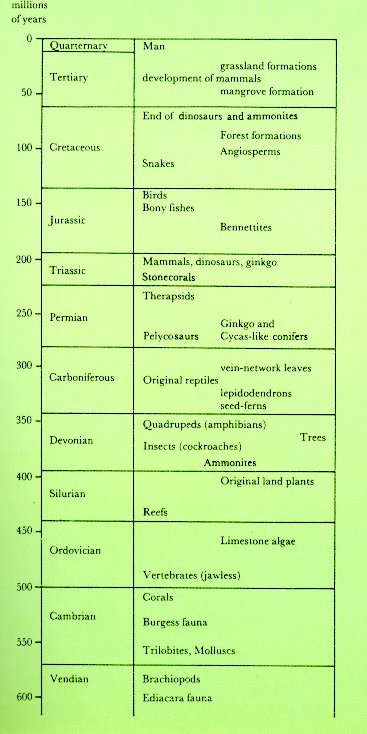 The ancestors of our modern snakes and lizards appeared along with the first
dinosaurs during the late Triassic period , almost 200 million years ago , although
fossil records of these reptiles are sparse . The modern lizards (suborder Lacertilia)
are likely to have branched off from the primitive order Eosuchia during the
Triassic period , but the oldest definite fossil links between modern lizards
The ancestors of our modern snakes and lizards appeared along with the first
dinosaurs during the late Triassic period , almost 200 million years ago , although
fossil records of these reptiles are sparse . The modern lizards (suborder Lacertilia)
are likely to have branched off from the primitive order Eosuchia during the
Triassic period , but the oldest definite fossil links between modern lizards
 and their ancestors originated in the Upper Jurassic period , about 140 million
years ago . During the same period , the first bird ancestors arose . It is
generally accepted that modern snakes (Suborder Serpentes) arose from the lizards
in the early Cretaceous period , about 130 million years ago , but there is
no hard and fast fossil evidence to link the two suborders .
and their ancestors originated in the Upper Jurassic period , about 140 million
years ago . During the same period , the first bird ancestors arose . It is
generally accepted that modern snakes (Suborder Serpentes) arose from the lizards
in the early Cretaceous period , about 130 million years ago , but there is
no hard and fast fossil evidence to link the two suborders . Unfortunately , small lizards and snakes do not make good fossils , as the small , delicate bones tend to break down or become scattered .
Paleontologists (people who study fossils) are continually finding various bones , but without the other parts to go with them their task is extremely difficult . One can compare the paleontologists task to the hardest of jigsaw puzzles , with many of the key pieces missing . Due to this incomplete fossil evidence , snake evolution is based largely on theory . The earliest known fossil creatures resembling snakes are from the lower Cretaceous period some 130 million years ago .
 These were
short and heavy and had a mixture of lizard and snake characteristics . Unfortunately
, there is no intermediary evidence to link these creatures with modern snakes
.
These were
short and heavy and had a mixture of lizard and snake characteristics . Unfortunately
, there is no intermediary evidence to link these creatures with modern snakes
. One of the most widely accepted theories is that all snakes evolved from burrowing lizards . Certain primitive lizards would have taken to burrowing into the substrate in order to escape from predators and perhaps to hunt other subterranean creatures (as some modern species still do) . This subterranean existence , over countless generations , would mean that certain modifications to the body would be necessary for the animal to remain successfull . In the dark , subterranean world , eyes were of little use , so they gradually became absorbed until only vestiges remained , these being just suitable for detecting the difference the difference between light and darkness . The method of burrowing meant that limbs also became dispensable , and all snakes have lost their external limbs (although some have retained limb girdles) . External ear openings would have also been an encumbrance in a subterranean environment , so these were also lost . At a further stage of their evolution ,
 some of these burrowing creatures found it convenient to return to the
surface . In a lighter situation , eyes again became important so they were redeveloped
(although the eyelids were completely lost , the eyes being under a transparent protective
scale called a brille) .
some of these burrowing creatures found it convenient to return to the
surface . In a lighter situation , eyes again became important so they were redeveloped
(although the eyelids were completely lost , the eyes being under a transparent protective
scale called a brille) . The limbs were almost completely or completely lost , so the reptile developed a serpentine method of locomotion . External ear openings were also lost , but modern snakes have developed an efficient mechanism for detecting vibrations through solid surfaces . Additional adaptations that probably developed during the burrowing period include a sophisticated method of scenting odors and a very highly developed sense of touch . Most modern snakes still have these attributes . In spite of the theory regarding the evolution of snakes from burrowing lizards , there is no modern lizard family that could be construed to be a link between lizards and snakes . Even the legless amphisbaenians (suborder Amphisbaenia) , which were at one time thought to be lizards 'turning into snakes' , have now been classified into their own suborder . Although they have some characteristics similar to some found in both lizards and snakes , they have further unique characteristics that suggest separate evolution . If the burrowing theory is true , it can only be proved if and when complete fossils of the intermediate forms are found .
Modern Snake Classification : The snakes living today , then , owe their existence to a rather complicated history of evolution , speciation and extinction going back over 100million years .During that time , the shape of the land has changed out of all recognition . The present distribution of the surviving families is dependent , to some extent , on the time at which they evolved ; old families tend to have a world-wide distribution whereas newer families have often failed to reach parts of the world that became isolated as a result of the breaking up of the landmass , a process that had already begun when they first put in an appearance and continues to this day . The classification of surviving snakes , though strongly linked to , and dependent upon , strongly linked to , and dependent upon , their evolution , is somewhat easier than that of extinct snakes . It is not straightforward , however , because many species are imperfectly known whereas others seem to have conflicting characteristics , making it difficult to assign them to one family or another . Again , different degrees of importance are assigned to various characteristics by different researchers . Many arrangements have therefore been put forward over the years , some of them differing only slightly from previous classifications while othrs are more revolutionary .
There are generally accepted to be 14 or 15 families of snakes but the 2400 species are by no means equally divided between them . Two families contain only one species each , one contains two species while another contains three . The largest family of snakes is The Colubridae , which has no accepted common name , has , at present , over 1500 species assigned to it . This family is most certainly derived from a number of ancestral lines and future research will undoubtedly divide it into a number of smaller families . At present , it is divided into subfamilies , some of which are better defined than others . For details please visit our SPECIES section .
Blind Snakes And Thread Snakes (Anomalepididae , Typhlopidae And Leptotyphlopidae) are small burrowing snakes , rarely seen on the surface . They are restricted to warmer tropical and subtropical regions .
File Snakes (Acrochordidae) are completely aquatic species that are found in fresh and marine waters in Asia and Australia .
Sunbeam Snakes (Xenopeltidae) are Asian species with smooth , highly iridescent scales .
Mexican Burrowing Snake (Loxocemidae) is the only member of its family and comes from Central America .
South American Pipe Snake (Aniliidae) is the only member of its family and is found in northern South America .
Shield-tailed Snakes And Asian Pipe Snakes (Uropeltidae) are found in India and Sri Lanka . They are secretive , burrowing snakes whose natural history is not well know .
Wood Snakes Or West Indian Dwarf Boas (Tropidophiidae) are found in the West Indies , with a few species in Central and South America .
Round Island Boas (Bolyeriidae) are found only on Round Island in the Indian Ocean . There is one surviving species and one other that is probably extinct .
Boas And Pythons (Boidae) are sometimes regarded as two separate families . They are found in most of the warmer parts of the world and include many small to medium sized snakes as well as know Giant Species .
Typical Harmless And Back-Fanged Snakes (Colubridae) include three-fifths of all snakes . They are found throughout the world except for the coldest regions and a few small islands . There is great variation in their shapes and sizes and some species are venomous.
Burrowing Asps (Atractaspidae) are poorly known burrowing snakes, some of which are venomous. They are found in Africa and The Middle East .
Cobras, Mambas, Kraits, Coral Snakes And Sea Snakes (Elapidae) are all venomous snakes. They are found in most of the warmer parts of the world except Europe and Madagascar.
Vipers And Pit Vipers (Viperidae) are venomous snakes with long, hinged fangs. They are found in most parts of the world except Australia and Madagascar.
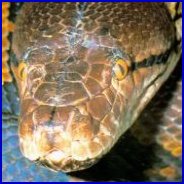
Size , Shape And Colour : The size and the shape of a snake together with the colour and markings , help to give each snake its identity . They may also hold important clues to the lifestyle of the snake because certain habitats and conditions tend to limit or encourage the wy in which snakes evolve. World's longest snake is The Reticulated Python (33ft, 10meters) and World's largest snake is Green Anaconda (18.9m Anaconda reported in Brazil 1907). Being large confers a number of advantages, not least the ability to avoid predation and to eat a wider variety of prey. At the same time, large snakes need to eat more than small ones. Even though snakes can survive on remarkably small amounts of food, finding enough prey to keep a 130kg (300lbs) body and soul together is no easy task, especially for an animal that is not very mobile and must, to a great extent , sit and wait for its meals to come blundering by. Large snakes, then, must live in areas where suitable food is relatively abundant.
In addition, their large bodies take longer to warm up than small ones and being cold-blooded, they cannot become active unless their body temperature is raised to a suitable level. For this reason, they are restricted to warm parts of the world. In practice, the regions where both these requirements are met fall within the tropics. Here, the ambient temperature is suitable and there is a reasonable chance of finding food every few days.
Just as snakes vary in size, so they vary in shape. Compared to most other animals, all are long and thin of course , but some are longer and thinner than the others. There is some degree of correlation with habitat here as arboreal species tend to be more slender and have longer tails and are therefore lighter relative to their lenght.
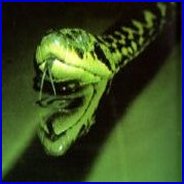
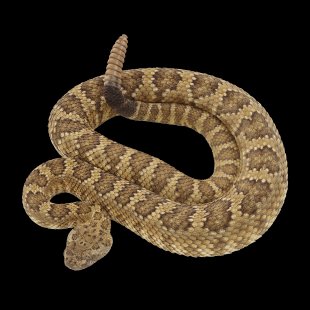
Snakes come in just about every colour. Some species such as the North American green snakes are uniform in their coloration whereas the pattern of others such as the Gaboon viper, are almost unbelievably intricate. Many diurnal snakes are striped whereas nocturnal or crepuscular species tend to be banded. Some vary from one individual to another, even when they are from the same clutch of eggs, and a few start off one colour and then change as they grow. These colour schemes, convenient though they are for identification, are not there for the benefit of herpetologists. Each has a role to play in helping the snake to survive. Furthermore, their role in survival may be primarily defensive, as in camouflage, or physiological, in increasing the absorption of heat or protecting vital organs from excessive radiation.