 | ||||||
| Articles | Projects | Resume | Cartoons | Windsurfing | Paintings | Album |
Biodiversity:
Ecological Effects of Species Introductions and Extinctions
by Waterose et. al.

Ecosystem Response to Stress:
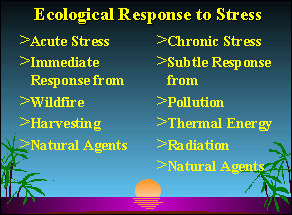
When an ecosystem is disrupted by a substantial event of acute stress, wildfire, harvesting or natural agents (like tornadoes, volcano eruptions and hurricanes), it can immediately suffer a specie mortality, along with structural disruptions and other ecological damages. Primary or secondary succession then begins and may restore a similar ecosystem prior to the disturbance. A process of ecological succession often follows after alleviation of the of the intensity of longer-term, chronic stresses. Chronic stress by pollution, thermal energy, radiation or natural agents results in ecological changes by causing physiological effects on organisms. If the intensity of the stressor exceeds thresholds of tolerance, organisms may suffer chronic or acute toxicity, and less tolerant species may die prematurely. If there is a genetic variation and a specie is more tolerant then, that specie may dominate the population. At the community level, relatively vulnerable species may decline or eliminated from stressed sites.
A chronic long-term example of this has been the results of smelting plant, Inco, of Sudbury, Ontario. A severe atmospheric and soil pollution caused a progressive replacement of the original mature forest by an open woodland, followed later by shrub-sized vegetation and then a herbaceous community. Other areas were barren.
In comparison, acute short-term response would be apparent within a few days in plants and/or wildlife such as �Round-up� which kills plants within 5 to 7 days for the purpose preparing an area for selected plants.
Finally, there is biological stress associated with the interactions among organisms, exerted through competitions, herbivory, predation, parasitism, and disease. Similar exploitive stresses can be by humans, as in animal or tree harvesting, or exploitation can be natural, as in widespread mortality caused by defoliating insects or disease.
Chronic outbreaks of the spruce budworm, in 1975 severely defoliated over 55 million conifers in eastern Canada. In Nova Scotia, an outbreak of a sea urchin overgrazed a mature kelp forest and converted the ecosystem to a barren ground with a much smaller standing crop and productivity.


 email Waterose
Please Sign My Guestbook
Please View My Guestbook

| Articles | Projects | Resume | Cartoons | Windsurfing | Paintings | Album |
 | ||||||