Yoga

The Four Paths of Yoga
Yoga is a spiritual path that originated in India several thousand years ago. It is the oldest system of integral personal development, encompassing body, mind, and spirit. People begin to study yoga for a variety of reasons. Some are seeking a way to maintain a more flexible, toned body. Others may practice yoga to obtain relief from a specific problem, such as backaches. Today many are discovering yoga as a form of stress reduction. To receive the maximum benefits from yoga it must be understood that yoga is much more than a mere set of physical exercises. Consistent yoga practice will make the student aware of the peaceful, contented state of mind which is the nature of the inner self. It is this realization which is the aim of all yoga practice.
History
Yoga, the science of life was revealed by the Gods to enlightened sages while in deep meditation. The estimated dates for the first efforts to put Yogic and Vedic teachings into written form range from 8500 BC (based on astronomical coordinates mentioned in the writings) to 5500 BC Most of these sacred texts are collectively referred to as the �Vedas�. Many other explanatory and supportive texts came later to further and enrich the understanding of the devotees.
Yoga is a Sanskrit word which means �joining�. The joining occurs between the individual self (soul) with God. There are four main paths of yoga, each is suited to a particular temperament or way of life. They are karma yoga, bhakti yoga, raja yoga, and jnana yoga.
Swami Sivananda taught that people are a mixture of will, feelings, and thought. In some people emotional nature will dominate while in others a rational nature will be seen. Just as feeling and thought can never be totally separated, work (karma yoga), devotion (bhakti yoga), and knowledge (jnana yoga) can never exist exclusive of the other. Sivananda taught Synthesis Yoga or combining all paths of yoga as a method suitable for most people. For instance, it would be impractical for most people to attempt to meditate sitting in a lotus pose for six hours a day. However, by combining a daily meditation/asana practice with karma yoga , mantra repetition, etc. a path of moderation can be found.
1)Five Moral Injunctions-nonviolence, truthfulness, nonstealing, `moderation in all things and nonpossessiveness
2)Observances- external and internal purity, contentment, austerity, study of religious scripture, worship of Deity
3)Asana-yoga postures
4)Pranayam-yoga breathing exercises
5)Withdrawal of the senses from worldly objects to still the mind
6)Concentration-this is the prerequisite to meditation, the ability to focus the mind on an external object or internal idea
7)Meditation
8)Samadhi or superconscious state-In thia stage the yoga becomes self-realizes or God-realized. In yoga philosophy samadhi represents that which all living beings are moving toward.
Follwing this ancient system of raja or ashtanga yoga, a complete yoga class should include the following: proper mood and environment (chanting, incense, candles, clean and orderly room), Savasan (mental and physical relaxation), Pranayam, Surya Namaskar and/or warm-up exercises to prepare the body for asanas, Asanas, and and concluding Relaxation and Meditation, with emphasis on concentration and positive thinking.
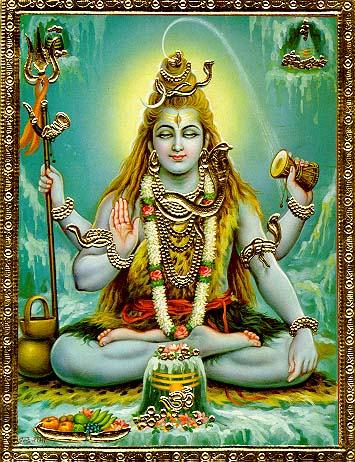
One of the easiest forms of meditation is the repetition of mantras or sacred words. Silent repetition of mantras is recommended during hatha yoga practice. Learning to repeat a mantra silently will improve concentration and bring the individual to a higher state of consciousness. Sanskrit mantras are important to yogic practice because each petal on the chakras corresponds to a letter of the Sanskrit alphabet. By chanting or silent repetition the chakras are stimulated and Kundalini is awakened.
Before beginning yoga practice, meditation, or japa yoga it is important to have the correct environment and attitude. Clearing the mind of negative thoughts or excess energy is condusive to meditation and spiritual practice. Establishing a regular time of day to practice will help establish a pattern and your mind will be conditioned to relax and concentrate at this time. The most traditional times of the day for yoga and meditation are sunrise and sunset. Before beginning meditation or japa yoga consciously regulate the breath for a few minutes. This practice will help the mind to focus and regulate the flow of prana or vital energy.
1. Om Namah Sivaya �Prostrations to Lord Siva�
2. Om Aim Saraswatyai Namah �Prostrations to the Goddess Saraswati�
3. Om Namah Narayanaya �Prostrations to Lord Vishnu�
4. Om This is an abstract mantra , the first vibration of sound and the sound from which all others emerge.
5. Soham �I am that I am�. This is another abstract mantra, asserting the immortality of the self.
Judaism--�Shalom�
Christianity-- �Hail Mary full of grace ...�, Our Father who art in heaven ...�, or even �Amen�
Native American (Lakota Sioux)-- �Wakan Tonka� (the form of God that is all things)
Buddhism-- �Namu Amida Buddhsu� or �Om Mani Padme Hum�
This is not a complete list mantras or sacred words . This list is intended to give the student ideas in searching for a sacred phrase to use during yoga practice. The language or origin of the words are not important. What is important is that the individual be attracted to the phrase and enjoy repeating it.
The Lotus Pose allows the yogi to maintain a firm, comfortable seated posture. Practice of Padmasana brings flexibility in the hips and ankles ; regular practice also helps to improve posture. This asana is the classic pose for meditation.
The Fish pose relieves stiffness in the neck and shoulder muscles. The thyroid and parathyroid glands are stimulated. The rib cage expand to facilitate deep breathing.
The shoulder stand stimulates the thyroid and parathyroid glands by pressing the chin into the base of the throat. Deep breathing is encouraged, and the back is strengthened. Inversion benefits are prevention/improvement of varicose veins and increased oxygenated blood flow to the head, neck, and brain.
The cervical and lumbar regions of the spine are stretched in the plough pose. The abdominal organs are compressed and tension in the shoulders and neck is relieved.
Yoga breathing exercises are called pranayam. Yoga students practice breathing exercises to increase their oxygen intake and to learn to control vital energy or prana. Prana is an all pervading subtle form of energy carried in air , water, food , and sunlight. When we eat and breath, we ingest prana. Prana is expended by thinking, moving, and willing. Therefore a yogi tries to keep a healthy supply of prana in their body. Pranayam improves concentration, health, and prevents laziness. In this class, we will cover three yogic breathing exercises.
Basic Breath -- sit in the lotus pose or other meditative posture. Inhale through both nostrils, retain the breath, then gently exhale. The time ratio between the inhalation, retention, and exhalation is a ratio of 1:4:2. For example, inhale (5 seconds), retain ( 20 seconds) , exhale (10 seconds).
Sivananda Pranayam-- Inhale through both nostrils. Retain the breath as long as is convfortable. Exhale as long as comfortable.
Anuloma Viloma--This exercise is also called alternate nostril breathing. Use the Vishnu mudra to close your right nostril with your thumb. Inhale through the left nostril. Pinch the fingers together to close both nostrils. This is the retention phase. Release the right nostril and exhale through the right side. Inhale through the right side. Again use the fingers to close both nostrils and retain. Move the ring finger and the pinky to exhale left. Repeat several times. Work up to a ratio of 1:4:2:
Every day we waste energy produced by our body on muscular tension. Tension is usually brought on by stressfull situations and the inability to relax. Physical relaxation can be accomplished by using autosuggestion to tell muscles and body organs to relax. Mental relaxation involves removing unneccessary worries and problems from the mind. Slow rhythmic breathing will help still the mind and allow concentration to develope. Spiritual relaxation completes the picture. In yoga, spiritual relaxation involves withdrawing the mind from chaotic thoughts and focusing on one�s unchanging, eternal nature. By identifying with the pure consciousness within one�s self the yogi acheives complete relaxation.
According to yoga philosophy, diet has a strong connection to both the mind and the body. a proper diet promotes a healthy, strong, flexible body and an alert yet steady mind. Food is divided into three categories: sattvic (pure), rajasic (over stimulating), and tamasic (inert). Sattvic foods are considered the most conducive to yoga and meditation. These include milk products, fruits, vegetables, grains and cereals. A few rajasic foods include stimulating substances such as tea, coffee, and heavily spiced or pungent foods. Fish and eggs are also considered rajasic. Yogis try to avoid tamasic foods because they generate laziness, are low in prana, and lower the body�s resistance to disease. These foods include beef, pork, other meats, alcohol, and drugs. Overeating and eating overcooked foods is also tamasic.
Anyone can practice yoga, but serious students should try to slowly change there diet to a sattvic one. A properly planned lacto-vegitarian diet is the best for yoga practitioners. This diet reduces the risk of cancer, heart disease, and arthritis.
 Return to Contents Page
Return to Ancient Oak Main Page
All information contained at this site is Copyright �1998. All Rights Reserved.

Get your own FREE homepage!!!
(click on the Earth above)
