KOALA |
|
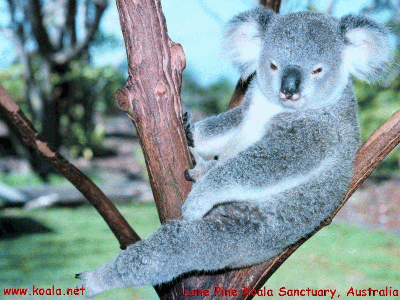
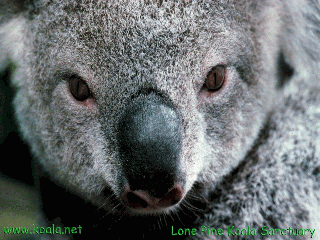
HABITAT Eucalyptus woodlands. FOUND Eastern Australia. SIZE Males 75 to 82 cm (29.5-32.3 in.); Females to 68 to 73 cm (26.8- 28.7 in.) HISTORY Before European colonization in Australia, koalas were an important food source for Aboriginal people and dingo (wild dogs). By the 1920's their populations were nearly destroyed from uncontrolled hunting for their fur. Presently, koalas suffer from habitat depletion that is the result of human development. DISTINCTIVE FEATURES Thick, dense fur ranging in color from slate-gray to reddish-brown. They have an opposable modified index finger that acts as a second thumb. DIET Consists almost exclusively of eucalyptus leaves EXTRA INFO Koalas are protected by CITES and the Australian government. Although koalas may look like bears, they are actually marsupials, animals with a pouch that protects developing young. Koalas almost never need to drink; they get most of their water from the succulent eucalyptus leaves they eat. The word "koala" is an aboriginal word meaning "no drink animal." Koalas are perfectly designed for their tree-dwelling life. Their hands have a large gap between the first and second fingers and their big toe is set at a wide angle to the foot. This gives the koala a vicelike grip on branches. They comfortably sit in a tree all day because of their thickly-padded tails. They live from 12 to 14 years in the wild. Males sexualy mature in 3 to 4 years, and females in 2 years. |
|
Back to main page
