
Nature's Oddities & Furies continued
Volcano
A vent or opening in the earth's crust through which molten lava, gases, and other materials issue from the earth's interior. Volcanos form when molten rock called magna, rises through the earth's crust to the earth's surface. Volcanos emit gaseous, solid, and liquid products. Lava can flow as fast as 20 mph and as far as 60 miles. There are 5 types of eruptions:
Volcanos . . .
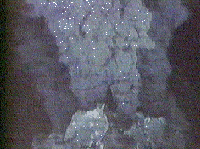
erupt slowly or without warning, |
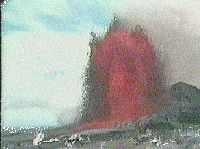
cover large areas with ash, |
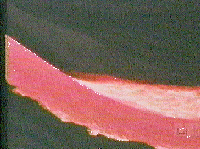
destroy cities, |
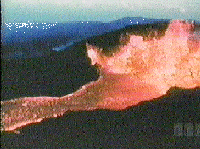
and erase life in hot lava. |
Did you know: There are so many volcanos fringing the Pacific Ocean that the region is sometimes referred to as the Ring of Fire. In 1943, Paricutic began erupting from a cornfield in Mexico and, within one year, a cone rising 1,500 feet above the surrounding land had been formed.
May 18, 1980 . . . Helen awoke. |
Waterspout
A whirlwind over water, usually shaped like a funnel or ropelike cloud. Waterspouts typically occur during fair weather over warm waters in the tropics or sub tropics when a strong current of warm air rises from near the surface of the water.
Waterspouts . . .
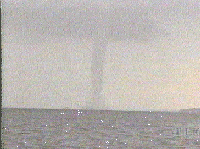
are funnels of water |
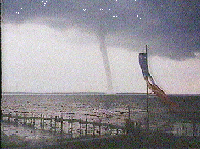
capable of destroying |
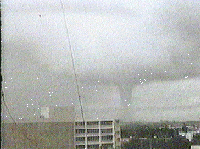
coast line cities |
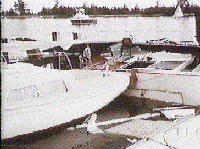
and relocating marinas. |
Did you know: If a waterspout touches land, it is called a tornado.
This page hosted by Get
your ownFree Home Page
Get
your ownFree Home Page