|
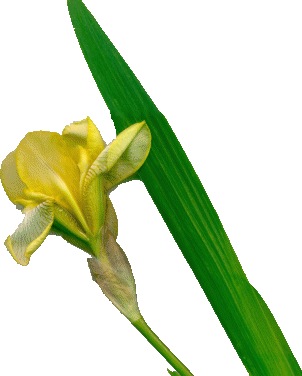
Iris plants do rather well in our area. They grow happily in our climate, especially if planted where they can take the most advantage of any sunlight we do get.These hardy plants spread slowly but surely, and we divide ours about every five or six years. Even when we don't have a good show of flowers because of cool, cloudy weather, the sword-shaped foliage of the plants makes a beautiful background for our other early summer plants.
The iris family is a large one, with varieties ranging in height from a few inches to 3 feet or more. They also come in a wide range of showy colors, from pastels to striking brights.
The blooms vary, depending on whether the original stock is Dutch, Japanese, or standard. Wild irises are especially delicate, with a beautiful blue flower highlighted with yellow.
I remember watching them bloom in a well watered corner of our pasture in central Washington when I was a child.
Iris flowers are wonderful as cut flowers, whether in Japanese-style arrangement, a cluster of irises alone, or as part of a hearty mixed bouquet. A garden plot with ranks of iris plants is a pretty sight too, with the rounded flowers contrasting against the sharp-edged, vertical leaves. And as an extra treat, there are few scents so refreshing as that of an iris--or, actually, that garden full of them--especially when a light summer breeze carries that sweet clean aroma in through my open windows. What a delight!
|