|
|
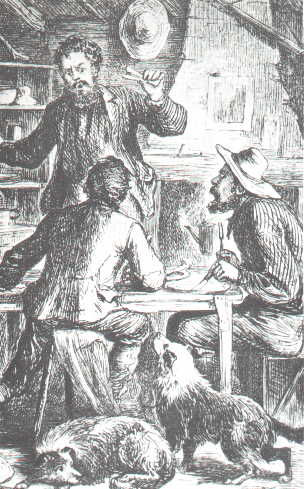
A SHEPHERDS STORY
".....I was up Lake Wakatipu at Walter Peak station, visiting the Colonel and listening to his stories of hardships endured in pioneering days on that great high-country sheep station. We yarned. I made notes for future reference. The Colonel was called away. I stood up to stretch my legs and wandered down to the stockyard to talk to an old high-country shepherd.
'Morning, Jack,' he said.
'Grand day,' I responded. It was. Wakatipu at its best.
'Aye.' A couple of dogs were at his heels.
'Dogs. Sheep dogs. Overworked and always friendly. What would a sheep station do without its dogs?'
'What would it do? Be abandoned. Be given back to the snow tussock, the rabbits, the hawks. aye, that it would.'
'Overworked because of their intelligence. Easy to train because for hundreds of years they've been selected for intelligence,' I said.
'They inherit training as well as intelligence, Jack,' he affirmed.
'Oh, come now. That's a tall one,' I went on. 'Children don't know the A.B.C. because father did but because they were brought up in a literary environment.'
'Jack, I don't care what you say. Dogs hand history and experience down from generation to generation.' There was a deadly seriousness about his tone and manner.
'High-country leg pulling,' was my response.
'You're wrong, Jack. You can see with your own eyes.'
'For instance?' I questioned.
'Jack, I'm serious. Look. I've been around here for over fifty years. When I was a very young man, we had trouble with the dogs. They were sick, savage.'
'Rabies?'
'They called it dog cholera. The dogs had all gone daft. They wanted to do nothing but savage one another.'
'Mad dogs.'
'Aye. Gone daft. We had to make a stockade and to put them in it until they recovered. Someone told us that if a dog bit a shepherd we'd soon be running around biting one another, tearing one another to pieces up in the snow tussock.'
'Why didn't you kill the dogs.'
'Kill all the dogs! What would a high-country station do without them? We took a chance on their getting better, or on some getting better, and kept them in the stockade.'
'And some got better?'
'Aye. Most of them did. Well, while the dog cholera was with us, the boss wouldn't let anyone leave the station and go down to Queenstown, afraid we'd spread the trouble all over the Central.'
'Quarantined.?'
'Aye. But when the dogs were cured, the boss still wouldn't let us go and we thought the time had arrived to send a message through to Queenstown. Without telling the boss, a shepherd wrote a note telling why we couldn't get out. He tied the message under one of the dog's tails, lifted the dog out of the stockade, turned his head to Queenstown, slapped it on the rump and away the dog went.'
'And it got to Queenstown?'
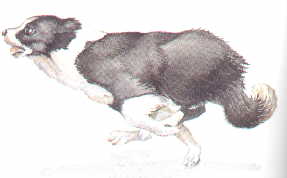
'That was well over fifty years ago, and the dogs has never been seen to this day. and do you know, every dog on the place waited to see if the messenger came back with a reply under its tail. Memory - the dogs waited for years.'
'That's a tall one.'
'Jack, I'm telling you. When that dog never came back the memory of that message was bequeathed to the pups and the grand-pups and remains with the dogs till this day.'
'They inherited the knowledge?' I said with a grin.
'Aye. Absolutely.'
'Taller than Mount Earnslaw,' I argued.
'Look, Jack. I can prove it to you, or could if you were here when a strange dog walks down the gangplank of the *Ben Lomond*. You would see what I mean.'
My laughter didn't disconcert him.
'Aye, you laugh. I could show you.'
'And how?'
'Look. To this very day, after nearly sixty years of new generations of pups, every time a strange dog comes to this station all the dogs on the place run and look under the stranger's tail to see if the stranger has brought a reply to that message. You could see with your own eyes.'
He didn't smile. He called his dogs and walked away.
He almost made me a believer. I am sure that every time a dog does go to the station all the other dogs look under it's tail and who was I to deny a high-country shepherd's authenticity.
And if you ever take a dog to Walter Peak, all the other dogs will come and look under the stranger's tail to see if a message has arrived.
And one hundred years have gone by since the day of the dog cholera."
JOHN A. LEE

ON AUTOMATIC
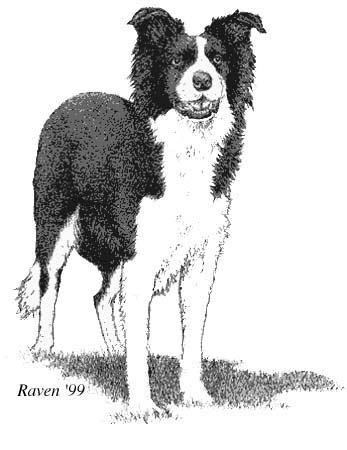
Our border collie, Bob, was a great sheepdog, but this incident concerns the house cow.
Every day, Bob would go and fetch the cow for milking, whenever he heard the rattle of the milk bucket.
By the time one of us had walked from the house to the milking shed 300 metres away, Bob would have the cow waiting in the yard.
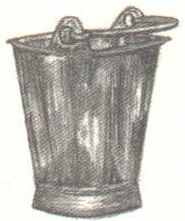
One morning, however, some months after we had sold the house cow, I had reason to use the old milk bucket.
I was amazed when, about half an hour later, Bob turned up with the Jersey from the adjoining farm two kilometres away.
BILL FRANKLIN
OBEDIENCE
I was enjoying the warm friendly atmosphere of a small Southland country hotel, after a day of watching sheepdog trial. My companions were my host, a local sheep farmer, and two other Southlanders called Gordon and Duncan whose occupation was back-country mustering. The converstion didn't stray very far from sheep or sheepdogs, and obedience was the topic under discussion when Gordon told of a dog he'd once owned.
'Best dog I ever had, he was. I was working up in Canterbury at the time, and needed a few quid in a hurry, so I sold him through the post to a joker in Gore for twenty-five quid.
'I took him into Ashburton and put him in the dog-box of the Invercargill express myself, then went way back into the hills on a big autumn muster for three weeks.
'Made one mistake though. When I put him in that box on the guard's van, and just before I closed the door on him, the last thing I said was:
*Stay Shep*
'Well, he stayed all right. Great dog, that: how he stayed! Nothing anybody said or did would make him budge from that box. And none of them railway jokers was game to risk losing a hand by trying to drag him out.
'So Shep rode the express back and forth, Christchurch to Invercargill for three weeks. They fed him by poking little bits of meat in throught those air holes.
'I didn't like to part with him after that, but eventually I sold him to Duncan here for thirty quid. You still got im Duncan?.
'No,' said Duncan with a shake of the head.
'Poor blighter was far too obedient, y'see. It was the last day of a big muster on a station up at the head of Lake Wakatipu. We were loading some sheep on to the lake steamer Earnslaw, and everything was going fine until one stubborn ewe turned in the race, got excited and jumped over the side into the lake.
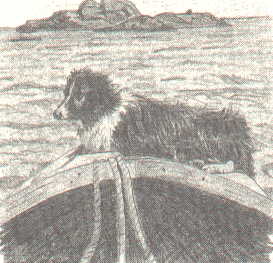
'She was swimming strongly away from the shore, and being heavy with wool I knew it wouldn't be long before she went down. I whistled up Shep and he hopped over the side and went swimming after her. It was just as Shep was about caught up with the old ewe that she realised she was going in the wrong direction, and turned around to swim back.
'Now, the lake is very deep, even close to the shore. I could see that a dog alongside the old ewe in the water, staring her in the face, was going to panic her into turning round and swimming off again. That was when I made my big mistake. I shouted a command to Shep and he obeyed right away.
'Siddown,' I shouted across the water.
'Old Shep sat down - and I haven't seen him since.'
MAURICE FLAHIVE