Since my site has been up in January, 2000, many people have contacted
me with information. Without their help, I would know very little
about these photos today. Most of the information about the places pictured
on this page comes from Geoff Walden of Schweinfurt, Germany. He has provided
me with present day photos of many of the sites my grandfather captured
on film. You can compare many more original "past and present" photos at
Geoff's site, "Third
Reich In Ruins." He has traveled to many sites in Germany, in the footsteps
of his father, taking photos of the same sites his father did some 55 years
ago. It's a really interesting site and I highly recommend it.
Visit
Geoff's Website Here...

Thanks Geoff for your expertise, interest and photographs.
Thanks also to Wilfred Bradach and André Flener.
Würzburg, Germany
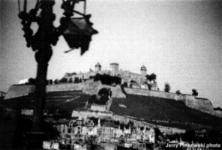
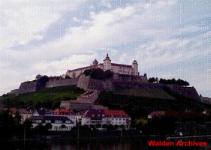
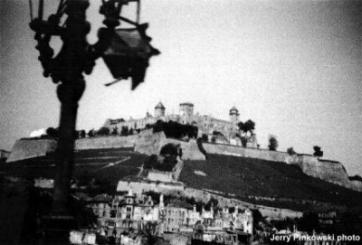
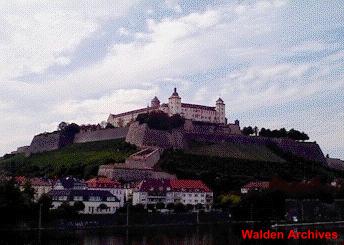
The Marientberg Fortress on the west side of the Main River in Würzburg,
Germany as it appeared in 1945, and how it appears today. It sustained
some bomb damage from Allied attacks late in the war. The fortress
has a long history and has served a variety of purposes. Some of
the stones on the fortress grounds have been dated as far back as 706 AD.
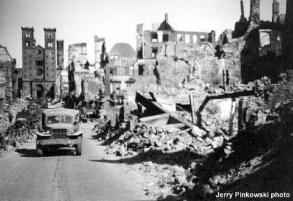
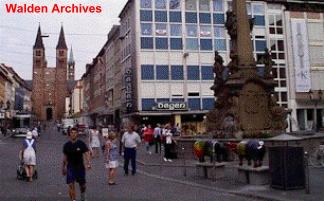 St. Kilian's Cathedral (Kiliansdom, as the Germans call it) in Würzburg,
Germany. Note the major damage it took in the Allied bombing attacks
on March 16, 1945. The Allied attacks laid waste to 80% of Würzburg,
as can be seen in the photo to the left. After the war, when the
cathedral was rebuilt, parts of it were done in a different architectural
style. This explains why the small peak between the spires is absent
in the present day photo.
St. Kilian's Cathedral (Kiliansdom, as the Germans call it) in Würzburg,
Germany. Note the major damage it took in the Allied bombing attacks
on March 16, 1945. The Allied attacks laid waste to 80% of Würzburg,
as can be seen in the photo to the left. After the war, when the
cathedral was rebuilt, parts of it were done in a different architectural
style. This explains why the small peak between the spires is absent
in the present day photo.
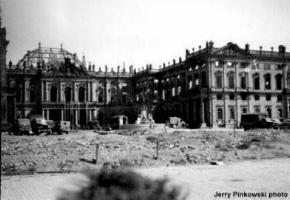
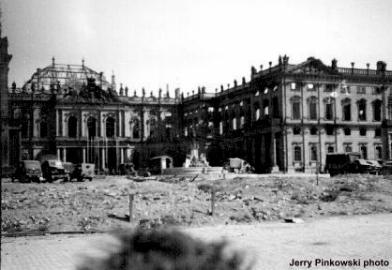
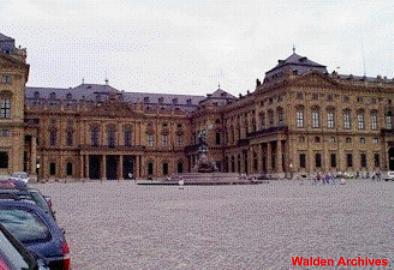
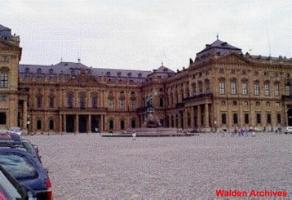 The Residenz in Würzburg, Germany as it appeared in 1945 and how
it appears today. Construction on the Residenz began in 1720 and
was completed in 1744. Once the prince bishops' palace, it is one
of Europe's most ornate Baroque palaces. It sustained some damage
when Würzburg was bombed in March, 1945.
The Residenz in Würzburg, Germany as it appeared in 1945 and how
it appears today. Construction on the Residenz began in 1720 and
was completed in 1744. Once the prince bishops' palace, it is one
of Europe's most ornate Baroque palaces. It sustained some damage
when Würzburg was bombed in March, 1945.
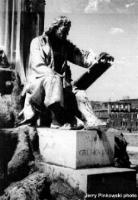
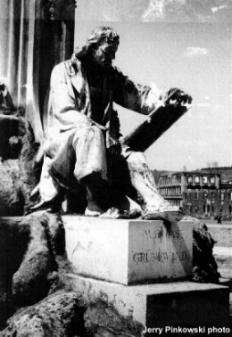
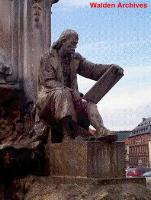 This is a statue of painter, Matthias Gruenwald at the base of the Franconian
Fountain (see below). It was untouched by Allied bombs and hasn't changed
a bit--even to the present day.
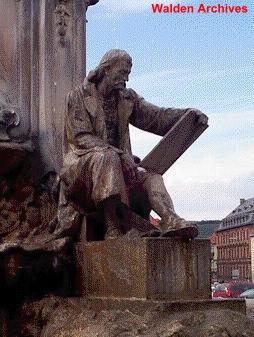
This is a statue of painter, Matthias Gruenwald at the base of the Franconian
Fountain (see below). It was untouched by Allied bombs and hasn't changed
a bit--even to the present day.
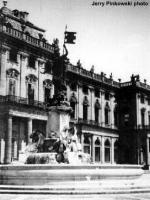
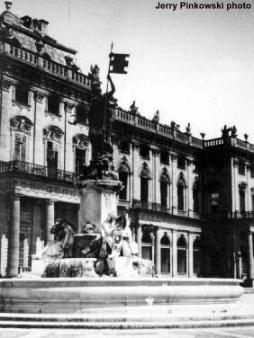
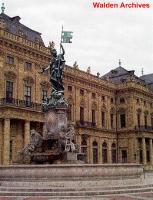 This is the Franconian Fountain. The facade of the Residenz can
be seen in the background. Situated around the base of the pedestal
are statues of famous German cultural figures, including Tilman Riemenschneider,
a famous 16th century sculptor and wood carver, and mayor of Würzburg;
painter Matthias Gruenwald (see above); and poet/minstrel Walther von der
Vogelweide.
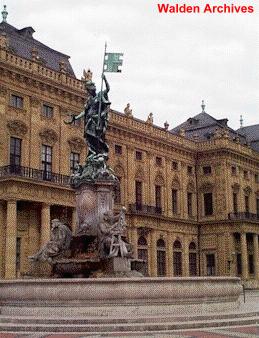
This is the Franconian Fountain. The facade of the Residenz can
be seen in the background. Situated around the base of the pedestal
are statues of famous German cultural figures, including Tilman Riemenschneider,
a famous 16th century sculptor and wood carver, and mayor of Würzburg;
painter Matthias Gruenwald (see above); and poet/minstrel Walther von der
Vogelweide.
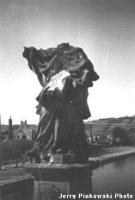
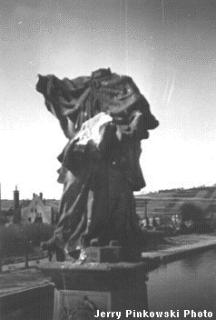
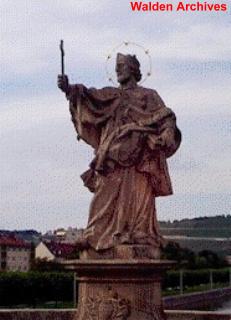
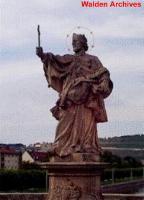 This is a statue of St. Nepomuk on a bridge crossing the River Main.
Unfortunately, Nepomuk couldn't escape damage when the Allied bombs came.
As you can see, though, he's been beautifully reconstructed.
This is a statue of St. Nepomuk on a bridge crossing the River Main.
Unfortunately, Nepomuk couldn't escape damage when the Allied bombs came.
As you can see, though, he's been beautifully reconstructed.
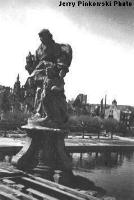
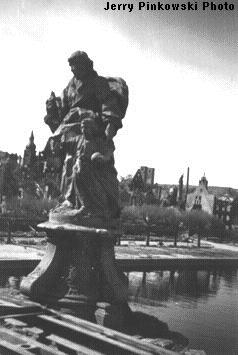
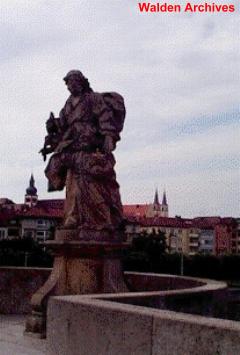
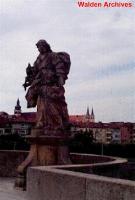 Here is another statue on the bridge. This one depicts Joseph
and young Jesus. Untouched by Allied bombs. Note the Kiliansdom in the
distance to the right.
Here is another statue on the bridge. This one depicts Joseph
and young Jesus. Untouched by Allied bombs. Note the Kiliansdom in the
distance to the right.
Nürnberg, Germany
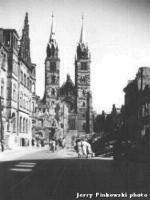
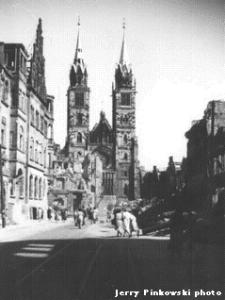
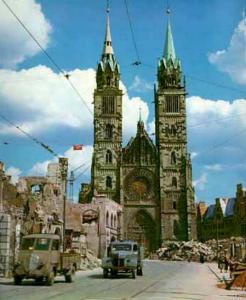
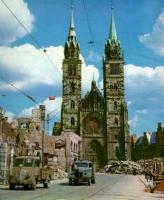 On the left is St. Lorenz Kirche in Nürnberg, Germany probably
in the closing days of the war. On the right is an early post-war
photograph.
On the left is St. Lorenz Kirche in Nürnberg, Germany probably
in the closing days of the war. On the right is an early post-war
photograph.
Berchtesgaden, Germany
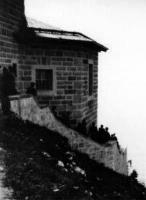
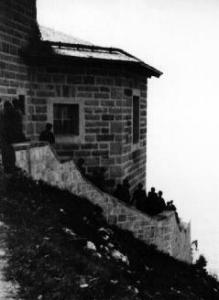
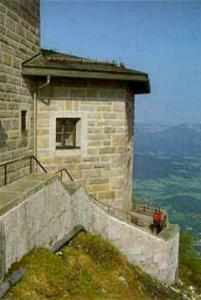
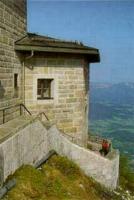 The Kehlsteinhaus, or tea house (known by the Allies as "The Eagle's
Nest", was a gift to Adolf Hitler, although his fear of heights prevented
him from making but a handful of official appearances there. After
the war, it was a very popular tourist site for American GIs. As
the photos show, it has changed very little today.
The Kehlsteinhaus, or tea house (known by the Allies as "The Eagle's
Nest", was a gift to Adolf Hitler, although his fear of heights prevented
him from making but a handful of official appearances there. After
the war, it was a very popular tourist site for American GIs. As
the photos show, it has changed very little today.
Luxembourg
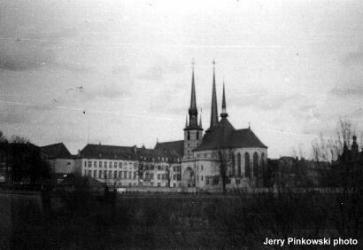
 This is the Cathedral Notre Dame of Luxembourg. It's changed very
little in 55 years. Thanks to André Flener.
This is the Cathedral Notre Dame of Luxembourg. It's changed very
little in 55 years. Thanks to André Flener.
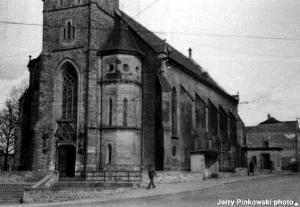
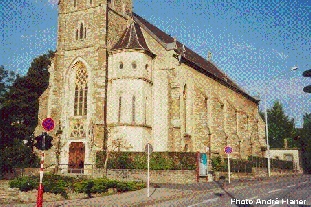 This is the Hollerich cathedral in Hollerich, a suburb just outside
of the city of Luxembourg. Thanks to André Flener for the present
day photo.
This is the Hollerich cathedral in Hollerich, a suburb just outside
of the city of Luxembourg. Thanks to André Flener for the present
day photo.
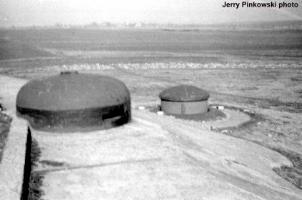
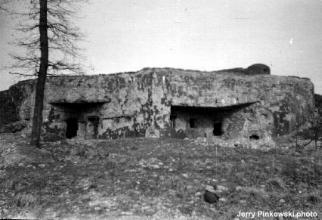
The Maginot Line
These are fortifications along France's famous Maginot Line. Thanks
to André Flener for the present day photos.
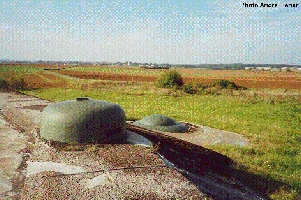
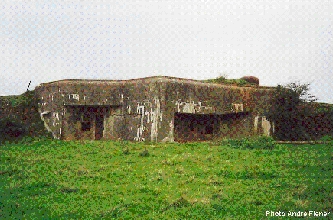 The modern day bunker above is not the same one photographed by my grandpa,
but is very similar in its construction. The true bunker was
found by André and it has literally been overrun by forest.
Perhaps on a later date, I will include photos of the true bunker on this
site.
The modern day bunker above is not the same one photographed by my grandpa,
but is very similar in its construction. The true bunker was
found by André and it has literally been overrun by forest.
Perhaps on a later date, I will include photos of the true bunker on this
site.
Some of the black and white photos, plus many more can be seen in
the "Lost Places" section of my site.
There's many more unidentified photos there.
World War II Aircraft Today
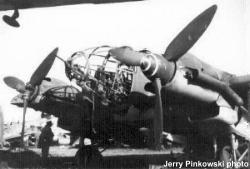
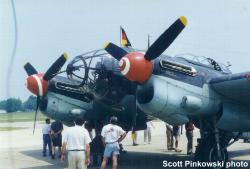
Heinkel He-111 Bomber
Half a world and half a century separate these two photos. The first
was taken by my grandfather, probably in Germany in 1945. I took
the second photo at an air exhibition in Mt. Vernon, Illinois in the summer
of 1999. Ironically, the Spanish-built bomber on the right is fitted
with Rolls-Royce Merlin engines, the same used in the British Spitfires
that chased this type of aircraft across the sky in the Battle of Britain.
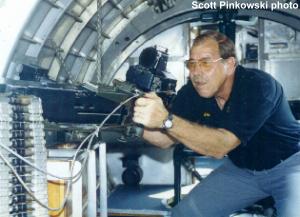
"Scratch one bandit at 7
o'clock!"
Here's my dad, Terry Pinkowski, manning the .50 caliber gun in the waist
of Sentimental Journey, a B-17 Flying Fortress. If anyone
can send me a similar war-time photo of a waist gunner in action, it would
be fun to put one up here on my site! E-mail me at [email protected]