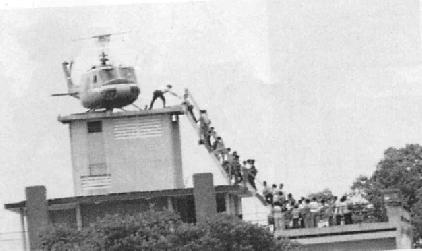
The following short stories were sent via Email to the Thailand, Laos, Cambodia Brotherhood relating some of my experiences in Southeast Asia during my tour with the Pony Express, 20th SOS at Udorn RTAFB, Thailand, Mar 69 to Feb 28, l970. Read and enjoy! (Note: most of the pictures in these stories are taken from Bob Arnau's collection.)
"Award and Decorations - DFCs ETC?"
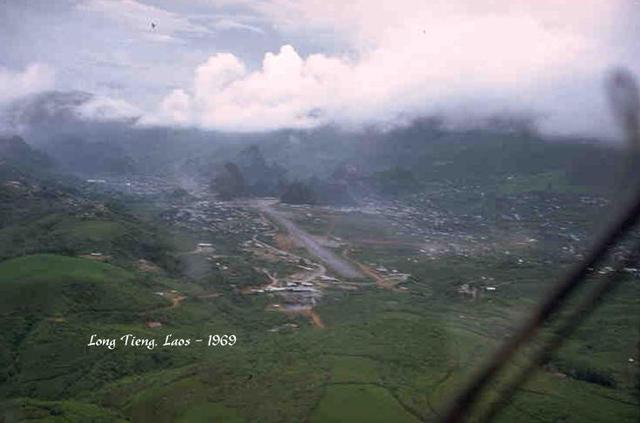
Hey gang, I've been reading all this discussion about the Vietnam War (SEA), and I remember that, as Awards and DEC's Officer, for the 20th SOS, Pony Express, I was forbidden to tell where the incident took place. I could not mention Laos, or Vietnam, or the Ho Chi Ming Trail. I always had to say somewhere in SEA, on or over a well traveled road, etc. But, it was always in South East Asia. The PDJ was an " insecure area," we flew over "hostile villages" (Laos), as we never knew who controlled what towns etc. When I first arrived at Udorn, and since I was a recip pilot who had been forced to learn to fly helicopters, I didn't have the feel of landing in or on uneven surfaces. Our Ops Officer, Don Berger, took me out in the hills one day and made me land on one wheel and on every rock in the place. At times, I tilted back until the tail rotor almost touched the ground, which helped me to learn to maintain control of the helicopter at all times. I am very thankful to him as without that personal training I would never have been able to accomplish half the missions I was fragged to do. On my first flight to Lima Site 20A, Long Tieng,
"Evacuation of Tchpone?"
Ed and all, I don't think the evacuation of Tchpone that Jack Kull spoke about was the same that I took part in l8 Sept 69. As I remember we evacuated them to a spot about 35 miles away as it was reported that NVA troops were coming south on a road leading to their village. As I remember it, out leader from the 2lst SOS picked up the first load and after takeoff decided to circle the area to see how every thing was progressing. He took quite a few rounds of automatic weapons fire and then got out of there. When I took off and got above the trees, I took several rounds also. The A-l s started spraying the area where the rounds were coming from, so I guess after that the bad guys either left or kept their heads down. Three helicopters aborted in the afternoon, but my helicopter was always hit under the nose in the crew area where we had armor plate to protect us (thank God)! Anyway, I flew for about six hours and airlifted around l50 troops, (I can't remember if they were troops or men villagers). Nevertheless, after I made my last pickup, we were sitting in the CH-3E watching Air America talking to all the people and making whatever arrangements they were trying to make, when about five men approached my helicopter and asked me if I would take them back to Tchpone. Obviously, they had boarded my chopper and came to me to take them back. I told them they would have to go over to that shack and talk to that man in the Air America uniform, and if he would permit it, then I would fly them back. They wandered over and were talking when some guards arrived and took them in custody. The Air America troop came over to me and said that those guys were some of the enemy who had jumped aboard my helicopter to see where we were taking everyone. After they found out, they wanted to go back and join their troops. One thing I never knew when we evacuated villages, and I remember evacuating several of them, just who were getting into our helicopter. I remember them, all shapes and sizes, men, women, children, goats, pigs, sacks filled with chickens, rice balls, and about any thing they could carry. That was a nightmare, but yet I enjoyed it tremendously! My short story for this night 9 Sept 99. Kirk
"Buffalo Crap?"
I forget
sometimes, if I ever told this story or
not - forgive this 70 year old if I sent it before, but I don't think I
sent it to the TLCB. Well anyway, Air America, or the CIA was obviously
having trouble with some of the Chieftains in Southern Laos or Northern
Cambodia so they asked them what they would need to take care of any of
our airmen that were shot down or landed in their area. We naturally
wanted
them to give him all the aid he needed and protect him until we could
pick
him up. Well, naturally they called upon the Pony Express to do the
dirty
deed or whatever it took to satisfy the big guys. It seems that the
Chiefs
wanted a pair of buffaloes, male and female, delivered to a small hill
in northern Cambodia or southern Laos, I can't remember. Who did they
pick
to accomplish this secret mission--that's right, old 39 year old, Major
Kirk! I flew to the Lima site in the Bolovens Plateau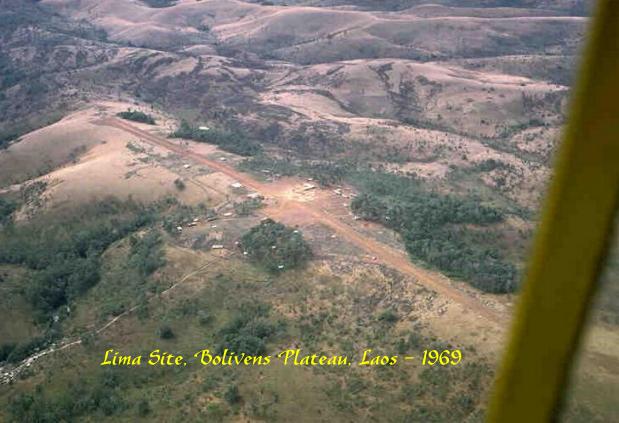 ,
about 275 miles from Udorn. Since this was a long way from our home
base
we had to refuel at the CIA base. Quite a few Gommers, Hmong troops,
came
to meet my helicopter and brought the fuel drums and pump to refuel my
chopper. I don't have a picture of my chopper, however, here's one of
Bob
Arnau
,
about 275 miles from Udorn. Since this was a long way from our home
base
we had to refuel at the CIA base. Quite a few Gommers, Hmong troops,
came
to meet my helicopter and brought the fuel drums and pump to refuel my
chopper. I don't have a picture of my chopper, however, here's one of
Bob
Arnau
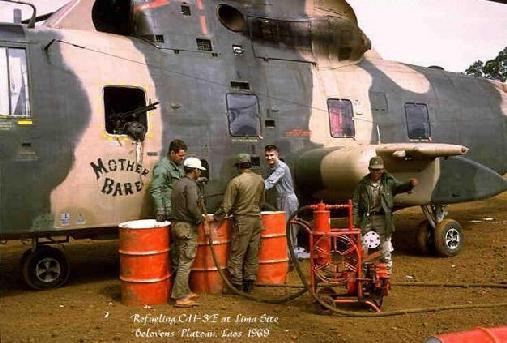 getting his chopper refueled
the same way at the same place. Thanks,
Bob! We let them do all the work and since it was noontime, we
broke
out our in-flight lunches and sat in the rear of the chopper and
started
eating. A young Lao saw me opening my lunch box and seemed amazed at
the
boiled egg that I started to eat. He put his hand out and
obviously
wanted the egg, so I gave it to him. Honestly, he put the whole egg,
shell
and all in his mouth, clamped down on it, and started spitting after he
took it out of his mouth. He pointed his fingers down, shouting NUMBER
TEN! I took the egg from him and peeled it and then gave it to him -
pointing
my fingers up saying--NUMBER ONE! He ate it and agreed it was
number
one! After they refueled my chopper, a truck arrived and they unloaded
a pair of buffaloes - small for buffaloes, but about the size of an
average
cow. They laid them near the rear of my chopper with their feet tied
together.
Our choppers did not have a rear ramp as the doors were removed and all
we had was a net attached to keep things from falling out. They lowered
the net and dragged one of the bellowing buffaloes to the backside of
the
chopper and put the net under him and a few dozens of them lifted the
net
and raised him into the chopper. They did the same for the female. You
can't believe the noise those two were making in the rear of the
helicopter.
Well, unfortunately, when an animal is scared like these two were, they
can't do anything but CRAP! Well, it was unbelievable, but they both
crapped
all over the rear of the chopper and believe me it smelled to high
heavens.
But, naturally, I had a mission to perform, so I took off and flew them
south to our landing rock and touched down until the concerned crew
could
pull them off the chopper. I was told not to land anywhere except the
designated
area as bombs that had trip wires attached to them that shot out in
every
direction had been dropped in that area (I'm dumb about that so you
experts
explain what I am talking about). Well, the mission was successful,
however;
all the way back to Udorn the smell of buffalo crap about killed the
crew.
When we landed at Udorn, they took a high powered hose and washed the
inside
out but some of that crap got in the metal parts of the floor and as
far
as I can remember, it never went away. Every one regretted being
assigned
to that chopper after that as the smell stayed with us forever and ever
more! Kirk
getting his chopper refueled
the same way at the same place. Thanks,
Bob! We let them do all the work and since it was noontime, we
broke
out our in-flight lunches and sat in the rear of the chopper and
started
eating. A young Lao saw me opening my lunch box and seemed amazed at
the
boiled egg that I started to eat. He put his hand out and
obviously
wanted the egg, so I gave it to him. Honestly, he put the whole egg,
shell
and all in his mouth, clamped down on it, and started spitting after he
took it out of his mouth. He pointed his fingers down, shouting NUMBER
TEN! I took the egg from him and peeled it and then gave it to him -
pointing
my fingers up saying--NUMBER ONE! He ate it and agreed it was
number
one! After they refueled my chopper, a truck arrived and they unloaded
a pair of buffaloes - small for buffaloes, but about the size of an
average
cow. They laid them near the rear of my chopper with their feet tied
together.
Our choppers did not have a rear ramp as the doors were removed and all
we had was a net attached to keep things from falling out. They lowered
the net and dragged one of the bellowing buffaloes to the backside of
the
chopper and put the net under him and a few dozens of them lifted the
net
and raised him into the chopper. They did the same for the female. You
can't believe the noise those two were making in the rear of the
helicopter.
Well, unfortunately, when an animal is scared like these two were, they
can't do anything but CRAP! Well, it was unbelievable, but they both
crapped
all over the rear of the chopper and believe me it smelled to high
heavens.
But, naturally, I had a mission to perform, so I took off and flew them
south to our landing rock and touched down until the concerned crew
could
pull them off the chopper. I was told not to land anywhere except the
designated
area as bombs that had trip wires attached to them that shot out in
every
direction had been dropped in that area (I'm dumb about that so you
experts
explain what I am talking about). Well, the mission was successful,
however;
all the way back to Udorn the smell of buffalo crap about killed the
crew.
When we landed at Udorn, they took a high powered hose and washed the
inside
out but some of that crap got in the metal parts of the floor and as
far
as I can remember, it never went away. Every one regretted being
assigned
to that chopper after that as the smell stayed with us forever and ever
more! Kirk
"TLC-Mission: Christmas 69"
All of you are talking about Christmas when you were over there, so thought I would put in my 2 cents worth about Xmas 69. I received a big box from my wife, which included about a three-foot fake Xmas tree with all the trimmings. Also, there was a Caramel Cake, a fruitcake, some Cheese straws, a big jar of Peanut butter, plus a few other things. When I opened the box, my house girl, POM, a Laotian, married to a Thai Sgt., watched me with a lot of wonderment. When I opened the box, she watched me put up the tree on my coffee table, and take out all the desserts, etc. She asked me what the cheese straws were and I told her they were Number one, so she grabbed a few and threw them in her mouth. She chewed for a few minutes and then started spitting, and spitting, yelling to me that they were, NUMBER l0! Obviously, she didn't like cheese straws. A little later, she opened the Peanut butter jar and I gave her a spoon and a cracker. Instead she put a big spoon of the peanut butter in her mouth and almost choked, as obviously she had never tasted peanut butter before. I grabbed the big spoon and told her she had to spread it on some bread or cracker, but to never eat a big spoon of it alone. When she followed my directions, she really seemed to like it. In fact, a few days later I found the big spoon in the jar and most of the peanut butter gone. I just gave up and let her have all the rest. The cakes were spoiled or fell apart so I {we} didn't get to enjoy them. Oh well, so much for what I remember about Xmas of 69. Kirk
"B-52 Arc Light-Ho Chi Ming Trail"
I didn't know what
an arc light was until Dec 69. I flew
over the Ho Chi Ming Trail many times and saw the craters with car
tracks
around them to continue their journey. But, I was called upon to lead a
mission as high bird (one designated to fly on the mission to pick up
any
downed crew or aircraft}. It was near the end of my tour and I knew the
territory, so it was only natural that I lead this perhaps new crew to
their LZ just across the Ho Chi Ming trail.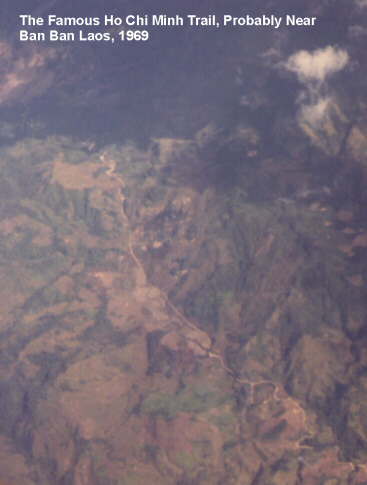 We flew to the Boloven's Plateau, was refueled, and took off heading
due
East toward the trail. We were supposed to drop an intelligence
gathering
team in a small clearing due east of the trail. Well, after takeoff, I
was leading my crew to the LZ when all of a sudden, I got a call from
who
knows where, telling me to hold my helicopters and not approach the
trail
as an arc light from Pleku? was imminent! Darn, I didn't even
know
what an arc light was, but I told everyone to circle until I found out
what this was all about. I made a few calls, but all of a sudden we saw
dust flying all along the trail and noise you wouldn't believe - surely
the bombs blasted for a mile or two and the dust rose more than a
thousand
feet. Soon, they called me and said all clear. As we had a mission to
do,
we crossed the trail flying instruments through the dust and I finally
located our clearing. I circled the area and as it was clear, I
vectored
my wing man in the LZ to drop the team. Because of the
bombing,
it was relatively quiet! Ha! I wonder what we could have expected
before
the bombing. Our mission was a success, however, I learned what an arc
light was and how much damage it could do. Anything, or anyone that
survived
that mass of explosives, surely kept their heads down if they had any
left,
when my little crew dropped our passengers. The trail, on our awards
and
DEC's, was called a "well traveled road"! Does this add anything to the
discussion about the B-52s and their bombing missions? Kirk
We flew to the Boloven's Plateau, was refueled, and took off heading
due
East toward the trail. We were supposed to drop an intelligence
gathering
team in a small clearing due east of the trail. Well, after takeoff, I
was leading my crew to the LZ when all of a sudden, I got a call from
who
knows where, telling me to hold my helicopters and not approach the
trail
as an arc light from Pleku? was imminent! Darn, I didn't even
know
what an arc light was, but I told everyone to circle until I found out
what this was all about. I made a few calls, but all of a sudden we saw
dust flying all along the trail and noise you wouldn't believe - surely
the bombs blasted for a mile or two and the dust rose more than a
thousand
feet. Soon, they called me and said all clear. As we had a mission to
do,
we crossed the trail flying instruments through the dust and I finally
located our clearing. I circled the area and as it was clear, I
vectored
my wing man in the LZ to drop the team. Because of the
bombing,
it was relatively quiet! Ha! I wonder what we could have expected
before
the bombing. Our mission was a success, however, I learned what an arc
light was and how much damage it could do. Anything, or anyone that
survived
that mass of explosives, surely kept their heads down if they had any
left,
when my little crew dropped our passengers. The trail, on our awards
and
DEC's, was called a "well traveled road"! Does this add anything to the
discussion about the B-52s and their bombing missions? Kirk
"37 MM Shells from the PDJ -DFC Material?"
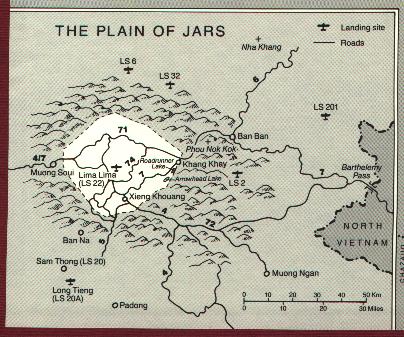
I have been reading
with interest your chats about the
Ravens and the PDJ. As I've said before, I spent a night in the Raven's
"plush quarters" and ate their good food. I remember the poster in the
kitchen serving area -- Some big bruiser with folded hands holding some
brown stuff - saying THIS IS S--- !! But, what I really wanted to know
is what did the Ravens call the spot among the trees between a couple
of
hills where Vang Pao's people or the Ravens discovered that mass of
ammunition,
all kinds, hand grenades, M-l6 shells, 37 MM antiaircraft shells,
etc.etc.
In Sept 69 the Ponies were called in to airlift all that ammo to a
small
airfield to be loaded aboard Air America transports to take back to 20A
to be redistributed to Vang Pao's people. I remember that day well as
when
I landed and picked up my huge load of boxes, some having a poster on
them
showing Uncle Sam shaking hands - lend lease, or something like that.
Anyway,
I tried to get into a hover but was so overloaded (about 4500 lbs. of
boxes)
that the helicopter would only rise about a foot and then fall back
down
to the ground. I started bouncing the CH-3E up and down edging forward
a few feet at a time. There was a slope ahead and my bouncing finally
paid
off as I was slowly hovering and picking up speed. Unfortunately,
there was a row of trees ahead of me and I didn't know if I was going
to
get above them. Luckily, I made it, and with climb speed made a sharp
turn
to the right and missed the trees. But, rat-atat, bang, bang, (sounds
of
automatic weapon's fire?) -- this place was supposed to be safe, but
these
NVA on the ground under the trees wanted my bird and the ammo
back.
Quite a few rounds hit us, but luckily the ammo was not ignited and all
of us blown to 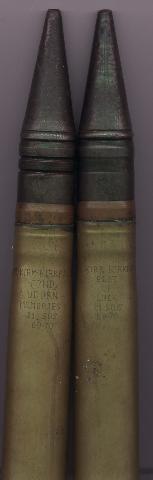 kingdom
come. One tracer round missed the crew chief's foot by an inch and hit
a fuel T-valve (feeding fuel to both engines) on the ceiling of the
chopper.
Luckily that shell still smoking was spent and hit the valve sideways
putting
about an inch long scar in the valve. Had it hit straight in, it would
have penetrated the valve and probably left us all scatter over the
PDJ.
We made it though and called in the A-l s to protect us, which they did
after that. After that fiasco we were not going to put any more boxes
inside
the choppers, so we dropped in cargo nets and when they were full, we
flew
in, hovered and the ground crew hooked them up. We felt if they shot at
us again we would just pickle the nets and get out of there. I made six
round trips that day and airlifted around 25,000 pounds of explosives
and
ammo to the safe area where Air America planes were waiting. Earned my
DFC the hard way that day. I left a box of brass (37 MM) shells l5"
long
and 2" wide at the base in my chopper to take back to Udorn as
souvenirs,
but the Air Police at Udorn would not disarm them so they confiscated
them.
A pilot from NKP took a box too and their APs disarmed them. They gave
me two of them at my going home party engraved with my name etc. A long
story but as it is my first to the TLC mission, maybe, yawl will
forgive
this 70 year old vet who has been pretty quite lately. Kirk
kingdom
come. One tracer round missed the crew chief's foot by an inch and hit
a fuel T-valve (feeding fuel to both engines) on the ceiling of the
chopper.
Luckily that shell still smoking was spent and hit the valve sideways
putting
about an inch long scar in the valve. Had it hit straight in, it would
have penetrated the valve and probably left us all scatter over the
PDJ.
We made it though and called in the A-l s to protect us, which they did
after that. After that fiasco we were not going to put any more boxes
inside
the choppers, so we dropped in cargo nets and when they were full, we
flew
in, hovered and the ground crew hooked them up. We felt if they shot at
us again we would just pickle the nets and get out of there. I made six
round trips that day and airlifted around 25,000 pounds of explosives
and
ammo to the safe area where Air America planes were waiting. Earned my
DFC the hard way that day. I left a box of brass (37 MM) shells l5"
long
and 2" wide at the base in my chopper to take back to Udorn as
souvenirs,
but the Air Police at Udorn would not disarm them so they confiscated
them.
A pilot from NKP took a box too and their APs disarmed them. They gave
me two of them at my going home party engraved with my name etc. A long
story but as it is my first to the TLC mission, maybe, yawl will
forgive
this 70 year old vet who has been pretty quite lately. Kirk
"A Big Jar from the Plain of Jars for Gen. Vang Pao"
It's 11:04 PM this
Tuesday night, and since my wife is
a little POed at me for buying her a Lazy Boy for her birthday tomorrow
without letting her pick it out, I'm sending it back, I felt like
writing
one of my long winded stories about the PDJ - something I thought most
of you brothers might enjoy. I hope most of you read my story about
air-lifting
all that ammo and shells out of the PDJ and getting my helicopter shot
up pretty badly. Well, anyway not long after that General Vang Pao was
trying to convince his superiors that he owned the PDJ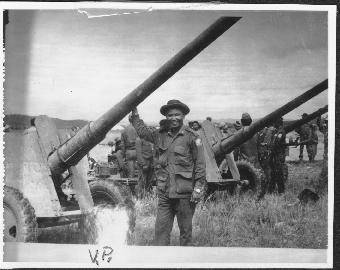 but most of them laughed at him as the PDJ had been under NVA troops
for
at least six years. I can hear them laughing and saying he was crazy if
he thought they would believe that. Ha Ha! Well, his reply was probably
something like this -"What do I have to do to prove to you that I have
control of the PDJ?" Ha, Ha, they probably replied, just do the
impossible
and bring us one of those big JARS, ha, ha! I'm sure he called the CIA,
and Air America, who called 7/l3th AF, who told us, the Pony Express,
20th
SOS, at Udorn to do the impossible and take Vang Pao a big JAR
but most of them laughed at him as the PDJ had been under NVA troops
for
at least six years. I can hear them laughing and saying he was crazy if
he thought they would believe that. Ha Ha! Well, his reply was probably
something like this -"What do I have to do to prove to you that I have
control of the PDJ?" Ha, Ha, they probably replied, just do the
impossible
and bring us one of those big JARS, ha, ha! I'm sure he called the CIA,
and Air America, who called 7/l3th AF, who told us, the Pony Express,
20th
SOS, at Udorn to do the impossible and take Vang Pao a big JAR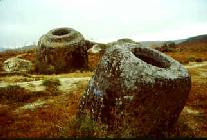 from the PDJ. Well, our Ops officer was assigned to the mission and I
was
assigned as the High Bird - we always had a High Bird, an empty
helicopter
responsible to pick up the crew if they were downed for some reason or
the other. Jerry Ballenger was Don Berger's co-pilot and was probably
about
5'8". We found a big jar that we could land both helicopter near and
Jerry
climbed inside the jar and only his head stuck out. We studied the
situation
and borrowed a pick-up truck from Air America. We pushed the truck up
against
the jar and tilted it over - about a 45 degree angle - dug a deep ditch
on one side of it and forced a large cargo net under it. We then tied a
rope to it and pulled it back wards toward the truck. Then, we dug a
ditch
on that side and pulled the net upward to fit it around the jar. Don,
got
his chopper airborne and we hooked the net to his chopper hook and he
started
to lift it in the air. I got my CH-3E airborne to follow him. You
wouldn't
believe the stress on his helicopter. I never saw one fly so slowly and
wop, wop, wop, wop, wop etc. It sounded like he would never make it to
our destination of Long Tieng, Lima Site 20A, Vang Pao's headquarters.
I flew as slowly as I could to stay with him. Well, to make a long
story
short, we made it and Don lowered that ton or ton and a half solid
stone
Jar in the middle of a parade field (or soccer court) and we left and
went
back to Udorn. I am sure that Vang Pao had the last Ha, Ha as he only
did
what they asked him to do. Bring us a Jar and we will believe you own
the
PDJ. The Ponies were a great bunch and we did some crazy things for the
war effort in Laos. Enough for tonight as my wife told me to get off
the
computer and get the cat in! Kirk
from the PDJ. Well, our Ops officer was assigned to the mission and I
was
assigned as the High Bird - we always had a High Bird, an empty
helicopter
responsible to pick up the crew if they were downed for some reason or
the other. Jerry Ballenger was Don Berger's co-pilot and was probably
about
5'8". We found a big jar that we could land both helicopter near and
Jerry
climbed inside the jar and only his head stuck out. We studied the
situation
and borrowed a pick-up truck from Air America. We pushed the truck up
against
the jar and tilted it over - about a 45 degree angle - dug a deep ditch
on one side of it and forced a large cargo net under it. We then tied a
rope to it and pulled it back wards toward the truck. Then, we dug a
ditch
on that side and pulled the net upward to fit it around the jar. Don,
got
his chopper airborne and we hooked the net to his chopper hook and he
started
to lift it in the air. I got my CH-3E airborne to follow him. You
wouldn't
believe the stress on his helicopter. I never saw one fly so slowly and
wop, wop, wop, wop, wop etc. It sounded like he would never make it to
our destination of Long Tieng, Lima Site 20A, Vang Pao's headquarters.
I flew as slowly as I could to stay with him. Well, to make a long
story
short, we made it and Don lowered that ton or ton and a half solid
stone
Jar in the middle of a parade field (or soccer court) and we left and
went
back to Udorn. I am sure that Vang Pao had the last Ha, Ha as he only
did
what they asked him to do. Bring us a Jar and we will believe you own
the
PDJ. The Ponies were a great bunch and we did some crazy things for the
war effort in Laos. Enough for tonight as my wife told me to get off
the
computer and get the cat in! Kirk
Rama Soon, the Monkey God and the Plain of Jars!
I don't know what
ever happened to that jar that we put
on that parade field. I don't think
Vang Pao had the capability at that time to move it
unless
they had a large crane or something like that. Believe me that jar was
heavy? I failed to mention that it was buried in the ground at two feet
or more and that's why we had to dig the big holes on both sides to
force
our net under it. If you have never had the pleasure of seeing all
those
jars, here's a picture taken from the Laos Link on my home page.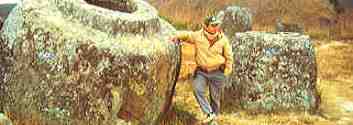 Although the Laotian standing next to it is probably short, you can
still
get an idea of just how large some of Jars are - big, big !! If
you
have read any Lao history you will find that no one can explain where
these
jars came from or who put them in the PDJ. They are extremely
large,
made of some sort of stone that can't be found any other place in Laos.
They might be made of some kind of clay, which has turned to stone over
the ages. Some historians say they are urns or burial vaults, but no
one
really knows. When no one knows any thing about them, the only thing
that
makes any sense is legends? Well, let's see if you like my
interpretation
of the legend of those jars. According to legend, the Plain of Jars
being
flat and grassy and surrounded by mountains was really the special
field,
battle ground, dining table with drinking cups (jars) of the Monkey God
"Rama Soon. This God fought many a battle at that spot, and with his
large
ax hit the enemy God's shields to cause lightening, and their hurt and
tears caused rain. After the battles, our great, righteous, God Rama
Soon
would call in his friends, who helped him in battle and they
would
sit down on the mountains and celebrate at their table (PDJ) and drink
from the Jars and celebrate their victories. Personally I think
that
makes a pretty good explanation of what the Jars were used for, at
least
it as good an explanation that you'll get from the experts. I have a
wooden
statue of Rama Soon which I you see here.
Although the Laotian standing next to it is probably short, you can
still
get an idea of just how large some of Jars are - big, big !! If
you
have read any Lao history you will find that no one can explain where
these
jars came from or who put them in the PDJ. They are extremely
large,
made of some sort of stone that can't be found any other place in Laos.
They might be made of some kind of clay, which has turned to stone over
the ages. Some historians say they are urns or burial vaults, but no
one
really knows. When no one knows any thing about them, the only thing
that
makes any sense is legends? Well, let's see if you like my
interpretation
of the legend of those jars. According to legend, the Plain of Jars
being
flat and grassy and surrounded by mountains was really the special
field,
battle ground, dining table with drinking cups (jars) of the Monkey God
"Rama Soon. This God fought many a battle at that spot, and with his
large
ax hit the enemy God's shields to cause lightening, and their hurt and
tears caused rain. After the battles, our great, righteous, God Rama
Soon
would call in his friends, who helped him in battle and they
would
sit down on the mountains and celebrate at their table (PDJ) and drink
from the Jars and celebrate their victories. Personally I think
that
makes a pretty good explanation of what the Jars were used for, at
least
it as good an explanation that you'll get from the experts. I have a
wooden
statue of Rama Soon which I you see here.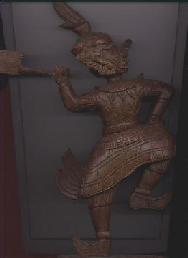 Another boring story from this 70 year old who doesn't know when to
stop.
Kirk (A proud Pony)
Another boring story from this 70 year old who doesn't know when to
stop.
Kirk (A proud Pony)
"Pony Express C-H3E Helicopters Armament 69 -70"
All this talk about armament has made me remember the armament on board the Ch-3C/E with the Pony Express helicopters. We had two pilots and two flight engineers. Each of us had a M-l6 rifle and the pilots each had a 38 pistol. We gave the engineers our M-l6s and one lay on the floor by the door with two M-l6s loaded. The other engineer stayed by the window on the port side of the Helicopter with two loaded M-l6s. When we got fired at, the two engineers would empty one M-l6 after the other and hopefully we would be out of range of what ever was firing at us. It worked on many a mission and even though we got a few holes here and there, we all returned safely from our missions in Laos. It would have been nice to have a few mini-guns, but our effort was to sneak in and sneak out before the Pathet Lao realized we were there. We dropped our teams, Hmong, Meo, or what ever before the enemy had time to react and know what we were doing. Air America fragged our missions months ahead of time, and we would look at 3-D pictures of the LZs and figure out the best way to sneak in and out. We were successful most of the time. I flew many a mission where this theory and practice was extremely successful and I am here to tell about it now. Did I bore you? Kirk
PS
Last Wednesday I wrote about the Firepower of the Ch-3C/E in the Pony Helicopters (four M-l6s and two .38 pistols) but I should have also mentioned the armor plates on the craft -- only the pilots' seats were armor plated when I arrived. We had on hand in the hangars armor plates for the nose and cockpit of the aircraft which would have been excellent protection, but the powers to be thought they were too heavy and would decrease our power. Well, we flew with out them until that mass gaggle into Laos where our Operations Officer was wounded in the thigh and a higher headquarters passenger got fragments in his eyes. That was it, and as a flight commander, I talked to the other flight commanders and we went to our Pony Boss and discussed putting the armor plates on the helicopters. Everyone agreed so we installed the armor plates there. Believe me that armor saved my butt on at least four missions and everything worked out for everyone. We also had a chest plate that we started wearing which hooked over our shoulders and was very awkward and uncomfortable but it worked for most of us. One of our commanders was so big and barreled chested that when he put his on, the pilot could hardly get the stick back far enough to come to a hover or land. (I won't mention his name, ha!) Kirk (A proud Pony)
PSS
The mission I was talking about was on 25 March l969, a joint mission between the Ponies of Udorn and the Dusties from NKP. (See the story on my page, Death of the Pony Express). Our Operations officer was Maj. Don Berger, a real helicopter pilot, and not a recip pilot who converted to helicopters like me. He was wounded in the thigh by a round that came through the floor and hit the thigh which was not protected by he armored seat. Needless to say he was not KIA as you thought. But as I said in my other emails, we convinced the powers to be, that we should put the armor plates under the cockpit even though they added a lot of weight to our helicopters. Personally, I never noticed the difference, but I felt a lot more comfortable knowing that those bad guys shooting up at me could not get to me through the floor. Many times after a mission in Laos, we landed at Udorn and were told we had some holes in the bottom of the chopper. We didn't even hear them hit. So much for armor plates, Kirk
PSSS
Our seats were metal and had small metal side strips that seemed to protect your shoulders. The chest plate we sometimes wore, if the mission called for it, was a big hunk of metal (about one half inch thick) shaped similar to a heart which covered your entire chest and stomach. It had two metal straps, one on each side of your neck, to loop over and hold it on your shoulders. You could put it under your survival jacket, but I don't think you could zip it up all the way. I can understand your putting it on the deck, as our crew chiefs no doubt did the same thing. At least after we put the armor plates under the cockpit, the pilots could survive with shots coming from below. When small arms rounds hit that armor under me it was hair raising - take a big chain and slap it across the hood of your car (ha!) and you will see and hear what I mean. I very seldom had to wear the chest plate but on some missions we expected to be fired at, especially when we were coming in for a landing or taking off, then, it was a necessity. Hope this answers your questions.
Kirk (Proud Pony Express Pilot).
Note:
Bob Arnau sent me this message to show the
difference
in the armament of the 2lst SOS
Helicopters. I flew with the 20th S.O.S which was
absorbed
by the 21st S.O.S.
"One comment, our CH-3s at NKP carried two M-60 machine guns on either side. Also we carried a grenade launcher. The M-60s were great coming out of a pickup. I truly believe the FE's spraying both sides helped keep the gomers' heads down or at least adversely effected their aim! Our pilots usually kept their M-16s next to them in a space between the side windshield and a metal brace.
About halfway through our tour, we changed our M-16's for the assault version, the AR-15. It had a shorter barrel and telescoping steel butt.
About that time, we also received a new ceramic armor vest. As the DO's exec, I was also the wing personal equipment officer. Consequently, I decided to test the three armor type vests (not including the steel plates kept in the helicopter). I took all three types out to our gunnery training area when I was checking out some FNG's. I fired an M-16 round into the flexible steel "fish scale" type of vest from about 20 yards and it went right through the vest. When I did the same with the ceramic vest, the round put a quarter sized crater into the vest but did not penetrate it. The last thing I tested was the standard flak jacket. The round went clear through and, being a tracer, it set the jacket on fire! As a result of the test, we stopped using anything other than the new ceramic armor." Bob
"l954 Annapolis Grads to the Air Force!"
Jay, yes I graduated from Annapolis and took my commission in the USAF. There were 221 of us that voluntarily went into the AF and l23 of us went directly to pilot training bases. The defense department had allowed a few to voluntary for the AF since 1949 since the AF did not have an Academy to supply them with regular officers and trained leaders. Our class was different because the Korean war was the coming of the Jet age and the AF needed a lot of Pilots, so the Secretary of Defense at the last minute authorized an increase in the number that the AF could take from my class. 26% of my class went into the AF as the AF offered promising opportunities and enticements. They allowed us to immediately enter pilot training, choice of duty in a wide array of specialty fields, and opportunity for bases of choice were pitted against duty at sea. I got my second base choice and 69 days leave with pay before I had to report to Southern Airways Flight School in Bainbridge. We were told my the AF that we would be able to participate in an exciting and special challenge, helping forge a new service, bringing with us the tradition, honor, dedication, and discipline instilled at the Academy and meld it with the fighting spirit developed in two world wars by the infant Army Air Corps. My class was also selected to go to Lowery and act as the upper class for the first AF Academy Class of plebes since the AF Academy wasn't built yet. Eleven of my classmates made it to the Generals rank, seven were rated pilots. I am known for being long winded, so forgive me, and I hope these answers your question. Kirk
"Morse Code -Radiomen?"
All this talk about
the Morse code has made me to decide
to tell my story, delete if you don't want to read it. When in Junior
High
and in the boy scouts, I tried to learn the Morse Code to earn a merit
badge, but it was hopeless at that age. When a Junior and Senior in
High
School, I was the TIGER commentator over the radio and had a fifteen
minute
program to broadcast the school news every Thursday and I participated
in Plays on Tuesday. I thought of myself as a good RADIOMAN. Well, when
I graduated in 1948, I was subject to the Draft, and, as my two older
brothers
had joined the US Navy during W.W.II, I felt I wanted to join the Navy
rather than being drafted in the Army. I went to my recruiter in Lima,
Ohio and told him about all my experience in Radio, Speeches in the
Debate
Club and assemblies, and he convinced me that I would make a good
RADIOMAN.
So, I became a Radioman Recruit in the U.S.
Navy 30
June 48 on my nineteenth birthday. After boot camp at Great Lakes, they
sent me to Norfolk, Va. to Radio school. The first day of class, I was
surprised that they expected me to learn the Morse code, but naive me,
thought, I was going to be talking over the Radio, maybe Armed Forces
Radio--was
I shocked? Well, I learned to type and the code and got pretty good at
sending messages with the key. The latter part of my class was in
Tele-type
as that was in the future. I graduated and most of my classmates were
assigned
to carriers where there were so many of them, it would be hard to get
promoted.
The ideal assignment would have been to a small ship, Destroyer,
Minelayer,
etc. as you could stand out among so few and
have
a better chance for promotion. Well, I was no dummy ;),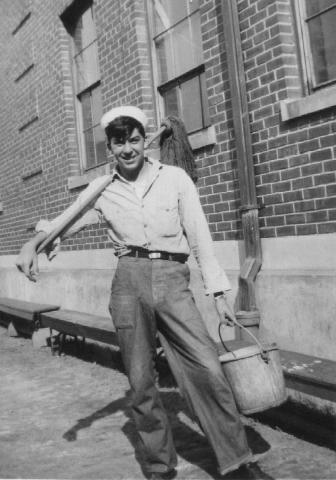 and stood in the top ten in the class, so they picked us to go to
Bainbridge
Island, Port Blakely, Washington to Communication Tech School. There
all
we did primarily was to learn the Russian Morse code, with a special
typewriter
with the extra characters on it. We listened to Russian circuits and
copied
all their messages. It was a good assignment, but the base that most of
the graduates were assigned was Adak, Alaska--close to nowhere! Anyway,
some Naval Officer convinced me and a friend to try to compete for an
assignment
to the Naval Academy Prep School. My friend and I studied together on
our
four-hour night watches; he taught me some physics, and I taught him
Algebra
and Trig. There were thirteen of us trying for the appointments at Port
Blakely, but only the two of us who were studying together made it.
After
NAPS, I got a Fleet Appointment, one of 120 to USNA. The rest is
history!
I took my commission in the USAF in June 54 and retired on July 1st,
l978.
I still remember the Morse code, but never got to practice it. Hope I
didn't
bore you Morse code fanatics. Kirk
and stood in the top ten in the class, so they picked us to go to
Bainbridge
Island, Port Blakely, Washington to Communication Tech School. There
all
we did primarily was to learn the Russian Morse code, with a special
typewriter
with the extra characters on it. We listened to Russian circuits and
copied
all their messages. It was a good assignment, but the base that most of
the graduates were assigned was Adak, Alaska--close to nowhere! Anyway,
some Naval Officer convinced me and a friend to try to compete for an
assignment
to the Naval Academy Prep School. My friend and I studied together on
our
four-hour night watches; he taught me some physics, and I taught him
Algebra
and Trig. There were thirteen of us trying for the appointments at Port
Blakely, but only the two of us who were studying together made it.
After
NAPS, I got a Fleet Appointment, one of 120 to USNA. The rest is
history!
I took my commission in the USAF in June 54 and retired on July 1st,
l978.
I still remember the Morse code, but never got to practice it. Hope I
didn't
bore you Morse code fanatics. Kirk
PS
When I wrote my email about my experience with the Morse code, I failed to mention that they sent the two of us who were going to NAPS to a Navy psychiatrist in Seattle who questioned us quite extensively. He asked me, if you were shipwrecked on a desert island with your mother and you sister, which one would you have sex with first? Hey, gang, I'm not kidding! Anyway, I responded, you got to be kidding me! He said no, give me an answer! Well, I thought a minute and finally said: My sister has a beautiful body, and my mother would do anything for me, even that, however, I think I would worry about meing and meing rather than heing and sheing at that stage of our isolation. Does that make sense? Nevertheless, I passed my psychiatrist quiz. Kirk
"C-47 Gun ships - Ha!"
Your stories have reminded me of an urge I had back in 68 as my tour as PAS at the University of Puerto Rico was coming to an end. I had heard about the C-47 gun ships and felt I would be a natural as I had over 2000 hours in the Gooney Bird of which at least l500 hours were IP time. I thought I would be assigned to the C-47 in SEA. Well, when I got my orders to go to helicopter transition school, I couldn't believe it, so I called a friend of mine at AF personnel to find out why I had been selected to go to helicopters. I told him sending me to helicopters was like teaching a child to drive a car one day and entering him the Indy speed way the next. I told him I would like to go to the C-47 gun ships instead. His reply was, you'll love the helicopters and Udorn Thailand. Besides, he said, you are only a Major and 39 years old. We save the Gun-ship slots for older Colonels not for young guys like you! Well, I am glad I was sent to helicopters and Udorn because I did enjoy both tremendously. After reading your emails and dissertation about the Puffs, I am glad I didn't get assigned to them. Things worked out for the best for me - thank goodness. Kirk (A proud Pony)
The TRAP!!
I've been reading
all this email about the Porters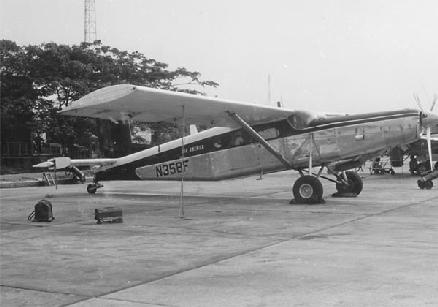 (my son informed me that it is in reality a Dornier Do-27) and even
though
I don't know anything about the airplane, I remember that usually when
the Pony Express had an exfield or infield of Hmong troops in Laos, the
Air America crew in a Porter led the way. I remember many missions that
they led us into the LZ, but the one that needs to be explained
is
the one in 69 which we later called the TRAP. The 21st SOS and the
remains
of the 20th SOS at Udorn were called upon for a massive infiltration of
Hmong troops into an area north of Pakse. I was on the mission, but my
memory is rather vague about it. We landed in a Lima site near the
Bolovens
plateau and picked up our teams of Laotian soldiers. We took off,
headed
north, to who knows where, and was led by an Air America Porter. The
Porter
had an air America pilot and a Hmong interpreter in the craft, and they
led us to the LZ. As a rule the Air America Porter pilot was supposed
to
get a colored flare and voice communication with the troops below. As
we
arrived to our destination, the AM pilot called for the predetermined
colored
flare and got it, but when the Hmong passenger in the Porter tried to
get
voice communication, no one answered. He called several times, but
there
was no reply. The Air America pilot said something was wrong with the
radio
and assured us that the place was safe as he had landed there or been
in
the area a few days before. He told us to go a head and land and drop
our
troops. The 21st SOS was leading the mission and LtCol Silva was
the Copilot on the lead helicopter. They made their approach and as
they
came into a hover to land, they were hit by many rounds of small
arms fire and crash landed on the ground without killing anyone. The
crew
and Silvajumped out of the helicopter and ran for a few ditches around
the LZ. When this
(my son informed me that it is in reality a Dornier Do-27) and even
though
I don't know anything about the airplane, I remember that usually when
the Pony Express had an exfield or infield of Hmong troops in Laos, the
Air America crew in a Porter led the way. I remember many missions that
they led us into the LZ, but the one that needs to be explained
is
the one in 69 which we later called the TRAP. The 21st SOS and the
remains
of the 20th SOS at Udorn were called upon for a massive infiltration of
Hmong troops into an area north of Pakse. I was on the mission, but my
memory is rather vague about it. We landed in a Lima site near the
Bolovens
plateau and picked up our teams of Laotian soldiers. We took off,
headed
north, to who knows where, and was led by an Air America Porter. The
Porter
had an air America pilot and a Hmong interpreter in the craft, and they
led us to the LZ. As a rule the Air America Porter pilot was supposed
to
get a colored flare and voice communication with the troops below. As
we
arrived to our destination, the AM pilot called for the predetermined
colored
flare and got it, but when the Hmong passenger in the Porter tried to
get
voice communication, no one answered. He called several times, but
there
was no reply. The Air America pilot said something was wrong with the
radio
and assured us that the place was safe as he had landed there or been
in
the area a few days before. He told us to go a head and land and drop
our
troops. The 21st SOS was leading the mission and LtCol Silva was
the Copilot on the lead helicopter. They made their approach and as
they
came into a hover to land, they were hit by many rounds of small
arms fire and crash landed on the ground without killing anyone. The
crew
and Silvajumped out of the helicopter and ran for a few ditches around
the LZ. When this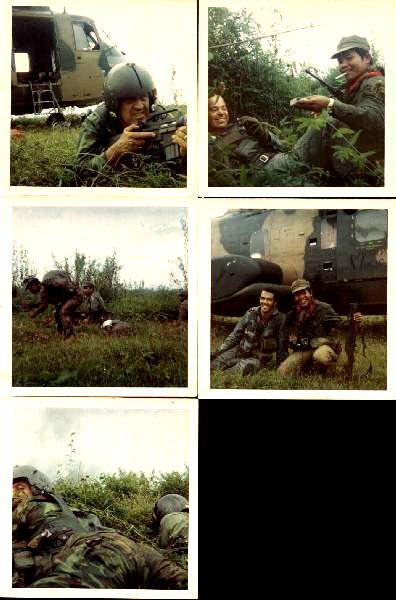 happened,
an emergency was declared and the rest of us kept circling the LZ
waiting
to drop our troops, if necessary. The A-ls shot up the area and
as
it seemed quiet, the AM pilot told us to get more troops on the ground
to help the others and perhaps better protect the area. So, the
second
helicopter tried to land with more troops. As he came into a
hover
he also received small arms fire and was forced to crash land. When
this
happened, we were told to go to a near by Lima site near the Mekong and
await further nstructions and to keeplistening on our radios to keep
track
of what was going on. This we did. On the radio we heard that Rescue
helicopters
were called in to help rescue the two downed crews and Hmong tribesmen.
Also, as it was an emergency broadcast to all in the area, I remember
hearing
that there were a few Navy fighters in the area who volunteered to come
and help. They had a few rockets or bombs that would be glad to
drop
in our area. This they did. The bombing, shooting by A-ls etc.
lasted
a long time and as darkness was approaching, it was feared that
we
could not get the crews and Hmong out before dark. The rescue
helicopters,
HH-53s arrived so they decided to drop sleeping gas?? or whatever you
call
it in the area to hopefully put the bad guys to sleep while they
rescued
the downed crews. I remember hearing that as the rescue chopper was on
the final approach, some enemy troops were running down the road trying
to escape the sprayed gas and the rescue chopper unloaded its
mini
guns and shot at any thing that moved down the road. Obviously, it
workedand
the helicopter successfully landed and picked up many of the crew
and Hmong. However, as soon as he broke ground with his load, a voice
was
heard over the radio saying in essence that they had left a
"round
eye" down there. The Pilot of the second helicopter that landed, after
the first one was crippled, was quite a ways away from the landing zone
of the first rescue helicopter. When this call was made, another rescue
helicopter was sent into the zone to pick up this other crew, so
everyone
was saved. Col. Silva was quite large in the chest, and as he lay
hidden
in a gully, his back was exposed above ground, so he ended up with a
bullet
hole in the fatty part of his back. A couple of Hmongs were wounded
also
and when it was all over just before dark, Silva and the two wounded
Hmongs
were transferred to the Udorn hospital. Those of us at the Lima site
left
out troops there and returned to Udorn and NKP when the two crews were
picked up. Of course we lost two helicopters that day assigned to the
21st
SOS at NKP, but if the Air America Pilot had stuck to the normal rule
of
a colored flare and voice communication, this fiasco would never have
happened.
The Ponies scratched many a mission when they did not get the radio
response
and the proper colored flare from the ground. Things changed pretty
fast
over there in Laos and even though the Pilot had been there a few days
before, he should have realized that it could have been a trap - as it
turned out to be!! Later that week, Col. Silva caused quite a stir as
he
and the two Hmong troops left the Udorn hospital without permission and
marched over to the BX in their bath robes to buy a few things. Ha,
ha!
That's about it for me and mostly all I remember, however, I hope Bob
Arnau
and Phil Conran will jump inhere to fill in the blanks that I missed.
Phil
was part of the mission and crewed the second helicopter that was hit
and
forced to crash land. Phil was wounded and returned to the states
shortly there after. I've asked him before to send me his
recollection
about this Trap, but nothing from him so far. I have some pictures of
Silva,
and Phil on the ground after they landed, but they take up too much
space
to send in this letter. If any of you would like to see the pictures
let
me know and I'll forward them to you. I'll eventually put this story on
my web page with all the pictures, but will wait awhile to see if Bob
or
Phil adds to the story. Kirk (A PROUD PONY)
happened,
an emergency was declared and the rest of us kept circling the LZ
waiting
to drop our troops, if necessary. The A-ls shot up the area and
as
it seemed quiet, the AM pilot told us to get more troops on the ground
to help the others and perhaps better protect the area. So, the
second
helicopter tried to land with more troops. As he came into a
hover
he also received small arms fire and was forced to crash land. When
this
happened, we were told to go to a near by Lima site near the Mekong and
await further nstructions and to keeplistening on our radios to keep
track
of what was going on. This we did. On the radio we heard that Rescue
helicopters
were called in to help rescue the two downed crews and Hmong tribesmen.
Also, as it was an emergency broadcast to all in the area, I remember
hearing
that there were a few Navy fighters in the area who volunteered to come
and help. They had a few rockets or bombs that would be glad to
drop
in our area. This they did. The bombing, shooting by A-ls etc.
lasted
a long time and as darkness was approaching, it was feared that
we
could not get the crews and Hmong out before dark. The rescue
helicopters,
HH-53s arrived so they decided to drop sleeping gas?? or whatever you
call
it in the area to hopefully put the bad guys to sleep while they
rescued
the downed crews. I remember hearing that as the rescue chopper was on
the final approach, some enemy troops were running down the road trying
to escape the sprayed gas and the rescue chopper unloaded its
mini
guns and shot at any thing that moved down the road. Obviously, it
workedand
the helicopter successfully landed and picked up many of the crew
and Hmong. However, as soon as he broke ground with his load, a voice
was
heard over the radio saying in essence that they had left a
"round
eye" down there. The Pilot of the second helicopter that landed, after
the first one was crippled, was quite a ways away from the landing zone
of the first rescue helicopter. When this call was made, another rescue
helicopter was sent into the zone to pick up this other crew, so
everyone
was saved. Col. Silva was quite large in the chest, and as he lay
hidden
in a gully, his back was exposed above ground, so he ended up with a
bullet
hole in the fatty part of his back. A couple of Hmongs were wounded
also
and when it was all over just before dark, Silva and the two wounded
Hmongs
were transferred to the Udorn hospital. Those of us at the Lima site
left
out troops there and returned to Udorn and NKP when the two crews were
picked up. Of course we lost two helicopters that day assigned to the
21st
SOS at NKP, but if the Air America Pilot had stuck to the normal rule
of
a colored flare and voice communication, this fiasco would never have
happened.
The Ponies scratched many a mission when they did not get the radio
response
and the proper colored flare from the ground. Things changed pretty
fast
over there in Laos and even though the Pilot had been there a few days
before, he should have realized that it could have been a trap - as it
turned out to be!! Later that week, Col. Silva caused quite a stir as
he
and the two Hmong troops left the Udorn hospital without permission and
marched over to the BX in their bath robes to buy a few things. Ha,
ha!
That's about it for me and mostly all I remember, however, I hope Bob
Arnau
and Phil Conran will jump inhere to fill in the blanks that I missed.
Phil
was part of the mission and crewed the second helicopter that was hit
and
forced to crash land. Phil was wounded and returned to the states
shortly there after. I've asked him before to send me his
recollection
about this Trap, but nothing from him so far. I have some pictures of
Silva,
and Phil on the ground after they landed, but they take up too much
space
to send in this letter. If any of you would like to see the pictures
let
me know and I'll forward them to you. I'll eventually put this story on
my web page with all the pictures, but will wait awhile to see if Bob
or
Phil adds to the story. Kirk (A PROUD PONY)
"The Trap's Gory Details"
I received this
information from Bob Arnau back in Feb.
but thought I had lost it when my computer went down. I just found it
and
wish that I had found it before I wrote my Trap Story.
Nevertheless,
I am sending it to all of you to add the gory details of that fiasco in
Oct. 69.
Kirk (A proud Pony)
Bob, Were you
on the mission in southern Laos where
we were infiltrating a Hmong force of great size but Air America got
the
flarebut not the radio contact and told us to land. Silva
was
the first bird that went down but he got hit . They jumped out of
the craft and headed for the gullies and ruts. Silva was so fat
that
he stuck out and got shot in the fatty part of his back. He and
two
Hmong were treated
at Udorn later. I was on that mission but we had
to abort and land at another site. We listened on HF and heard
all
the details. I'm interested in the details of that mission if you
know them.. Let me
know..... Kirk
Kirk,
I was not on the mission but in the DCO's office where
I worked when the report came in. I went to the SAR command post
with my boss Jerry Ransom, the DCO, and spent the rest of the day there
throughout
the entire rescue effort. Phil Conran was shot
down on the Bolovens Plateau in a helicopter
trap set by a large force of North Vietnamese in
October
69. This was one of the 7th/13th AF/DOSA missions that we flew in
support of the war in the Laotian panhandle. I was in the SAR
center
in the command post throughout that day with the DCO. Eight CH-3
crewmembers, including Phil, with the 50 Laotian troops they were
inserting
werepinned down in a small depression in an open area. (The lead
helicopter
was on the ground and the second just about to touchdown when the
NV opened fire.) The A-1's provided support but the NV were well dug
in.
Several attempts were made throughout a very long day by HH-53 Jollys
to
pick them up but each time the Jolly's had to abort with battle
damage
(several badly damaged HH-53's landed at NKP). Finally at dusk,
the
wind dropped off and the A-1's delivered "Peanuts"(the
debilitating
gas that CNN "Tailwind" confused with nerve gas!) which
allowed
two
HH-53's to make the pickup. Six of our crew members and
49 Laotians got on the first Jolly leaving two lonly crew members
on the ground. However, # 2 was right behind and they got
on
that. One Laotian had been killed but everyone else got out. Phil
took a round through his thigh early in the day when he returned to the
helicopter under fire to recover an M-60 to assist in their
defense.
Despite his wound
he did recover the machine gun. (Phil was
recommended
for the Medal of Honor and I believe received the Air Force Cross for
his
actions in recovering the machine gun and leading their defense that
day
even
after being wounded.) Ted Silva, the squadron
commander,
received a deep crease in his back from a round. (Everyone said that if
he hadn't been so overweight the round would have missed him!) As
I recall, several Laotians were also wounded. I met the recovery
helicopters on the flight line and went with
Phil to the infirmary. I recall taking his
bloodstained
flying suit back to the hooch and threw it into his room. Two days
later
I remembered it (he didn't have a roommate at the time) and threw it
into the washer. Much to my surprise, the bloodstains
and mud came out. I suspect that Phil still has that flying suit
with the holes in the leg! This incident and the fact that Phil
was
nominated for the Medal
of Honor is mentioned in the Air Force book on Tactical
Airlift that I previously told you about. One
thing that I also remember about that day in the SAR
Center. The personnel folks prepared missing in action (MIA)
messages
on our eight crew members and stated that they were supposed to be sent
to AF
HQ after personnel were downed and not recovered within
2 hours. My boss, Col. Ransom, and the Wing Comdr., Col. Crosby,
told them "Not no, but HELL no!! Throughout the long day, the personnel
folks kept telling the Comdr. that the messages had to be sent.
Thank
God he had the wisdom not to comply with the regulations or eight wives
would have been notified during that day that their husbands were MIA!
"
Kirk, after the
mission, Intel determined that the helicopter
trap had been sprung by a company sized group of North Vietnamese
regulars.
Our 7/13 DOSA and the CIA guys really screwed up on planning this
mission.
were shot down on the second or third straight day that this large FGU
had been infilled to the same spot!! Apparently, they assumed
that
there were a few Gomers around but that they would not wish to tangle
with
a large FGU! We came close to losing all eight of our
guys. The gomers were well dug in and were able to survive the
continuing
air strikes on them. However, every time the Jollys went in, they
would pop up and raise hell with their automatic
weapons.
If the wind had not finally died down at sunset so we could use the
gas,
I don't think they could have survived the night. After the
rescue
was made,
our aircraft destroyed the two CH-3Es. The end!
"Evacuation of Mong Soui -Conversation between Bob and Kirk"
Kirk: Bob, my
memory is rather vague, but as I remember
it, we were called up to 20A and waited in the Ravens shack while
Ambassador
Sullivan and Vang Pao kept looking at the situation at MS.
Finally,
they decided that everything would be all right for the night and set
up
bunks etc. showed Pillow Talk (?), Doris Day etc. and fed us. Remember
the poster over the kitchen counter, a big bruiser with clasped hands
holding
a bunch of crap, shouting THIS IS SHI- !! As I remember, we spent the
night
there and the next morning we waited and waited until finally they let
us go home to Udorn. Early the next morning they called us back in an
emergency
situation and even though the weather was bad and all hell was breaking
lose we had to get the Thai's out of there. After we got them out they
told us to stand by and that's what I was doing when you took my
picture.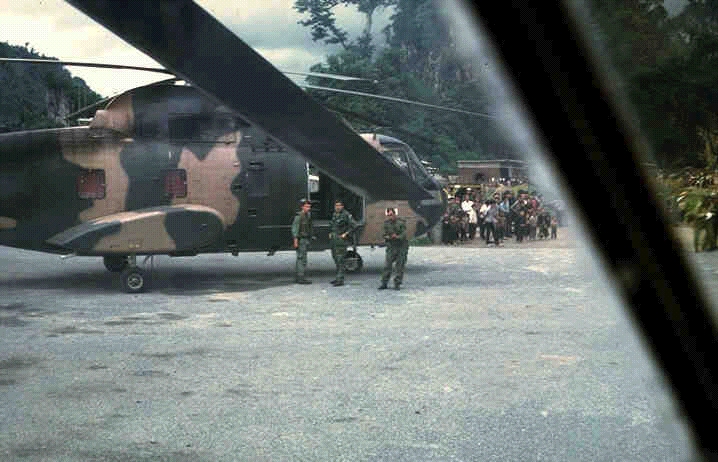 They sent a couple back to MS to pick up the round eyes still there and
told us to stand by to go back and get some of Vang Pao's troops. But
after
the helicopters picked up the round eyes, mortars started hitting the
airfield,
and we were told that Pao's troops had gone to the hills to escape,
They sent a couple back to MS to pick up the round eyes still there and
told us to stand by to go back and get some of Vang Pao's troops. But
after
the helicopters picked up the round eyes, mortars started hitting the
airfield,
and we were told that Pao's troops had gone to the hills to escape,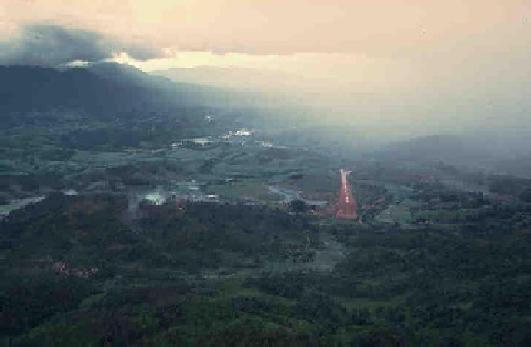 and therefore, we didn't have to go back --thank God! Is this the way
you
remember it? Is my memory fading after 30 years of not thinking about
it?
(Kirk)
and therefore, we didn't have to go back --thank God! Is this the way
you
remember it? Is my memory fading after 30 years of not thinking about
it?
(Kirk)
Bob: Kirk, Your e-mail came in after I had left the computer and I have been absent from it for a couple of days. I am including your entire message in this reply as I am cc'ing this to other members of the 21st and they did not receive your original message. John Holt flew in the mission and J.D. Adams was one of the FE's on board the 21st CH-3E that was shot down. They may have additional recollections of that day. As I recall, those of us from the 21st were not there earlier like you Ponies. At least, I wasn't. We got the word the previous evening to launch at first light. My memory agrees with you that the weather was lousy. I recall that we arrived in the vicinity of Long Tieng above an under cast, found a hole to go down through and then followed a valley and went over a ridge line to get into the base. I remember seeing the Ambassador, Air Attaché and Vang Pao in discussions during our long wait that morning. I also recall that part of the time we waited at the Raven building.
Some of my other remembrances: We had not been there long when I heard nearby machine gun fire. It was my first time at 20A and I thought we must be under attack. I was greatly relieved when told that it was just one of the soldiers in the guard tower near the runway clearing everyone off the runway for a landing aircraft! Apparently, firing a short burst from the machine gun was their normal signal for folks to clear!
You Ponies had one of your Huey's from Vietnam with you. Apparently, since this was an all out effort, the Huey was also pressed into service. I remember this well because one of the Huey pilots was a fellow co-pilot from my B-47 wing at Homestead. (I believe it was Billy Bunn but could have been Charlie Dancer.) It took part in the evacuation.
Besides the 20th and 21st SOS, I was surprised that the Jolly's also contributed a couple of helicopters. This really surprised us as the Jolly's were strictly dedicated to SAR's by the AF and never got involved in Special Operations. It must have taken some high level push to get them involved!
I believe the Ambassador, Air Attaché and Vang Pao were hoping to leave the Thai artillery unit in Moung Soui. They felt that with the large number of "Neutralist" infantry troops with them (I seem to recall that there were nearly 1,000 of these) and with close air support they could hold Moung Soui. (Remember that besides Vang Pao's Hmongs, the Laos Army consisted of Royalist and Neutralist factions. Apparently, the "Neutralists" did not have the same will to fight displayed by the Hmongs.) As the weather got even worse, air strikes became impossible and when the North Vietnamese tanks started arriving, all of the "Neutralist" troops "booked" leaving the Thai artillery and American advisors on their own with no infantry support. That was when the decision was made to evacuate using all available helicopters, (including Air America). I recall that NVA mortar fire had already started falling on Moung Soui before we arrived. (Roger Warner's "Back Fire" has a good summary of the Moung Soui evacuation and seems to support my recollections.)
I remember how
impressed we were with the discipline of
the Thai's. Even though under fire, they stayed in ranks and loaded
only
when told to do so. When Bill Knapp and I "fell" into the flooded rice
paddy,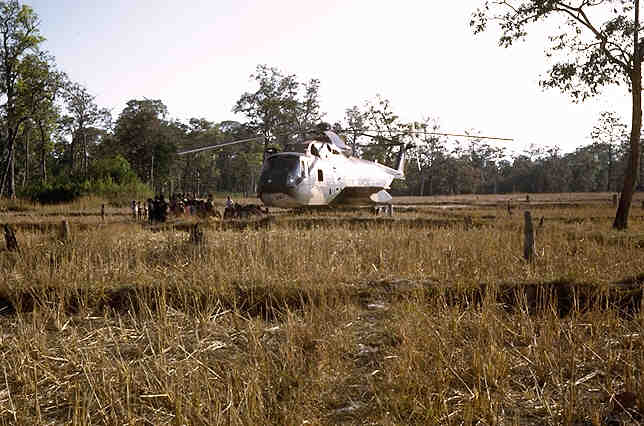 I motioned to the
Thai
NCO to off load 3 or 4 people. He pointed to those closest to the door
and without hesitation they immediately jumped into the water and
started
wading back to the HLZ. Very impressive! They were damn fine soldiers!
I motioned to the
Thai
NCO to off load 3 or 4 people. He pointed to those closest to the door
and without hesitation they immediately jumped into the water and
started
wading back to the HLZ. Very impressive! They were damn fine soldiers!
Majors Henery and
Mattos were flying the 21st CH-3 that
was shot down in the same rice paddy. (J.D. Adams was one of the FE's.)
I believe I sent you the picture I took of Henery and Mattos just after
they got back to 20A.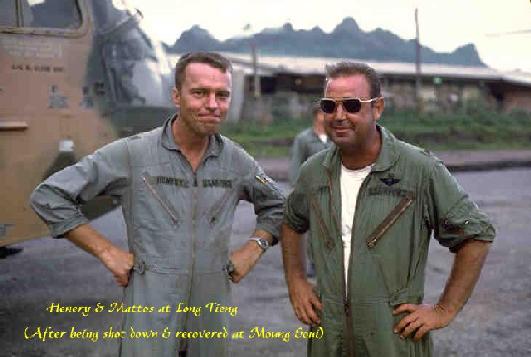 Henery told me that he couldn't understand why he was having so much
trouble
wading through the rice paddy back toward the HLZ until he realized he
still had his parachute on! (Several months later, I was flying over
Moung
Soui and saw the destroyed CH-3 in the then dry rice paddy.) It was
Henery's
second time being shot down, so his tour was cur tailed by a month or
two.
He was quite fortunate to have escaped both relatively unscathed! His
first
shoot down was near the trail on a sensor drop. The controls were
totally
shot out and the helicopter elected to do a loop and flared slightly
just
before impact. A couple of the crew was injured, but all were picked up
by Knife 52, the number 2 bird. John Holt was also shot down on a
sensor
drop near the trail. Glad that our squadron ceased performing that
lousy
mission before my arrival! However, it was replaced with Prairie Fire !!
Henery told me that he couldn't understand why he was having so much
trouble
wading through the rice paddy back toward the HLZ until he realized he
still had his parachute on! (Several months later, I was flying over
Moung
Soui and saw the destroyed CH-3 in the then dry rice paddy.) It was
Henery's
second time being shot down, so his tour was cur tailed by a month or
two.
He was quite fortunate to have escaped both relatively unscathed! His
first
shoot down was near the trail on a sensor drop. The controls were
totally
shot out and the helicopter elected to do a loop and flared slightly
just
before impact. A couple of the crew was injured, but all were picked up
by Knife 52, the number 2 bird. John Holt was also shot down on a
sensor
drop near the trail. Glad that our squadron ceased performing that
lousy
mission before my arrival! However, it was replaced with Prairie Fire !!
Again, this is my recollection; after, we picked up the Thai's, the neutralist troops reappeared at Moung Soui seeking evacuation. The decision was made that the area was too hot by then and they would just have to disappear again! Which they apparently did with great haste!
A day or two following our evacuation of the approximately 400 Thai troops, The Bangkok Post published a front page article that stated that the rumors that Thai troops were involved in fighting in Laos had been thoroughly investigated and proved to be totally false. (Bob)
Buddha, Buddha, Buddha!!
I was looking
through a few drawers the other day and
found a little bronze statute and suddenly remembered where I got it
and
what it meant to me when I was over in Udorn flying hazardous Pony
missions. One morning bright and early, I woke up when
my alarm went off in my nice little bungalow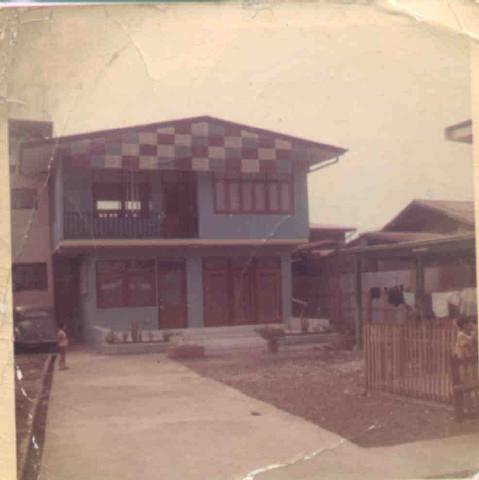 in down town Udorn. I was scheduled for a mission in Laos and had to
get
up and get to the base for the second briefing. I showered, brushed my
teeth, had a quick cup of coffee, got dressed in my flight suit, left
the
house, and went outside my gate and hailed a taxi. It was dark, but the
street light allowed me to see around me. The cab arrived and I got in
the back seat, leaned back, and put my left arm on the door since the
window
was opened. I told the driver to take me to the Udorn RTAFB main gate,
but all of a sudden, I got a terrible ache in my left arm, like some
one
was driving nails in my flesh. I looked out the window and saw this
little
old lady, dressed in black, cape and all, with a funny looking black
hat.
I immediately thought she looked like the wicked old witch in Snow
White.
She was grasping my left arm with her hand and shaking her right hand
back
and forth. I faintly heard a jingle when she shook her hand. I tried to
pull away but she held on tightly. I said what the hell do you want and
why won't you let go of my arm, woman? She said, hey, GI, you number
one
fly boy, chai? Today, you go Laos or VietNam, Chai? Well, let me tell
you,
when you get there, the V.C. bad guys go BOOM! BOOM! BOOM! and you
(twirling
her hands as though I was in a spin) will go to the ground and
die!!
You, fly boy, will not come back to Udorn Thani!! She kept shaking her
hand and I could still hear the jingle. I asked the taxi driver to tell
this witch to let go of my arm and to get me out of here fast. But, she
kept mumbling and saying you no come back to Udorn Thani! You no
come back to your number one bungalow!! What does she want I asked the
driver? Is she trying to put a curse on me? He spoke a few Thai
words
with her and then told me, she wanted to sell me a Buddha to protect me
on my flights and assure that I return to my number one Bungalow and
Udorn
Thani. What in the world is she talking about, selling me a Buddha,
where
is it, how much does she want for it? He spoke to her again and
she
said one hundred baht (five dollars). I don't carry that kind of money
on me when I have to fly a mission, I said. All I have is a
couple
of dollars with me. He told her I would give her twenty baht as that is
all I had at this time. She mumbled a bit but agreed to it and let go
of
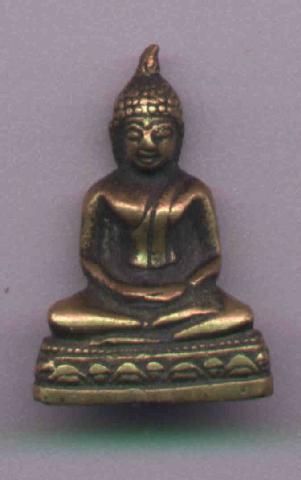
my arm and opened her hand and gave me this little Buddha . It had a
round
piece like a BB inside of it for as she shook it, it jingled. She said
look, number one fly boy, you put Buddha in your pocket near your heart
every time you go across the Mekong to Laos or Vietnam. As you cross
the
river you pat Buddha three times and say, Buddha! Buddha! Buddha!, and
he will see you safely back to Udorn Thani and to your number one
bungalow.
She left then, and the driver took me to the base. As I crossed the
Mekong
that day, I remembered what she said and patted my pocket and the
Buddha
three times and said Buddha! Buddha! Buddha! Well, believe it or not, I
kept that little statute of Buddha in my left upper flying suit pocket
on every mission and every time I crossed the Mekong into Laos, I
patted
it three times and mumbled Buddha, Buddha, Buddha. I had some
close
calls but I always managed to get through the missions and get back to
my number one bungalow in Udorn. Suspicious, ME, of course not,
but
I learned many years ago, when in Rome, do as the Romans do! So, when
in
Buddha Land, do as the Buddhist do! Who knows, maybe that little
trinket helps me get through all my missions after that and brought me
safely back home!!! See the little Buddha trinket attached and remember
it is only one and one half inches high, and one inch wide.
Another
long and winded story from this almost 71 year old (June 30th) but I
enjoyed
sharing it with my brothers and sisters in the TLCB. KIRK
in down town Udorn. I was scheduled for a mission in Laos and had to
get
up and get to the base for the second briefing. I showered, brushed my
teeth, had a quick cup of coffee, got dressed in my flight suit, left
the
house, and went outside my gate and hailed a taxi. It was dark, but the
street light allowed me to see around me. The cab arrived and I got in
the back seat, leaned back, and put my left arm on the door since the
window
was opened. I told the driver to take me to the Udorn RTAFB main gate,
but all of a sudden, I got a terrible ache in my left arm, like some
one
was driving nails in my flesh. I looked out the window and saw this
little
old lady, dressed in black, cape and all, with a funny looking black
hat.
I immediately thought she looked like the wicked old witch in Snow
White.
She was grasping my left arm with her hand and shaking her right hand
back
and forth. I faintly heard a jingle when she shook her hand. I tried to
pull away but she held on tightly. I said what the hell do you want and
why won't you let go of my arm, woman? She said, hey, GI, you number
one
fly boy, chai? Today, you go Laos or VietNam, Chai? Well, let me tell
you,
when you get there, the V.C. bad guys go BOOM! BOOM! BOOM! and you
(twirling
her hands as though I was in a spin) will go to the ground and
die!!
You, fly boy, will not come back to Udorn Thani!! She kept shaking her
hand and I could still hear the jingle. I asked the taxi driver to tell
this witch to let go of my arm and to get me out of here fast. But, she
kept mumbling and saying you no come back to Udorn Thani! You no
come back to your number one bungalow!! What does she want I asked the
driver? Is she trying to put a curse on me? He spoke a few Thai
words
with her and then told me, she wanted to sell me a Buddha to protect me
on my flights and assure that I return to my number one Bungalow and
Udorn
Thani. What in the world is she talking about, selling me a Buddha,
where
is it, how much does she want for it? He spoke to her again and
she
said one hundred baht (five dollars). I don't carry that kind of money
on me when I have to fly a mission, I said. All I have is a
couple
of dollars with me. He told her I would give her twenty baht as that is
all I had at this time. She mumbled a bit but agreed to it and let go
of
my arm and opened her hand and gave me this little Buddha . It had a
round
piece like a BB inside of it for as she shook it, it jingled. She said
look, number one fly boy, you put Buddha in your pocket near your heart
every time you go across the Mekong to Laos or Vietnam. As you cross
the
river you pat Buddha three times and say, Buddha! Buddha! Buddha!, and
he will see you safely back to Udorn Thani and to your number one
bungalow.
She left then, and the driver took me to the base. As I crossed the
Mekong
that day, I remembered what she said and patted my pocket and the
Buddha
three times and said Buddha! Buddha! Buddha! Well, believe it or not, I
kept that little statute of Buddha in my left upper flying suit pocket
on every mission and every time I crossed the Mekong into Laos, I
patted
it three times and mumbled Buddha, Buddha, Buddha. I had some
close
calls but I always managed to get through the missions and get back to
my number one bungalow in Udorn. Suspicious, ME, of course not,
but
I learned many years ago, when in Rome, do as the Romans do! So, when
in
Buddha Land, do as the Buddhist do! Who knows, maybe that little
trinket helps me get through all my missions after that and brought me
safely back home!!! See the little Buddha trinket attached and remember
it is only one and one half inches high, and one inch wide.
Another
long and winded story from this almost 71 year old (June 30th) but I
enjoyed
sharing it with my brothers and sisters in the TLCB. KIRK
Emergency Mission! Lao Soldier with Appendicitis!
Every once a while,
a thought comes to you that you had
forgotten in the days of the lost cause in Laos, the secret war, and it
comes to you some how or the other. I remember mission I was called
upon
to complete in Southern Laos in late l969 where a young Laotian
soldier,
Hmong, or whatever, was stricken with appendicitis and needed an
immediate
evacuation from some remote karst site in southern Laos, near the
Bolivian
plateau. They called upon me as I was very familiar without the area,
so
I flew my trusty Ch-3E down there to pick him up and take him to a spot
where he could be transported to a hospital. When I arrived over the
LZ,
it was completely socked in with a big overcast in the area. I circled
the LZ two or three times but but there was no way that I could land
and
pick up my passenger. I left and went
back to Udorn. The next day they scheduled me again to
go down there and see if I could get him out. The same thing happened,
I circled the LZ but was not able to find an opening to get to him.
Well,
the next day the weather cleared and another crew was able to get him
out
and take him to the hospital for his operation. He told the crew
and the hospital personnel that he had heard me two days in a row
trying
to get to him and he was encouraged, knowing that his Air Force, his
transportation,
was trying to save him. While he was waiting, he constantly carved a
wooden
model of his Air Force Ch-3E, the ones who put him there and the ones
he
knew would come to his aid and same him. I wish I had a model of his
carvings,
but I don't, maybe they looked a little like this. Kirk
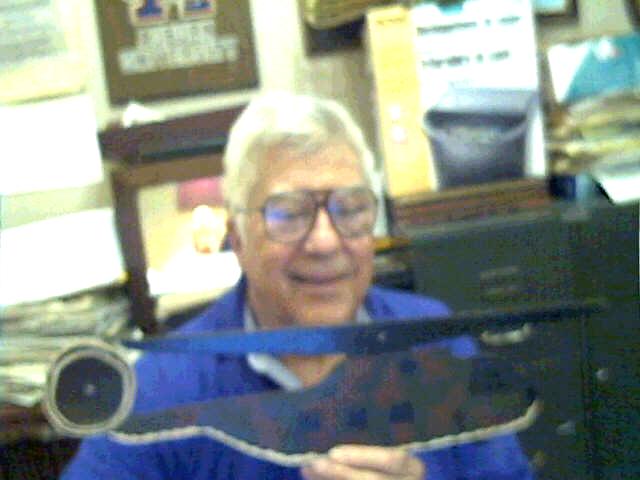
The Fall of Vietnam in 1975
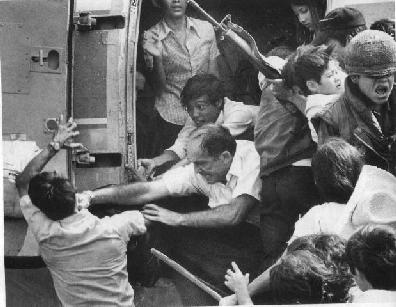
I spent a year in Thailand, flying
missions in Laos to help the Vietnam war! But, while I was at Maxwell
in
1975, the fall of Vietnam came over the TV and as I saw all the
helicopters
landing on the roofs and the people trying to get through the
gates,
I became extremely mad and took a brush and some oil paints and tried
to
express my feelings about the deaths and murder that was about to
happen. I painted a little in those days, but never knew what I
was
trying to show on the canvas. Look at this picture that I painted that
day and see if you can see the death, devils, murdered children,
evil spirits etc that my inner mind and heart was trying to depict. The
real painting is about a twenty-two by twenty eight and hangs in
my den. Naturally, if you don't want to play this game, delete, and
tell
me it should not have been put on the mission list. But, had I not
served
as a Pony and spent a year trying to help the CIA and Air America, and
Vang Pao in Laos, I would never have felt the way I did when the
politicians
lost the war and retreated from Saigon like they did to shame our
nation
and our military whose hands were tied throughout the
War in Vietnam!!!! Kirk