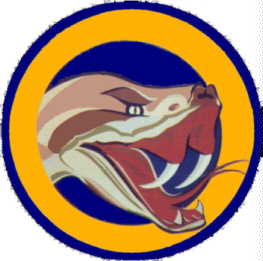
The Bushmasters

On April 1, 1931, another 78th Squadron was assigned to the 20th Pursuit Group and attached to the 6th Composite Group. It was then activated at France Field in the Panama Canal Zone without any aircraft. The 78th moved within the Canal Zone to Albrook Field on Oct. 15, 1932, and began operating P-12 aircraft. The squadron was then assigned to the 3rd Attack Wing, but remained attached to the 6th Composite Group. However, the 78th was reassigned to the 16th Pursuit Group that December and remained in the Canal Zone. The War Department, realizing the existence of another 78th squadron, reconstituted and consolidated the squadrons on April 25, 1933. The squadron, unequipped with aircraft for nearly a year, was inactivated Sept. 1, 1937.
The squadron was redesignated the 78th Pursuit Squadron (Interceptor) and reactivated Feb. 1, 1940, at Wheeler Field, Territory of Hawaii. The 78th, now assigned to the 18th Pursuit Group, began flying operations with P-26 and P-36 aircraft, obtaining its people from the 18th. The squadron also participated in the Hawaiian Department maneuvers in June 1940. The 78th temporarily moved to Bellows Field for gunnery training in October 1941, returning to Wheeler Field a month prior to the Japanese attack on Pearl Harbor. The 78ths newly acquired P-40s were destroyed or damaged on the ground in the surprise attack on Dec. 7, 1941. By the next morning the squadron's maintainers had made four P-40s available for patrol duties. The squadron moved to Kaneohe Naval Air Station two days later as part of the defense-dispersal and to provide a smoother landing field while preparing for the arrival of 12 newly-received P-39s.
After the declaration of war, the squadron's principal mission was to train pilots for other combat units in the Pacific Theater. A ground echelon sailed from Honolulu on Jan. 12, 1943, to prepare for the arrival of the aircraft and pilots on Midway Island. The 78th's pilots then flew non-stop 1,100 nautical miles from Barking Sands, Kauai, to Midway, replacing the 73rd Squadron that was on patrol duty. The squadron continued to provide aerial defense for Midway until April 1943, when it returned to the Territory of Hawaii and was reassigned to the 15th Fighter Group.
Over the next 18 months the 78th moved to five bases throughout the Territory of Hawaii, finally arriving at Bellows Field on June 8, 1944. During that time the squadron converted to P-47s and began training for extreme long-range escort missions. That program continued through 1944 and was marked by the 78th's conversion to the P-51 Mustang at the end of the year. During 1944, members of the 78th awaited transfer to a combat theater. A move in September 1944, was cancelled, however, new orders sent the squadron into combat with the 15th Fighter Group in January 1945. The first section of the squadron's ground echelon arrived at Iwo Jima on Feb. 19, during the invasion landings on the island. After the island was secured March 2, the first echelon disembarked and set up camp. The second ground echelon arrived three days later and were followed by the aircraft on March 8. The remaining squadron members arrived five days later. Almost immediately the squadron began flying combat patrol missions in support of the Marines on Iwo Jima. By the end of the month the squadron had begun flying missions against enemy airfields and other installations on islands in the Bonin Group.
On April 7, 1945, the 78th, along with other components of the 15th Fighter Group, flew their first escort missions to Japan, earning a Distinguished Unit Citation for escorting the B-29s that bombed the Masashino Plant aircraft factory at Nakajima near Tokyo. During the remaining months of the war the squadron flew fighter sweeps against Japanese airfields and escorted B-29s on long-range strikes. The squadron remained on Iwo Jima until Nov. 25, 1945, at which time it returned, without people or equipment, to Bellows Field. The squadron absorbed the people and equipment of the 468th Fighter Squadron. The 78th moved to Wheeler Field Feb. 6, 1946, and inactivated nine months later on Oct. 15, 1946.
Squadron decorations and campaign streamers include the Distinguished Unit Citation; and Central Pacific, Air Offensive Japan and air Combat Asiatic-Pacific Theater Campaign Streamers.