ZHONG QIU JIE ������ڣ�
Zhong
Qiu Jie falls on the 15th day of the eighth lunar month. It is an occasion for
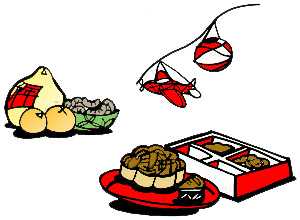
family members to get together over mooncakes, fruits and fine tea and have "moon
appreciation" (����) sessions. With its association with mooncakes and
lanterns, Zhong Qiu Jie is also called Mooncake Festival or Lantern Festival other then
Mid-Autumn Festival.
ORIGIN
It
probably began as a harvest festival where Chinese agrarian communities celebrate and
rejoice over their harvest.
The legend of Chang-E (����) and Hou Yi (����) goes like this: the earth once had
ten suns circling it, each taking its turn to bring light and warmth to earth.
However, one day all ten suns appeared together. The heat was so scorching and
unbearable. A strong archer named Hou Yi came out and succeeded in shooting down
nine suns. He was later made the emperor but after that he became a tyrant.
He wanted the elixir of life so that he can continue to rule forever. In order to
save the people from his tyranny, his wife Chang-E stole the elixir and comsumed it
herself. She then floated to the moon taking along her pet rabbit with her.
Hence started the legend of the lady in the moon with her Jade Rabbit.
Zhong Qiu Jie was given new meaning during the 14th century when Zhu Yuan Zhang
(��Ԫ��) plotted against the Yuan dynasty started by the Mongolians. The
rebels hid their messages in the mooncakes. Zhu eventually succeeded in
overthrowing the Mongolian rule and became the first emperor of the Ming dynasty.
Although Han rule was taken over by the Manchus in the 17th century (Qing dynasty), Zhong
Qiu Jie continues to be a commemoration of the overthrow of the Mongolians by Han people.
CELEBRATION
Zhong
Qiu Jie is quite extensively celebrated in Singapore. Mooncakes and lanterns are put
up for sale as early as a month before the festival.
People buy mooncakes not only for personal consumption, but also as offerings to ancestors
and gifts to senior relatives. The pomelo fruit is another of the popular gift to go
along with the mooncakes. The Cantonese name for pomelo is "yow" which has
the same meaning as "have".
Children are happy because they have mooncakes and pomelo to eat and also have lanterns to
play with. For the adults, they take part in lantern-making competitions and
exhibitions. Traditional games such as "deng mi" (lantern puzzle /
�µ���) whereby verses of puzzles are hung on lanterns for people to solve.