
 |
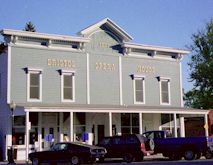
Over its more than 100 years of history, the Bristol Opera House has played many roles. |
| Completed in 1897 by Cyrus Mosier, who was also the owner and publisher of the local newspaper, The Bristol Banner, the building has been everything from a music hall theatre to a skating rink to a storage site. | |
| In July of 1892, Cyrus contracted out the building of the east half of the building, which was to house the post office and a stationery store. The basement had adequate room for storage and for a barber shop. On the third floor was offices, with back rooms planned for lodge meetings. In 1896, Cyrus's son, Horace, built the west half which included the opera house and club rooms. | |
| Mr. Mosier wanted to make an impact on the community with his new theatre and attract touring shows that would bring entertainment and enlightenment to the citizens of Bristol. But with relatively few seats, the revenue from a small town like Bristol wasn't enough to attract the best acts. Less important shows, or traveling entertainers who were glad for any work at all, were easier to entice to make a stop here. | |
| On opening night in 1897, a stirring rendition of the U.S.S. Pinafore played to a packed house, but the prices of later travelling attractions that topped twenty-five cents, proved to be less affordable for the local citizens. Mr. Mosier did not take defeat easily. He continued to book acts to fill the engagements he advertised in his newspaper. Of course, he shamelessly promoted his own theatre in his own newspaper. And why not? He was bringing culture to the community. | |
| Medicine shows were easier to book than first line entertainment. They sold their health products as well as tickets and were more likely to come away with a profit for the trip. During the season of 1906-07, The Opera House placed host to the Vita Wonder Medical Co., which according to the advance publicity in the Banner, was a "high class spectacular, devoid of vulgarity and which especially caters to ladies and children." Among the other shows that played Bristol, some more than once, were the Clifton Remedy Company, the Sharpsteen Medical Co., and the Arion Company, best known for its opening night performance in 1897. | |
| As an live theatre, the house fell into disuse, and by 1915, sincethe era of silent movies had come, the theatre began shows on Saturday night or Sunday, costing just ten cents. By 1917, a metal movie booth was installed to protect the theatre from the threat of fire from the volatile film itself. and the interior of the house was remodeled to better accommodate the showing of films. But the coming of the horseless carriage made it possible for local people to drive to bigger cities for their entertainment, and the movies were discontinued. | |
| During the 20's, numerous other activities took place there, including using it for roller skating and as a basketball court. Through the 1930's, local groups used it as a meeting place or for political rallies, but by 1940, the condition had deteriorated to a point that it was only suitable for storage. | |
| In 1960, it was scheduled to be torn down and sold. Instead, it was leased to the Elkhart Civic Theatre, a local amateur group. Since 1947, the Civic Theatre had been sponsored by the Elkhart City Park Department. They held their productions on the stage of the Elkhart YWCA gym. But the small stage had to be extended for every production, and by the time a set was built, there could only be a few rehearsals before opening night. Then everything had to be taken away after the production ran, since there was no place for storage or workshops. | |
| The use of the Opera House seemed like a dream - and nearly became a nightmare for the group. The prospect of permanent quarters was thrilling, but the realities of the gigantic amount of work required coupled with an anonymous letter to the authorities declaring the building a fire trap, threatened to turn hopes to disappointment. | |
| But the members persevered. The two-year lease included an option to buy, and the group attained a tax exempt status and began to raise funds. With as lofty a dream as old Cyrus Mosier, the group declared their goal of creating "a cultural center for the visual and performing arts of Elkhart County." On what was billed the coldest day of the year, the warmly dressed crew waded into the sixty-five year old sea of debris and began to work the magic. | |
| The $5,000 needed for renovation was raised, the fire trap issue was settled, and the group concentrated on modernizing the building while changing the appearance as little as possible. Updated service like electricity, plumbing and heat were the main concerns, as well as assuring the safety and comfort of the performers and the audience. The front of the building became the lobby and restroom facilities. | |
| The whole community became intrigued at the transformation going on, and help came from many quarters, including the renovation of the old chandelier by the Bristol Fire Chief and his employees at the Bristol Band Instrument Co. In July of 1961, during the Homecoming Celebration, the Bristol opera house presented its first production to an enthusiastic crowd. | |
| Over the years, the theatre has endured. The membership has continued to grow, as star struck young and old alike have joined together to experience the joy of performing and working at the many other tasks that producing the productions require. | |
| Fund raising for various improvements have been successful, and as the 1999 season begins, the Elkhart Civic Theatre will celebrate its 38th season at the Bristol Opera House. Plans are already underway for recognition of its 40th in 2001. | |
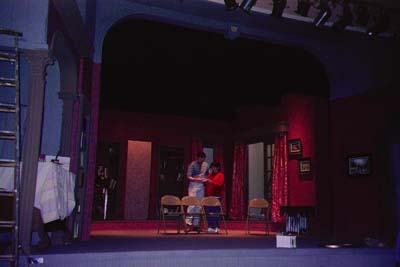 |
Testing the lighting on a Saturday afternoon, the crew makes ready for its latest production. |
For information on the current schedule, or for reservations, call 219-848-4116 on Monday through Friday from 3-7 PM. |
 |