
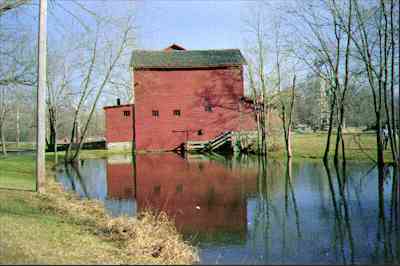
| The Bonneyville Mill, a silent sentinel to the passage of the years, stands on the banks of the Little Elkhart River, about three miles East of the town of Bristol. It is the oldest continuously operating grist mill in the state of Indiana, and it was through the efforts of Mrs. Chauncey Baldwin, a local advocate for historical preservation, who spearheaded the campaign to save the mill in the late 1960's. |
| In 1835, Edward Bonney brought his bride here from New York City. He bought 110 acres of land, on which he built the mill, in partnership with Nathan Whipple. It is said that over 100 farmers assisted in the construction, anxious to have a facility to convert their grain to flour. A saw mill was also built, but burned a short time later. | 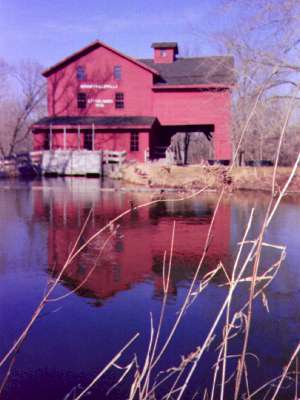 |
| Born on August 24, 1807 in New York, Edward Bonney was also known for his famous exploits and rumored to have been wily, if not downright dishonest in some of his business practices. After running the mill for a few years, he was arrested for counterfeiting in 1842. While he was being taken to Indianapolis for arraignment, he escaped. He went to Nauvoo, Illinois and is said to have joined with a robber gang. By May of 1844, he had sent for his family and sold the mill. At the ripe old age of 37, he began a new life. |
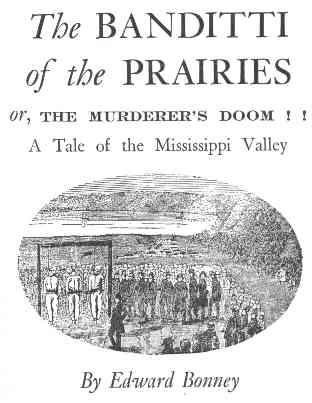 |
To record his adventures among the Mormons and the various criminal elements of the region, in 1850, he wrote a book, The Murderers' Doom, - a Tale of the Mississippi Valley," which became a best seller in Chicago. It is still considered to be a classic of life about the Mid-Western frontier days. |
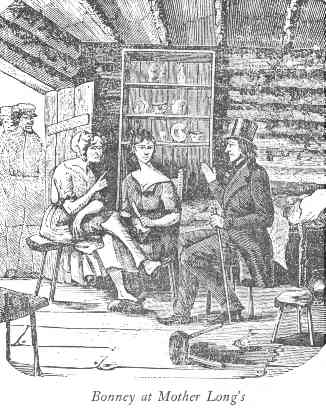
| In this illustration from his book,
Bonney, on the trail of suspected murderers is shown appealing to a family linked to the Banditti of the Prairies to aid him in his search, while not revealing his true motives. |
 |
| Bonney died in 1864, and is said to have been buried in the Bonneyville Cemetery, though no trace remains of the grave. When the Bonney farm house was torn down in 1900 by subsequent owners, the Daily family, it is reported that three counterfeit coins were found hidden in the wall. The coins were dated 1825 and had 13 stars and were marked as fifty cents. Another story goes that a tunnel ran from Bonney's house to the Elkhart River where there was a cave where he kept the cache of his counterfeiting materials. A legend, perhaps, but in the realm of possibility, especially considering his later arrest on that charge. |
| Edward Bonney's dreams of development of Bonneyville into a thriving city never materialized, as the advent of the railroads brought the cancellation of the plans for a local canal system begun with the Erie Canal. Some of those who helped to build the mill had come to the community after working on the Erie project. Some stayed once the mill was completed, but many moved on to seek adventure and opportunities further West. The mill then passed through the hands of the Garber, Daily, Mauck and Blood families who continued to grind wheat, corn and oats for the local farmers into the 1960's. |
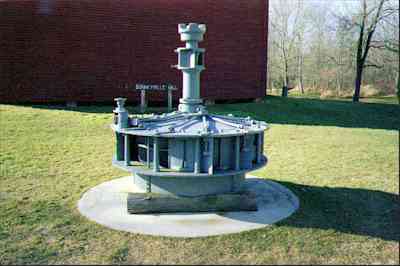
| The mill had been built with a horizontal water wheel to drive larger quantities of water than the more traditional vertical water wheel. |
 |
The mill even produced hydroelectric power during the Depression to a few customers, but its primary focus was producing livestock feed and the "Famous Buckwheat Pancake Flour" through the 1950's. |
| When Mrs. Baldwin and the local chapter of the Michiana Watershed undertook their project to save the mill in 1967, they had, according to Mrs. Baldwin, only $36.10 in their treasury fund. But undaunted, they undertook to raise the $100,000 it took to buy the mill. Proudly, the committee members were able to present the deed of the Bonneyville Mill to the Elkhart County Parks Department, who has managed the property since. |
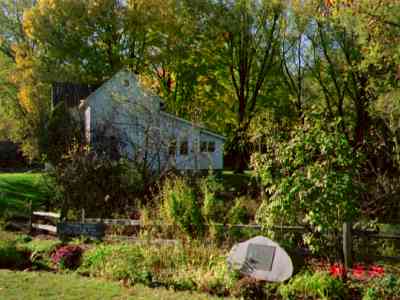
| This memorial garden near the mill entrance honors Mrs. Baldwin's vital support in making this park a reality. |
 |
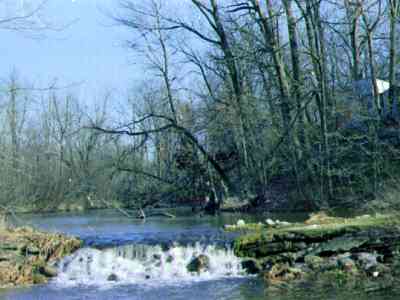 |
The surrounding Bonneyville Mill Park offers visitors a place to fish, picnic, hike, and tour the mill where grain products made at the mill are offered for sale. |
| Although the park is open year-round, the mill operates everyday from 10 am to 5pm from May through October. |
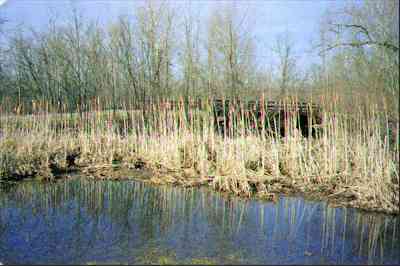
| The park consists of 233 acres of a mixed environment of woodlands, marshes and meadows. |
 |
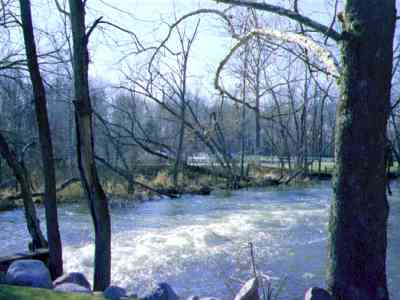 |
A self-guided nature trail takes advantage of the variety of habitats to showcase the richness of flora and fauna. |
| The tour begins at the lower level at the back of the mill. |
 |
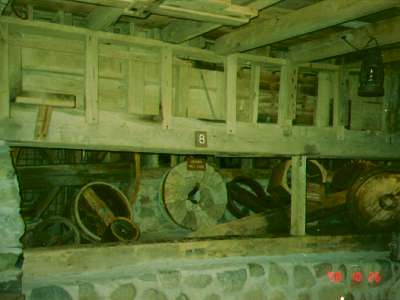
| Here, a display of mill stones is visible by lamp light. |
 |
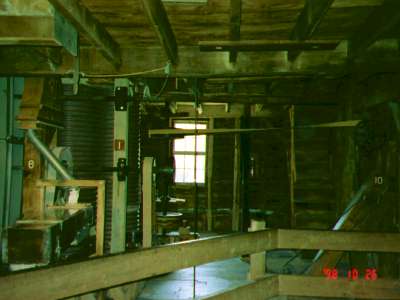 |
On the upper floors, the machinery is clearly visible, and numbered signs explain the operation.
|
| At the end of the milling process, the cornmeal is packaged for sale. | 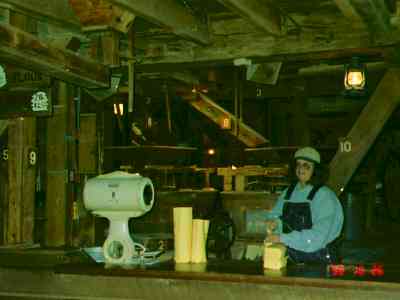 |
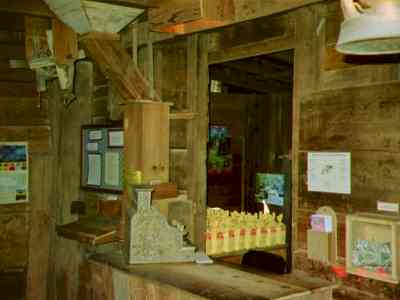 |
The mill store sells a variety of flours and cornmeal at very economical prices. |
| In mid-September each year, the Park hosts the Bonneyville Mill Celebration. A weekend filled with food, events and activities with a pioneer theme, the celebration draws visitors from the local area and from many other states as well. | 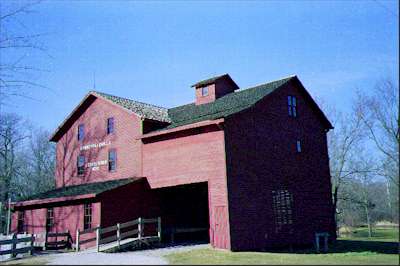 |
| Highlighted is the annual Bonneyville Mill Baking Contest in which local cooks bake up new uses for the flour products that are produced and sold on the premises. A visit to Bonneyville Mill Park will bring sights worth remembering - don't forget to bring your camera! |
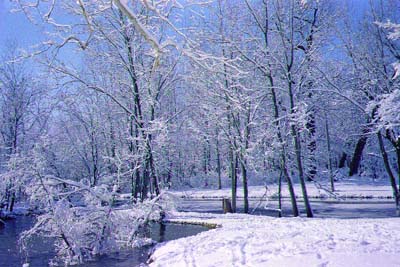 |
A late Winter snow frosts the trees and freezes time on a chilly weekend afternoon. |
| The snow-covered trees that line the mill pond dam reflect a peaceful scene in the still water. | 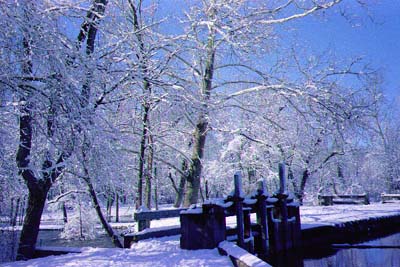 |