July, 1999
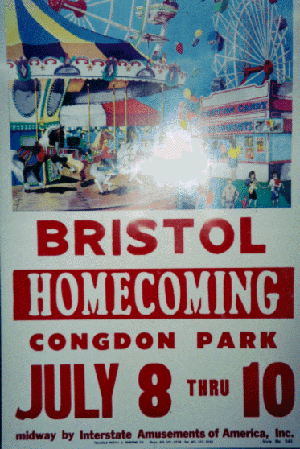
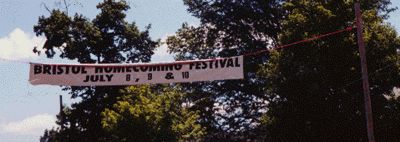
Bristol Homecoming
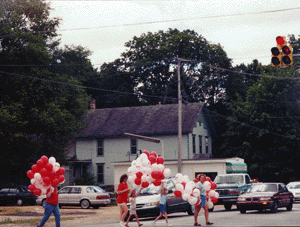
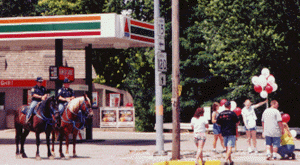
Traffic stops for the balloon bearers
as
|
|
|
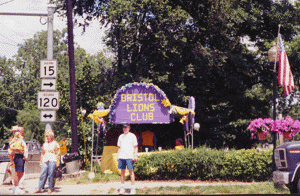
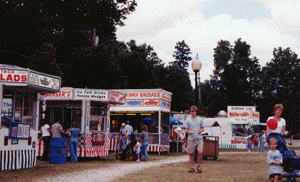
The Lion's Club booth offers a raffle to attract passers-by on the way to and from the Midway. |
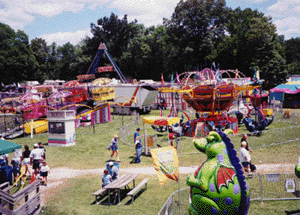
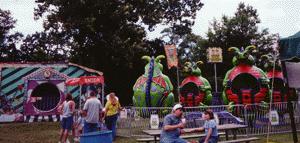
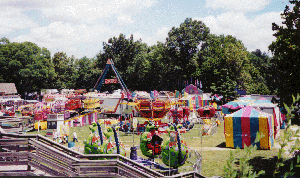
| On the Midway at Congdon Park, the rides the main attraction for the kids. |
|
|
Food vendors offer everything from tacos to sausage sandwichs to pop, sno-cones, ice cream and cotton candy. |
| So many decisions - to ride or eat - which should you do first? |
|
|
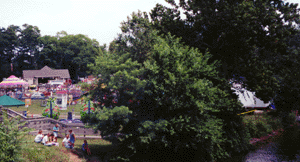
The river bank was a place to sit and decide what to do next. |
| Then it was either back to the park or up to the street to watch the parade. |
 |
|
The Bristol Marshal's Mounted Patrol got into position on the parade route. |
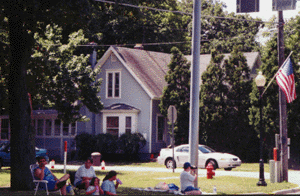
| Parade watchers stake out their favorite spots along the route, complete with chairs. |
 |
|
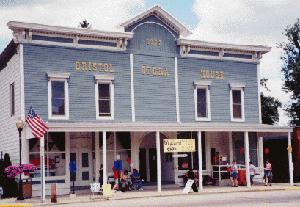
Refreshments are served along the route at places like the Opera House, where ice-cold lemonade is the special. |
| The Mounted Patrol brings out the troops. | 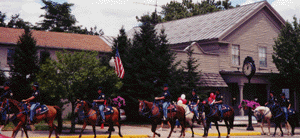 |
| The annual Bristol Homecoming is one of the oldest community festivals in the state of Indiana. Although the exact first year date is unknown, it was probably between 1879 to 1883. Known in the 1880's as the "Harvest Home," and the "Harvest Jubilee," it was held in the early fall, usually September, as a time to celebrate the harvest before the long, cold winter began. |
| At some unrecorded time, the name was changed to the "Bristol Homecoming," because from the beginning, Bristol was not only a place to come to, but a place to leave. Settling in Bristol from New England towns, the less adventurous considered that they had "gone West." But the Gold Rush and other opportunities lured others to seek their fortunes, or just see what lay beyond the horizon. Often, it was the young who left to find that elusive greener grass, leaving behind family who were content to remain in the small country village. Later, homesick or anxious to share their tales of success or woe in the distant wild West, the adventure seekers would return to the little village on the edge of the beautiful St. Joseph River, nestled near the abundant fruit hills. |
| In the early years, the event was more like a family reunion, when families would reunite and celebrate with food and socializing. The festival date was moved to mid-summer, perhaps to take advantage of the fine weather and better travel conditions for those who would come from near and far to participate in the activities, to eat, and most of all to reconnect with those they may not have seen for a year or more. All kinds of games and sports were arranged, from tub races to baseball, from foot runs to bob apple races. Modest prizes were given for competitions like the greased pole climb. |
| Use of the river for competitive sports activities was common in the early days, but an unfortunate accident in 1895, during a tub race, put a damper on the fun. An old iron bridge, built in 1868, attracted a number of spectators who gathered on the bridge to watch the race. When the racers in their galvanized tubs passed under the bridge, the crowd rushed to the other side to see who was leading. The overweighed walkway collapsed, and scores of people were tumbled 20 or 30 feet into shallow water and rocks. Over 60 people were injured, some seriously, and the community was embroiled in claims and lawsuits for a number of years. One account speaks of the death of a local doctor, but is not confirmed by other reports. Although some sorts of river sports continued, and another tub race was held during the 1978 event to celebrate the completion of another new bridge, rising liability insurance costs have made such events history. Most other years, the worst thing that happened were a few fist fights over contested competitions, and the celebrations continued. |
| Around the turn of the century, the festival featured contests such as watermelon eating, seed spitting and baking the best fruit pie. As the early settlers soon discovered, the area was revered for fruit hills where weather and soil conditions were perfect for cultivation of apples, berries and other fruits. Throughout the early 1900's, the Homecoming continued to be the major looked-forward-to-event of the Summer. Even during the depression era, the Homecoming was a time for celebration and sharing. Material goods and money might have been short, but still, there was plenty of food to prepare and eat together, even a whole ox roasted on a spit and produce from the gardens and farms. |
| By the war years, the Homecoming was a time for those who had left the area to return to see family and friends. The event was halted during World War II, but resumed in 1945, when families celebrated the return of loved ones. That year, fireworks made their first appearance. |
| During the 1960's, 70's and 80's, the Homecoming grew and grew, spreading from the downtown area to the nearby parks and riverbank. A marathon-type race was begun in the seventies and known as the "Bristolthon," it attracted runners and walkers from all over the country. By 1998, it had become the Bristol Fruit Hills Classic race and welcomed participants from all over the world. |
| Just this past summer, the Homecoming featured parades and carnival rides that delighted the hometown children, while music and the crowning of the Festival Queen brought out the teenagers. A variety of food vendors insured that those who came didn't leave hungry; a wide assortment of activities raised the excitement level; and a band of dedicated volunteers labored to deal with the thousands of details that made the festival a success. |
| Although now, in the late nineties, the planning is more complex and today's busy lifestyles leave precious little time for community activities, the courageous supporters and sponsors push on, determined that the heart and soul of Bristol continue to bloom once each summer, as they produce the extravaganza that remains the most important event of the year for them: the annual Bristol Homecoming. |
| Returning Bristol expatriates and those who just stop by for the food and fun agree, it's a fine time to "Come Home Again." The festival is usually held in mid-July, so don't miss it. |