


.
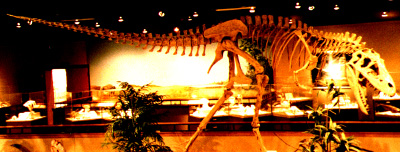
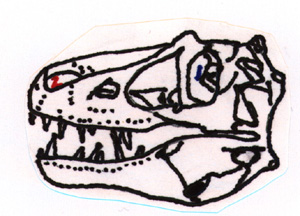
Meat eater. 75-70 MYA late cretaceous. Based on teeth found. It is questionable as a valid name.
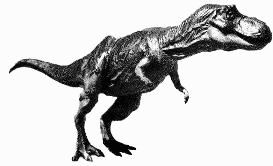
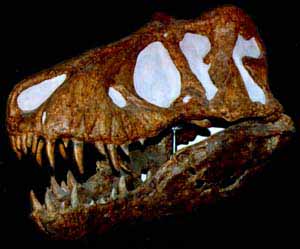 The T-rex skull is more massive then that of Allosaurus. The openings in the skull bones are are thicker and heavier. It was able to with stand impacts or jarring. The jaw is also capable of expanding or dislocating (like a snake does) to swallow large bites of flesh.
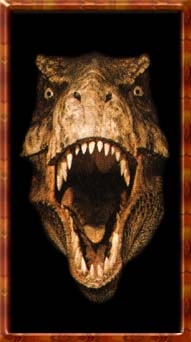 The long rows of 6 inch teeth that lined the jaws were like sharp serrated steak knives. As you can see in the picture. Not only were teeth large but there were also very large jaw muscles. The combination of skull, muscles and teeth could crush up to 3,000lbs of flesh, bones and whatever else it felt like eating. There are several fossils that have been found with large Tyrannosaurs rex teeth found in bone or holes with in the bone. View image of T.rex tooth.
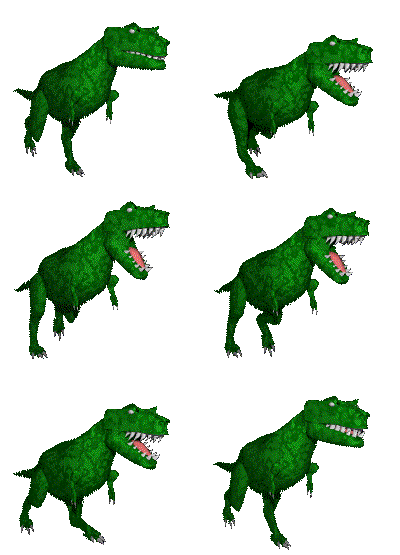 How fast could T.rex run?.... about 25 mph or 40 kph. It was believed that T.rex couldn't run for too long. But now there has been research done on the rib cage to see how far out it expanded. It has shown that he could run longer distances, than what was thought before. The long leg bones also show that there were also large muscle attachments. ; On the pelvis, femur and tibia and the fibia. They also had very long strides, T. rex stood at about 18 feet high. With the long strides from its legs it could cover some ground. Which made it move faster.
Meat eater. 68-65 MYA Late Cretaceous. 5 meters long, 600-1,000 pounds. Skull is 22 inches long. Found in 1942. Has a low skull, snout is long and narrow. Feild of vision overlaps giving it stereoscopic view or "binocular vision". Skull has similar features to that of T. rex.
 Go to Dino Menu.