 A classic model is one that stands the test of time, and
the foundation of Gibson's Classic Series is, appropriately, the model that has
been in production longer than any other Gibson electric: the ES-175.
Gibson electric guitars evolved quickly after their introduction in 1936, until
they reached a plateau of excellence in 1949 with the ES-175. Aesthetically, it
combined the traditional Gibson archtop look with the bold, modern touch of a
"Florentine" pointed cutaway. Functionally, the laminated maple top,
back and sides gave it greater stability at a more affordable price than its
acoustic relatives, and the new P-90 pickup was the strongest in the industry.
The ES-175 of 1949 offered an unbeatable combination of features and value, and
it was an immediate success.
A classic model is one that stands the test of time, and
the foundation of Gibson's Classic Series is, appropriately, the model that has
been in production longer than any other Gibson electric: the ES-175.
Gibson electric guitars evolved quickly after their introduction in 1936, until
they reached a plateau of excellence in 1949 with the ES-175. Aesthetically, it
combined the traditional Gibson archtop look with the bold, modern touch of a
"Florentine" pointed cutaway. Functionally, the laminated maple top,
back and sides gave it greater stability at a more affordable price than its
acoustic relatives, and the new P-90 pickup was the strongest in the industry.
The ES-175 of 1949 offered an unbeatable combination of features and value, and
it was an immediate success.

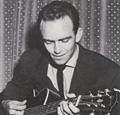 Gibson continued to refine
the ES (Electric Spanish) models in small ways-such as the addition of a second
pickup to the ES-175, the move to humbucking pickups, and the introduction of
thinbody model-and also in monumental ways, such as the design of the ES-335.
Gibson continued to refine
the ES (Electric Spanish) models in small ways-such as the addition of a second
pickup to the ES-175, the move to humbucking pickups, and the introduction of
thinbody model-and also in monumental ways, such as the design of the ES-335.

By the mid-1950s, the electric guitar market was divided into two camps, each
with its own appeal. Hollowbody electrics had the traditional look and sound;
solidbody electrics strayed from conventional guitar lines 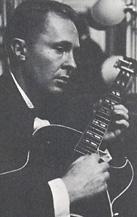 and they produced a more aggressive tone with more sustain. In 1958 Gibson
president Ted McCarty brought the two styles together in the Gibson ES-335
model. It had the arched top and violin-style F-holes of hollowbody models, but
the body was thin (less than 2" deep), with a double-cutaway shape and a
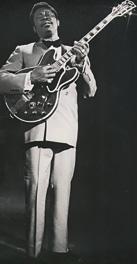
solid maple block through the center. The semi-hollowbody style proved to be one
of Gibson's most versatile, providing the musical vehicle for such diverse and
influential musicians as rocker Chuck Berry, jazzer Larry Carlton and bluesman
B.B. King.
and they produced a more aggressive tone with more sustain. In 1958 Gibson
president Ted McCarty brought the two styles together in the Gibson ES-335
model. It had the arched top and violin-style F-holes of hollowbody models, but
the body was thin (less than 2" deep), with a double-cutaway shape and a
solid maple block through the center. The semi-hollowbody style proved to be one
of Gibson's most versatile, providing the musical vehicle for such diverse and
influential musicians as rocker Chuck Berry, jazzer Larry Carlton and bluesman
B.B. King.
From classic Gibson electrics of the '50s, a new generation of classics was born. Jazz great Howard Roberts modernized the traditional jazz guitar adapting the semi-hollowbody concept to a small, single-cutaway guitar. His Howard Roberts Fusion model debuted in 1976. Another great jazzman, Herb Ellis, used his single-pickup ES-175 as the inspiration for the Gibson ES-165 Herb Ellis model, introduced in 1991. B.B. King's "Lucille" guitar had been a Gibson ES-355 (a fancier version of the ES-335) for over a decade when, in 1982, Gibson incorporated his personal preferences into an official Lucille model. And Gibson revived and updated the popular thinbody, single-cutaway designs of the '50s with the ES-135 model, introduced in 1991.
The Classic Series is the ultimate illustration of Gibson's world-renowned combination of innovation and tradition.
TEXT FROM http://www.gibson.com/products/gibson/Stories/Classic.html