The history of Lindy Hop
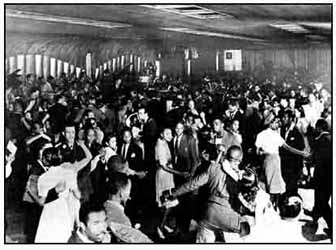
Lindy Hop was born in Harlem, New York in the late 1920s and became popularised in the 30s and 40s. There are many stories as to how the dance became known as Lindy Hop, but the most popular one involves a famous lindy hopper of that time - "Shorty" George Snowden, whose signature move was the comic 'Shorty George', which poked fun at his height in contrast to his dancing partner's.
It was in 1927 that Charles Lindbergh had completed the first transatlantic solo flight and Snowden appeared to give tribute to Lindbergh, when a reporter asked him what he called the style he was dancing, and he replied, (with reference to Lindbergh -> Lindy's "hop" across the atlantic),"Lindy Hop!"
Lindy Hop, or lindy in short, evolved out of the older dances of that time, which included the Collegiate, the Texas Tommy, the Charleston, the Black Bottom and the Breakaway. Lindy took aspects of all these jazz dances and combined them to form the exuberant style that it is today.
Eventually, so many styles evolved as the spirit of swing dance was to modify and to innovate, and there were never any set patterns or strict rules. 2 main styles of Lindy hop appeared. The Savoy style, created by Frankie Manning, over 80 years old and still teaching. The Hollywood style, was made popular by Dean Collins. Besides these, many other forms of dance styles have evolved, like the east coast, west coast swing, the various "shag" dances, boogie-woogie, rock-n-roll and the jive variations.
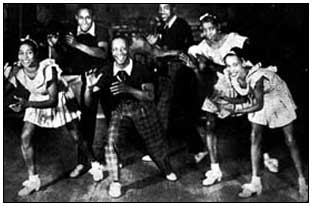
The Lindy Hop, is both a social dance and a performance dance. Traditionally danced to big band music or swing music, lindy can be danced to any form of music with a strong and steady beat. As a social dance, while there is a common vocabulary of steps and moves, there are no set patterns to the dance, resulting in sponataneity and lots of improvisation (and of course, a lot of fun)
Lindy hop is a marriage of African and European dance temperaments, just as swing was a marriage of Afro-Euro music temperaments. The dance blended African styled solo movement for personal expression with European styled folk/courtly social dance.
During the post-war period, swing fever died down as other social dances came into favour and interest in swing music gave way to different genres of jazz (be-bop and beyond). A revival began to take place in the mid 1980s when, more or less simultaneously, groups in Sweden (the Rhythm Hot Shots), England (the Jiving Lindy Hoppers) and the USA re-discoverd the incredible dance form known as the lindy hop. With that, a world wide revival was on its way.
Dubbed the "dance of happy feet", lindy hop is one dance that will bring a smile to peoples' faces with its infectiousness and that is one of the reasons why Kinetics wants to spread the dance to NTU!