The Thunderbird or T-bird
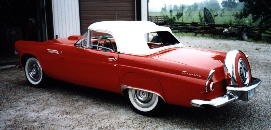
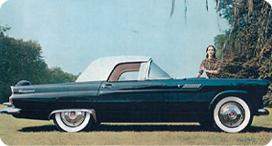
was first developed in the early 50�s by the Ford Motor Company. Its
first production year was 1955 with them first being offered in
September of �54. Ford designed the T-bird as a direct competitor to
Chevrolet�s Corvette. The first Thunderbirds were two seaters with
moderate engines and little trunk space. After the Thunderbird�s huge
success in 1955 Ford addressed the trunk space problem by moving the
spare tire to a hard case on the rear bumper. Ford also started to
offer a larger more powerful engine as an extra option.
Dispite the success of the
T-bird in its first three years, Ford thought that not enough people
would buy the Thunderbird any more because of growing families in the
U.S. Ford said that the only way that it would keep the bird was by
making it a four seater. In 1958 the first of the four seater birds
rolled of the production line at Ford. This 2nd generation of
Thunderbird was dubbed the �Square Bird� because of its square roof
line. Even though this change in design saved the T-bird, the outside
design did not last long. By 1960 the bird was redesigned to appeal
to the younger crowd.
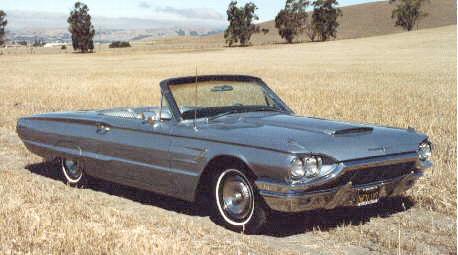
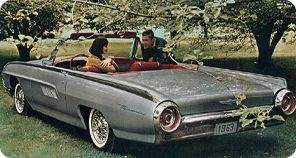
The sixties were good times for
the sales of the Thunderbird. In just on year in the early sixties
sales were higher than the first three years combined. However the
sixties were not all good for the T-bird. With more and more
government safety regulations the convertible option of the
Thunderbird was discontinued. Ford replaced the convertible option
with a four door option, however this was not popular at all and was
also discontinued after a couple of years in production. The
emissions standards set by the government were starting to come into
play the engines were forced to be smaller therefore putting out less
power. It was these regulations that stifled the sales of the T-bird
in the seventies.
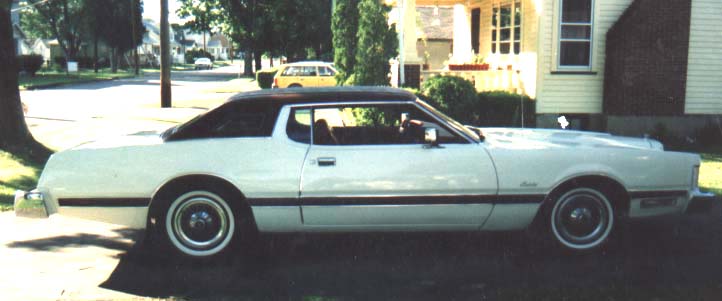
The seventies were not good
times for the entire automotive industry. Starting with the emissions
standards set by the government and pushed by the environmentalists
put an end to the powerful engines that the car companies were
putting in their cars. What added to the problem was the oil embargo
on the U.S. by OPEC. With changes in management at Ford the
Thunderbird started to look more like a regular car rather than the
distinctive image that it had created for itself in the previous
twenty years. However the next twenty years started to look up for
the declining bird.
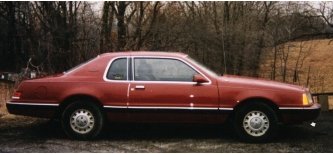
The 1983 redesign of the
Thunderbird proved to be a turning point for the car. It became more
aerodynamic which made it possible to put a larger engine in it and
still meet the government standards set in the sixties and seventies.
Even with the popularity of the Thunderbird still high Ford
discontinued it in the mid �90s. However the outcry from the
Thunderbird fans forced Ford to think about coming out with a new
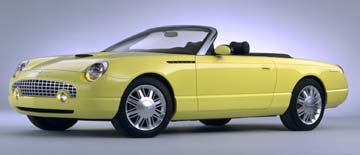
completely redesigned T-bird. The concept car was unveiled at the
1999 Detroit Car Show and looks more like the Thunderbird of the
1950�s rather than where it was left off in the mid �90s.