| DAVID GOH'S HOME PAGE Last updated: 27 Dec 2001 D'Singapore Scene
This page is located on:
|
Motorcycle Taxes in Singapore Page first created 20 Jul 1999 The Singapore Government strongly supports and encourages
the use of public transport. This also means that private/personal transport is strongly
discouraged by various means, including:
I'm not a big fan of taxes... frankly, who likes to have to pay taxes, eh? But it is something we have to live with in the reality of Singapore. Whatever it is, one way or another, soon or later, the tax man always wins... and if there is a tax cut in once place, they'll figure out another way to make up for it elsewhere. On the flip side, public transport services work well: the train systems (MRT, LRT) work (though I don't take them), peak hour traffic jams aren't so bad (at least the buses still flow - albeit more slowly - due to the reservation of the left lane for public buses during peak hours), and the roads are in good condition (few or no potholes, regularly resurfaced).
Registration fees are charged when a brand new vehicle is first registered for use on Singapore roads. Singapore does not have an open market in the normal sense. Due to the Singapore Government policy of encourging the use of public transport and discouraging private/personal transport, taxes in the form of fees are levied on all vehicles. Therefore the "Open Market Value" is the value of the vehicle if no additional taxes are levied:
In Singapore, new motorcycles are subject to the following fees:
And if you think the ARF for motorcycles is high, stop complaining and take a look at cars... the ARF for cars is 140% of the OMV!
Before one can own a vehicle, one must cough up chunks of money for a "Certificate of Entitlement" or "C.O.E.". According to the LTA website, they say (quote):
To the cynics like me, this was magic: it allowed the Singapore Government to be politically expedient by appearing to have cut taxes (i.e. the registration fees) and yet actually put more money into the coffers (a.k.a. print money by printing COEs)! Best of all, the the COE are released through a quasi-auction. This way when people who are more desperate to get their vehicles bid higher, the blame for the higher levies does not fall on the Government, but falls on the public. Next, because prices in auctions depends on the demand and supply, when the supply exceeds demand, to boost prices they only need to strangle the supply of COEs. This was the case when for many months, the COE for motorcycles was only $1 while the COE for cars was running at about $50000. They Government conveniently "converted" the motorcycle COEs into private motorcar COEs, thereby converting a practically worthless COE into fantastically valuable revenue for the Government coffers. Today, the motorcycle COEs are running at about $600, down from an all-time high of about $2000. Also the demand today always exceeds supply: since the Government decides the quota, who's to say that they are not controlling supply. Also if you look at it, there are a heck of a lot more cars on the road than there were years ago, and I say it is down right scary for us motorcyclists. In my opinion, the Government does not mind releasing more COEs for cars because cars (and their owners) are the great big cash cows (they pay higher COEs, are subject to higher registration fees and duties, road taxes and ERP tariffs. Whatever it is, the tax man always wins... *sigh*
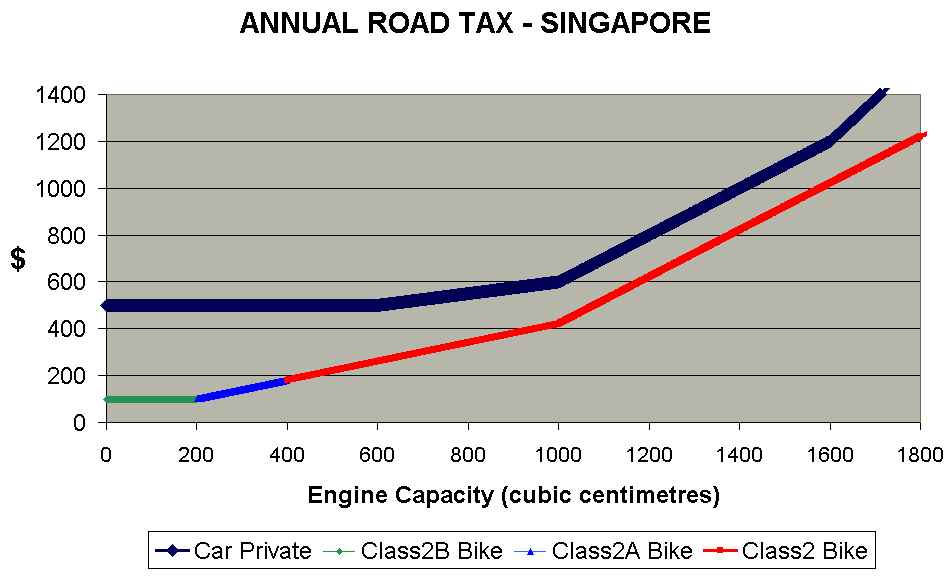
The current road taxes for motorcycles are computed using the following formulae:
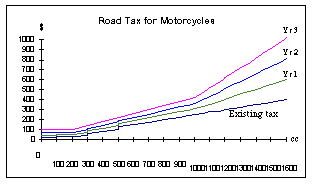
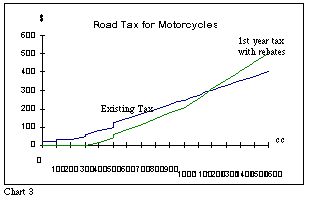
Though the Government tried to soften the blow for the first 3 years where phased increase of the road taxes and compensatory tax rebates were offered, these new taxes represent a significant increase from what one used to pay. Though the Government. To give an idea of the difference, see the chart and compare with the existing tax back then: (Year 1 to 3 represents the tax during the 3-year phase in period, "Year 1" being the first year of the phase in period) As can be seen from the chart, after 1000 c.c., the curve skew sharply upwards. So those owning bikes with engines greater than a 1000 c.c. have to be prepared to fork out royally to own their motorcycles. Here are some comparative calculations of the old and current road tax for three Classes of motorcycles (small, medium, large) using some typical motorcycles.
Here's what the Government says about the E.R.P.:
For cynics like me, the ERP is intended to control traffic on selected routes (city district, highways) during peak hours by posing monetary disincentives for using these routes. A wireless ERP device is mounted to the vehicle. Money is stored in an electronic form on a "cash card" (smart card, available from most banks and convenience stores). The value is deducted when the vehicle passes below a gantry. Motorists are charged on a "per-pass" basis and charges depend on the category of the vehicle. Motorcycles are charged according to the table below.
In my opinion, while the Government appeared to "reduce" road taxes, this was made up for by introducing the ERP, which is effectively a per-entry or per-pass tax. Hey, presto! Instead of bleeding buckets every year, they bleed you every day. Today, you cannot enter the city (RZ) during business hours without being taxed. You cannot drive along the expressways towards the city during the mornings (ECP, CTE) without being taxed. You definitely cannot drive along the highways east to west and vice versa (ECP, PIE) without being taxed.
You can read more about the land transport policies and its impact from:
|
||||||||||||||||||||||||||||||||||||||||||||||||||||||||||||||||||||||||||||||||||||||||||||||||||||||||||||||||||||||||||||||||||||||||||||||||||||||||||||||||||||||||||||||||||||||||||||||||||||||||||||||||||||||||||||||||||||||||||||||||||||||||||||||||||||||||||||||||||||||||||||||||||||||||||||||||||||||||||||||||||||||||||||||||||||||