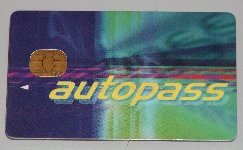
Ever lost your CashCard or Autopass? Don't lose it again!!! Have you lost your CashCard or AutoPass card before? How many times have you lost it already??? Every time you lose it, the stored value is lost, and you still have to pay for a replacement card. Singapore bikers must be familar with these:
Malaysian motorcyclists who ride into Singapore or must enter the Singapore CBD must be familar with the hassle of getting a replacement Autopass card when you lose your card which was stolen when left it in the IU unit? . You can avoid losing your card! Finally, here is a device to remind you not to forget to remove your CashCard or AutoPass: More importantly, no modifications are made to your ERP IU unit. The CashCard Alert makes use of a patent-pending method of detecting the presence of a cash card without the need to modify the ERP unit, so as not to void the warranty on the ERP unit.
Where can I get the CCA installed?
Dealer enquiries are welcomed! Please call (attention prontoMoto, Mr John Koh)
|
|
| Usage
Instructions The CashCard Alert will behave in the following manner:
Logic inversion/opposite behaviour Occasionally, the CCA may behave improperly in that (1) the CCA will beep when it should not, and (2) fail to beep when it should (complete opposite of the correct function). There is nothing physically or electrically wrong with the device, but the logic has become inverted. Because the method of cash card detection is based on monitoring the activity of the in-vehicle unit (IU), additional unanticipated activity in the IU could trick the logic, hence the logic inversion. An example of this is the "low value/top-up cash card" warning that the IU will generate when the value stored in the card falls below the preset warning level ($5). To avoid this logic inversion, it is suggested that the minimum card value be maintained above the "low value/top-up warning" level . When logic inversion occurs, this can be easily corrected by following the procedure below:
The logic should be re-inverted back to normal and your CCA should now function normally.
|
|
| Test
Review by David Goh The joys and sorrows of having to pay the ERP...
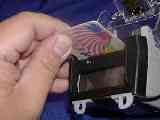
Drivers of cars have these bulky grey in-vehicle units (IUs) install them against the windshield inside the car. Motorcyclists on the other hand have the unit mounted on their handlebars. This make the possibility of casual theft if they are unfortunate enough to leave their CashCard or Autopass in the damned reader. The stupid plastic loop for locking the IU with a padlock is a waste of effort, since the thief would simply break of the flimsy plastic loop and take the card.
Home-made passive reminders Anyway, there have been tried many different schemes to not forget to remove the cash card: ribbons, labels. These required the rider to see the visual reminder, but even then, there are sometimes lapses because I get distracted or am in a hurry. Withdraw the card after passing a gantry is possible, but sometimes one still forgets. One way I developed was to punch a hole in card, string a flat ribbon through it and tie one end of the ribbon to the ignition key, so that the key can't be removed without withdrawing the Cashcard. The trouble was that once the card had a hole, it tended to crack over time. Furthermore, it only worked if the distance between the ignition switch and the ERP unit was very close, e.g. sports bikes. Cruisers and other bikes with the ignition key below the seat ended up with a long ribbon which have a tendency to flap pretty hard at high speeds, and sometimes gets tangled, with potentially lethal consequences. Design challenges of an active reminder The most ideal solution to this problem is an electronic device that reminds the driver/rider to remove the cashcard when one parks the vehicle. However this has been plagued by two important challenges: (1) how does the device know whether the card is in the unit or not, and (2) how will the unit know when to alert the driver/rider. A number of people have been developing electronic means of detecting the card. However these require modifications to the ERP unit. Such a modification constitutes tampering and would obviously void the 5-year warranty on the ERP unit, and numerous requests to LTA to approve such modifications to the ERP unit have to date been unsuccessful. Ironically, the LTA is in the best position to solve this problem: if the IU had this feature built into the IU in the first place, this would never have become necessary. The CashCard Alert (CCA) Developed and manufactured in Singapore, the developer of the CashCard Alert appears to have figured out how this can be done without modifying the ERP unit. This innovation is currently being patented, and the CashCard Alert therefore appears to be the first promising commercially available device as it does not require any modification to the ERP in-vehicle unit. Installation The installation was relatively painless. Roughly the size of a $10 note and as thick as 10¢ coin, the module is fitted either around the battery case or somewhere else under the bike saddle, depending on where there might have space.
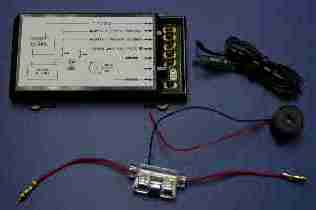
There are screw mounting loops in the chassis of the module so could be screwed on to some panel. Alternatlvely, double sided tape could also be used. In my case, due to the tight space around the battery holder, it had to go into the tail where it was secured to the base of the tool storage area using a long heavy-duty plastic cable tie. It has a beeper which does not necessarily have to be put together with the unit, but can be placed elsewhere to be better heard. Optionally, there is also a lead for an LED indicator, but is not really necessary as the audible alert is adequate.. The wiring work took around 15 to 30 minutes. Essentially, instead of the ERP unit being wired up directly to the battery, the ERP unit is now connected to the CashCardAlert, which is in turn connected to the battery. There is also additional wiring between the unit and the beeper and other sensing wires. After all the wires were laid and connected, they were nicely taped up to become a wiring harness. How it works The logics of the CCA appears to be designed such that the unit is active only when the ignition is turned on or off, and generally remains off at other times. The unit beeps under two conditions. The first being when the ignition key is turned on, the unit will beep repeatedly until the rider inserts his CashCard or 10 seconds has elapsed. If the card is in the ERP unit before the ignition key is turned on, the unit does not beep. The second is when the ignition key is turned off and if the CashCard is still in the ERP unit, in which case the unit would beep until the rider removes the CashCard or 10 seconds has elapsed. If the card is already removed from the unit before the ignition key is turned off, the unit does not beep. Occasionally, the logic can become inverted such that it beeps when it should not, and not beep when it should. This is easily fixed by inverting a cash card in the wrong way such that an "Err" is displayed. Normal operation is then restored. My opinion The beeping is quite effective. In my opinion, it would be difficult for the rider to forget to remove the CashCard when switching off the bike. In principle, the unit enforces some form of behavioural modification. On the flip side, it is also too irritating, because it beeps everytime one turns on the bike, especially if one does not need to pass through an ERP gantry. . Perhaps this nuisance is a small price to pay to avoid losing a CashCard or an Autopass. Pricing was not available at the time of writing this article, but was said to be between $60 and $70, which would include installation. Compared to the value if a number of cards are lost, this does not cost very much. Interested motorcyclists can go to the workshop or call prontoMoto.
|
|
| About
Singapore Electronic Road Pricing To restrain private motor vehicle ownership, the Electronic Road Pricing scheme directly charges drivers according to the congestion manifesting at the particular time and place. With ERP, motorists will be made aware of the true cost of driving. Intermodal competition, such as with the mass transit system, would also become fairer. Since June 1975, Singapore had been operating a manual road pricing scheme called the Area Licensing Scheme for the city area. Under the system, a motorist needs to purchase and display a paper area licence to enter a restricted zone in the city. These licenses come in different shapes for different vehicles and are colour coded for different months for easy spotting by the police. This is a labour-intensive and inefficient method.. In 1998, Singapore started the first ERP scheme in the World. The first two ERP gantries started operating along an expressway, the East Coast Parkway, from 1 April 1998 to replace the manual system. There are currently 41 ERP controlled points and the Singapore Land Transport Authority (LTA) had plans to extend the systems to the Outer Ring Road. In terms of capacity, the Singapore ERP system is designed to handle up to 100 control points. About Vehicle Entry Permits and Autopass Cards
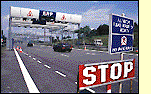
The automated Vehicle Entry Permit (VEP)/toll system has been implemented on 1 April 2000. With the automated system, drivers of Singapore registered vehicles will use the CashCard to pay for their tolls, and foreign-registered vehicles will use the Autopass Card, a stored-value smart card, to pay their VEP fees and/or toll at the Singapore land checkpoints;ie Tuas Checkpoint, Woodlands Checkpoint and Changi Ferry Terminal. VEP fees are calculated on a daily basis. Under the new payment system, no VEP fees are payable on all Saturdays, Sundays and all Singapore Public Holidays. The Autopass Card can also be used to pay the Electronic Road Pricing (ERP) charges using a temporary in-vehicle (IU) unit which may be rented at any one of the IU rental shops. The Autopass Card is non-transferable. The tables below show the different VEP fees and toll charges for the different categories of vehicles during hours of operation. To use the new payment system, drivers of Singapore-registered vehicles will need to purchase a CashCard ($22, inclusive of a refundable deposit of $2). Drivers of foreign-registered vehicles will need to purchase an Autopass Card at a cost of $10, comprise $4 cash value preloaded into card and $6 card cost (non-refundable) at the primary clearance/immigration booths at the Singapore checkpoints. Owners of foreign-registered buses, taxis and goods vehicles may buy their Autopass Cards at the LTA office at Sin Ming Drive at the same time when they apply for a Goods Vehicle Permit (GVP) or Public Service Vehicle Permit (PSVP) Before arriving at the Singapore checkpoints, the drivers are required to top-up their Autopass Cards or CashCards with sufficient cash value to pay their VEP fees and/or toll. Topping up services are available at 7-Eleven convenience stores, Automated Teller Machines (ATMs) of DBS, OCBC, OUB, UOB, POSBank and Keppel-Tat Lee Bank; most petrol stations, and convenience stores and outlets that carry the "Autopass Card Top-Up" sign. For more information, see:
. |
|
| ERP
In-Vehicle Unit FAQ Note: The following content originates from the One-Motoring website. However due to the slow speed and difficulty accessing that website, it has been included here for your convenience. Source URL: http://www.onemotoring.com.sg/faq/faqIndex.asp?CatID=76 Q1: How can I be sure that the IU is reliable to use?
Q2: What should I do if my CashCard is faulty?
Q3: How do I know if my CashCard is in working order?
Q4: What will the ERP charges be?
Q5: Where can I buy the CashCard?
Q6: How do I insert the CashCard?
Q7: Can I test my IU daily?
Q8: Where can I top-up my CashCard?
Q9: What are the operating hours for ERP?
Q10: Where are the ERP gantries?
Q11: How will I know if my CashCard balance is low?
Q12: What is an ERP violation?
Q13: Has the IU been tested and how do we know that it is safe to use?
Q14: What if there is a fault?
Q15: How do I know if the ERP charge has been deducted properly?
Q15: Where can I see ERP gantry numbers?
Q16: What is the ERP operating hours in the Restricted Zone on the eve of public holidays?
Q17: What must I do if I suspect that the IU is malfunctioning?
Q18: Where can I rent an IU?
Q19: I have received a Vehicle Inspection Notice (VIN) from LTA, where can I send my IU for inspection?
Q20: What should I do if my IU is lost or stolen?
Q21: Can I buy an IU from LTA and have it fitted by my friend who is a mechanic or fit it myself?
Q22: Can I sell my IU to someone else?
Q23: What will happen to the IU when my vehicle is sold to another owner?
Q24: What will happen to the IU when my vehicle (Singapore-registered) is scrapped?
|
|
This
page has been read  times since
21st September 2002. Last updated: 26 August 2003 times since
21st September 2002. Last updated: 26 August 2003DISCLAIMER: The Webmaster does not assume any liability arising out of the application or use of any product described herein, neither does it convey any license or rights. The Advertiser has prepared this content from sources deemed reliable, but is not responsible for errors or omissions. The Webmaster accepts no liability for incidental or consequential damages arising from the use of any products indicated herein. This disclaimer of warranty is in lieu of all warranties whether expressed, implied or statutory, including implied warranties of merchantability or fitness for a particular purpose. COPYRIGHT NOTICE: The Webmaster retains the copyrights on all text, structure, format and the graphics images. Users may not distribute the text or graphics; redirect, forward, or "mirror" this information; or re-use or modify the text or graphics from this Web page without the express written permission of the Webmaster. Users may print copies for their own personal use and store copies of these files on their own computer for their personal use. Webmaster does not warranty the accuracy or completeness of the information, text, or graphics contained in this Web page.  The CashCard is a registered
trademark of the Network for Electronic Transfers
(S) Private Limited (or "NETS"). For more details
about CashCard services, please see the NETS website at http://www.nets.com.sg . The CashCard is a registered
trademark of the Network for Electronic Transfers
(S) Private Limited (or "NETS"). For more details
about CashCard services, please see the NETS website at http://www.nets.com.sg . |
 Do you face
the need to enter the Central Business District
(CBD) or pass through an
Do you face
the need to enter the Central Business District
(CBD) or pass through an 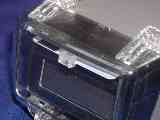 Ever
forgotten to remove your CashCard?
Ever
forgotten to remove your CashCard?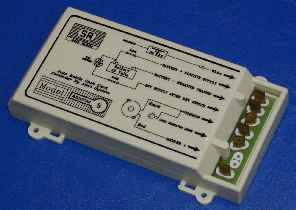

 Since the introduction of
  Depending on one's
luck when losing the CashCard, there might have a bit or
a lot of stored electronic money left in it. However if
one rides a Malaysian motorcycle and has to use the
Autopass card, the problems are bigger because the Land
Transport Authority requires the same card to be used
with the same vehicle, so that the daily Vehicle Entry
Permit charge can be correctly calculated. Lose that and
one would have to face the troublesome task of queuing at
the LTA counter at the border checkpoint to cough up
another $10 to get a replacement card and register the
vehicle number to the card. If one is in a hurry to get
home or if it is the peak hour, this would be a pain.
Depending on one's
luck when losing the CashCard, there might have a bit or
a lot of stored electronic money left in it. However if
one rides a Malaysian motorcycle and has to use the
Autopass card, the problems are bigger because the Land
Transport Authority requires the same card to be used
with the same vehicle, so that the daily Vehicle Entry
Permit charge can be correctly calculated. Lose that and
one would have to face the troublesome task of queuing at
the LTA counter at the border checkpoint to cough up
another $10 to get a replacement card and register the
vehicle number to the card. If one is in a hurry to get
home or if it is the peak hour, this would be a pain. Some agencies have
been so clever to try and integrate the CashCard into
their Bank ATM cards, or worse, the Army integrated it
into the servicemen's military identity card, all in the
name of convenience - not! So great: instead of
losing one item, you lose more in one go. And if it
happens to be a military identity card, it is a serious
offence and God-bless-the-hapless serviceman who would
have no choice but to face punishment...
Some agencies have
been so clever to try and integrate the CashCard into
their Bank ATM cards, or worse, the Army integrated it
into the servicemen's military identity card, all in the
name of convenience - not! So great: instead of
losing one item, you lose more in one go. And if it
happens to be a military identity card, it is a serious
offence and God-bless-the-hapless serviceman who would
have no choice but to face punishment...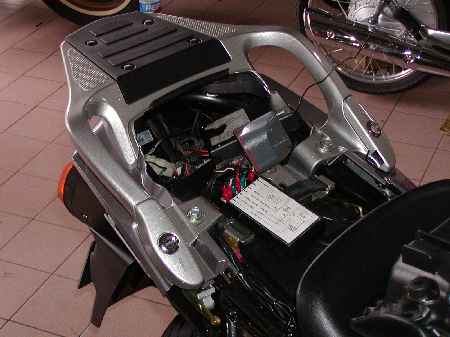 (Image: The Cash Card Alert being
installed in the confined space of the tail of a sport
tourer. The other module and siren is an existing car
alarm system which was there prior to installation of the
CCA).
(Image: The Cash Card Alert being
installed in the confined space of the tail of a sport
tourer. The other module and siren is an existing car
alarm system which was there prior to installation of the
CCA).