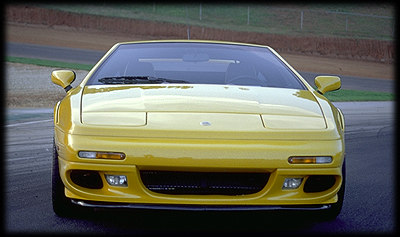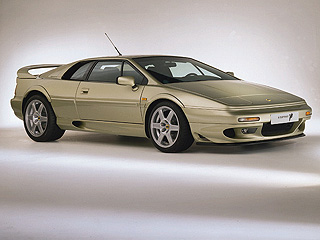
1987 became an important year for the Esprit, October saw the unveiling of a completely revised car.
This was the first Esprit to be built using Lotus VARI (Vacuum-Assisted Resin Injection) process, which improved quality and consistency in the finish.
The backbone chassis from the previous Esprit was kept because it was so effective, there was no need to change it.
It wasn't until 1993 that new models were introduced into the Esprit lineup.
The S4 was introduced as a replacement for the SE.
The original bumpers and sills remained, but additions included front and rear wheel arch extensions to accomodate OZ competition wheels and a massive rear wing was fitted to keep the car glued to the road.
With production of the S4, S4S and Sport 300 now over, a cheaper Esprit was needed for those who couldn't afford the �50,000+ asking price for the V8.
The model that was introduced was the GT-3.
The 1998 British Motorshow heralded a significant change to the Esprit, a long overdue interior revamp, making the cockpit more user friendly.
The smooth new body was styled by Peter Stevens and used Kevlar to reinforce the fibreglass body panels.
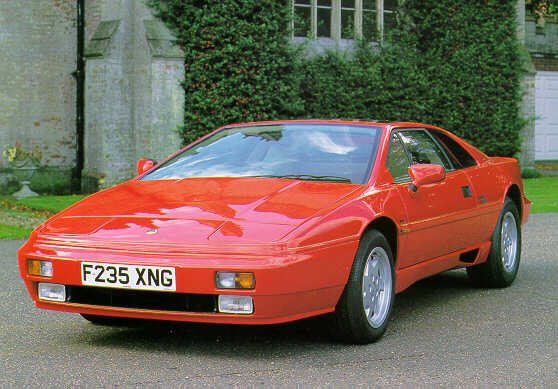
Two states of tune were initially offered for the UK market, the normally aspirated model producing 172 bhp and the Turbo which gave 215 bhp. This allowed the smoother shape to accelerate to 60mph in exactly 5 seconds, truly great performance for the price.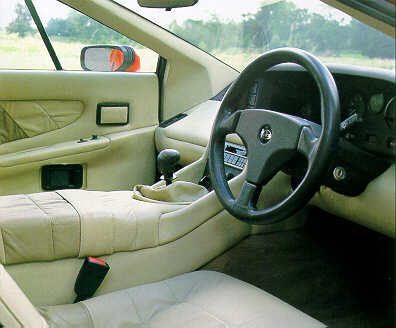
1989 saw even more power with the introduction of the Turbo SE, this gave 264 bhp with the aid of a chargecooler. Quite unbelievable from only 2.2 litres and 4 cylinders, even more impressive to learn that the engine was fitted with a catalytic converter.
The SE had uprated front suspension to cope with the extra power.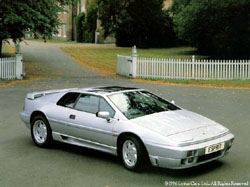
1991 saw the Esprit having an all Turbo lineup, with a a 228bhp "S" version slotting between the Turbo and SE models.
ABS brakes were now fitted as standard on all Esprits.
Power steering was added to the equipment list and there was a slight interior redesign.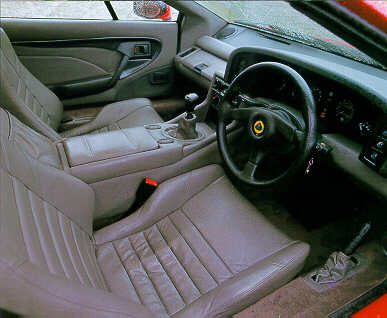
Most significant were the exterior changes, with smoother bumpers and sidesills, a redesigned rear spoiler was mounted higher up on the car to give better rear visibility and new alloy wheels were fitted, now with a coloured Lotus badge in the centre.
Vauxhall Carlton door handles also replaced the previous British Leyland examples.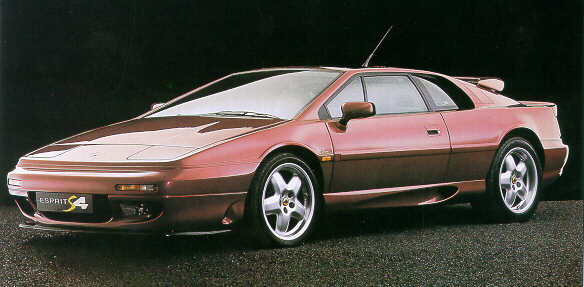
The next model in the revised lineup was a limited edition for both road and competition use. The Sport 300 had a weight reduction and a power increase, now 300bhp from 2.2 litres.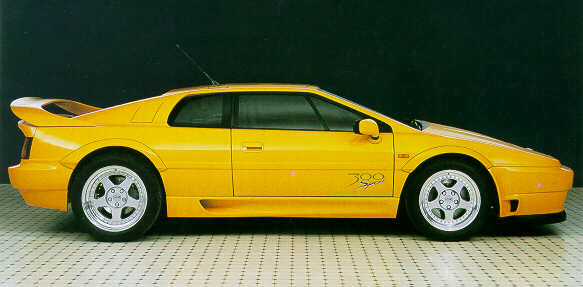
The S4S was introduced in 1995 to slot in between the S4 and Sport 300. This added the Sport 300's wheel arch extensions and rear wing to the S4's body.
Larger wheels than on the S4 were fitted, and the engine had a power and torque increase over the S4.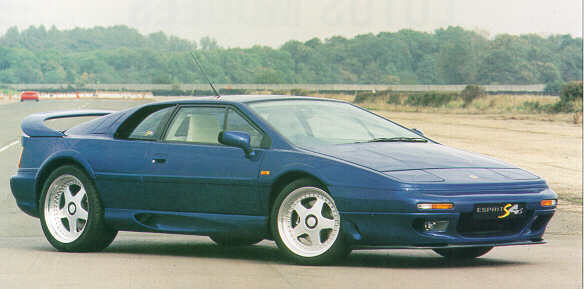
1996 saw the most important Esprit model to be introduced for a long time.
The car finally gained an engine worthy of its Supercar status with the launch of the V8 model. The 3506cc Twin-Turbo unit produced 350bhp, some 50bhp more than the best 2.2 litre Esprit.
One reason for the V8's introduction was that the 4 cylinder engine was no longer acceptable for US emission legislation, and Lotus couldn't afford to lose valuable US sales.
Exterior changes were minor, with new wheels and a rear V8 badge being different from the S4S.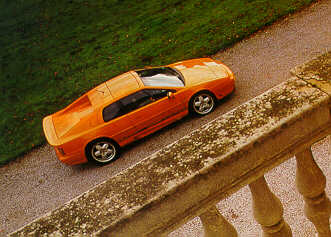
This reverted to a 1973cc Twin-Turbo 4 cylinder engine, producing 240 bhp, yet still propelling the car to over 160mph.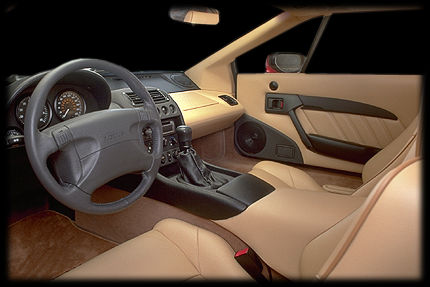
Also shown was probably the most extreme production Esprit, the V8 powered. stripped out Sport 350.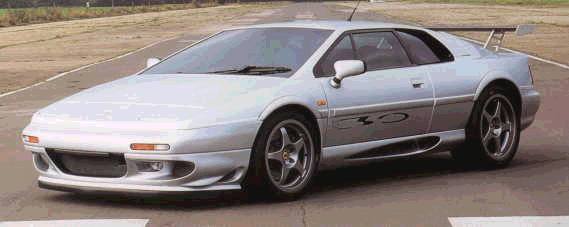
Featuring the new interior, a GT style rear wing and more extensive use of weight saving materials, the Sport 350 is, to date the ultimate Esprit.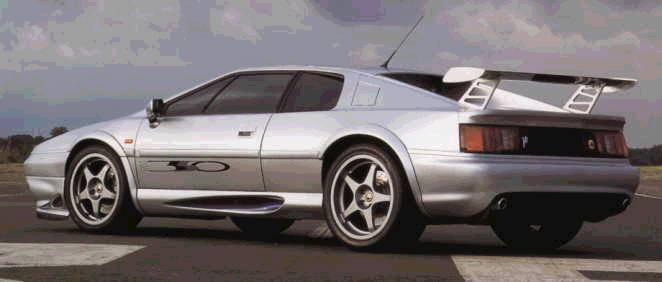
So the Esprit continues through 1999, but there will undoubtedly be exciting development going on at this very moment, to create something spectacular!