 Building
a General Lee
Building
a General Lee

The following is a letter sent to me by Gary Anderson and it was originally created by Andrew. He has had much experience rebuilding cars, including a '68 Charger. For all of you who may want to rebuild a Charger someday to look like the General Lee, this information will be very valuable. Keep in mind that any opinions expressed in this letter are Andy's and not mine. Any questions you have for him should be sent to: [email protected]. Andrew's Remodeled '68 Charger Here is the letter: Since the show’s return almost a year ago, many have expressed interest in "building the General Lee".
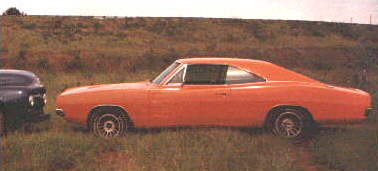
Andrew's remodeled 1968 Charger
General Lee SpecsI have written this article as an informative guide for such a project, and as a wake up call. I have been in contact and advised many on this topic, and have noticed common questions, and common problems. My previous letter was a bit less organized than this one, and a bit harsh in its treatment of hardcore Dukes fans.
A few introductory notes. I have noticed that the vast majority of those planning, hoping, or wanting to build the General Lee are not mechanically inclined, nor do they know a lot of basic automotive knowledge. This letter is very detailed, and presents an entry level explanation of things. Keep in mind that there are many things that I will discuss here that have higher levels of complexity, and I am preparing other letters, which I will send out as "stock" letters on a request basis. These will cover things like engine math, cam and head design, etc. Also, for all the jerky nitpickers, I know there are exceptions to the generalizations. I know there are people who don’t care about spending $30 a day on gas, who don’t mind not having a smooth ride in traffic, who want a more custom drivetrain. However, those people also are of the experience to do all this without a plan, and I assume if you are one of them, you are just reading this to see what I know. Well, this ain’t everything. I want average folks to be able to understand this and follow it. I can certainly design a 1,000+ hp monster mill and a frame that can handle it, but that would have no place on the street or as being the General Lee.
I figure I’ll start at the very beginning, finding and selecting a car. Most of you are probably at this stage. Chargers exist on many levels, base models, R/T’s, 500s, HEMIs, on and on. You need to know what you want, because money spent initially is usually less than that spent after (it is usually more affordable to spend $12,000 on a 440 car than to buy a $5000 base model and make it a 440 car).
Hemming’s Motor News has long been the mainstay of automotive enthusiasts. Published on a monthly basis, any issue has at least 10 2nd generation (1968-1970) Chargers. However, as Hemming’s, and Auto Trader’s Old Car Trader are national publications, you may not be able to see the car you want. For those who must do the car soon, this is your best bet. I advise searching through your local papers, Auto Trader and Sportscar Trader magazines, and wait until the right car comes. Go to local Mopar shows and actually talk to owners of Chargers. You’ll learn a lot, and sometimes they know of one for sale, or there may be one for sale. Patience shows in any project car, and if you can’t wait for good things to come along (not that you always have to), you might want to reconsider your interest in classic cars. Also, remember, the main reason patience shows, after holding out for a clean car, and clean parts, is that the longer one waits, the more money one saves up, presumably. So, if you happen to be rich, yes, you can buy and finish a car in two months. However, sadly, most of us just ain’t in that situation.
Expect to pay $5000-$10,000 for an OCPG (old car price guide) class III car. Class 3 is a car that has good running drivetrain, fairly straight and clean body with little bondo or rust, and a decent interior, maybe needing a new headliner, or carpet, but nothing major. It shouldn’t need an engine or tranny rebuild, but some retrofitting is in order. It is a car that could be restored for less than $5000 in parts and labor, and in less than a year. You can pay less for a class 4 or 5, but if you are not the type to do major auto work, I advise against it. Spend the time you would have spent saving for parts earning more money for a better quality car (I cannot explain the OCPG rating system, but class 2 is what you find at most car shows, class 1 is what wins most car shows, class 0 would be if you found a car that had never been sold and stored in a vacuum for the past 30 years. Class 4 is an ex hot rod with a lot of detrimental modifications, class 5 is usu. A car that has something that saves it from the wrecker, class 6 is a parts car. The last 2 classes have destroyed relationships!!!).
Realistically, for an average Dukes fan, you will look at 318 small block (LA) V8s, 383 big block (B) V8 cars, and 440 big block (RB) cars. The 318 or 383 should be considered for daily or frequent driving (I will henceforth consider "frequent driving" to mean more than weekend, less than daily. A car you take to friends houses, out cruising, to the movies, but do not commute or in any way rely on this vehicle.). A 1969 440 Charger consumed on average, 8.1mpg, so it is definitely a weekend or infrequent driving car (I will get into fuel later).
If you plan on having the Charger as your only vehicle, to drive to school or work or whatever, stay with the LA engine. I’ve had 318’s run 400,000mi without a rebuild and never die. No, it isn’t fast (it’ll beat Probes and Hondas), but it can easily accept a 360 engine, which will still deliver 15mpg or so and dust a Z28, and you can buy them in crate form, brand new, ready to install.
If you want a fun car, but want to drive a lot and be seen, however have something else to depend on, I suggest a 383 car. It will give good pickup with fair fuel economy (11mpg). 440’s do not get the fuel economy (unless it is a 6-pack, which are hard to keep in tune) to be a daily driver, and really push a frequent driver (the job you drive to in your other vehicle will pay for gas and little else.) With both these engines in their original forms, there are incompatibilities with modern fuel.
I need to take a break here and explain. Before 1972, aside from being cheaper, gas was leaded, and had higher octane than is available now. The lead acted as a lubricant, and without it, hardened exhaust seats are necessary. Many machine shops can do this for $80-$100 a head, provided you remove the cylinder heads and get them to the shop, and reinstall them yourself. Also, the highest compression usable with 93 octane fuel is 9:1, a bit short of the 383’s 9.7:1 and 440’s 10:1. People who say they run higher either have larger combustion chambers than their piston was rated at, a cam with large intake duration, severely retarded timing, or a much thicker gasket. Until you tear apart the engine for a rebuild, at which time you should have 9:1 pistons rated for whatever cc your combustion chamber is, you can purchase a bottle of octane booster every time you fill up. On a weekend car, this isn’t a huge problem, but on even a frequent driver it will be. Also, remember that with 9:1, you will have to run premium 93 octane from a reputable gas station, in other words, Shell, Texaco, Amoco, Chevron, or Citgo. No 7-11, Cumberland farms, Circle-K, or BP type stuff.
Also, there 3 ratings of engine power. Before ’72, you had gross horsepower, at the flywheel, no accessories. Then you had net, which was at the crankshaft with everything, although some manufacturers went so far as to rate it at the tailshaft of the transmission. Last, you have brake horsepower, at the rear wheel. The difference in ghp to bhp is usually about 100hp, so a 375ghp 440 magnum actually put out 275hp rear wheel hp, or bhp.
One last side note before I return to where we were. Since about August ’96, more and more people are building General Lee (part of the reason I have taken the "uniform" off of my General). It has gone from being a, "hey cool, me too" attitude among builders (most of whom were still car enthusiasts), to a competition (most builders now are high school/college kids who are trying to live out a fantasy and posses little automotive knowledge). As a result, criticism is high. A non-’69 car will get criticism from many Dukes fans, mainly out of jealousy. My car is a ’68, and I didn’t start getting any comments about the ’68 pieces until April or May of last year. So, even though it is harder to find the ’69, it would be well worth the wait for those set on General Lee (they aren’t much rarer, actually, ’70 had the lowest production number, just that everyone wants the ’69s.).
Now, assuming you get a Class 3 car, lets talk reality again. This time, about performance. As discussed above, you have a trade off with performance and drivability. The Dukes of Hazzard was a complete fiction world where the General Lee was the fastest car on the road and yet idled smooth and was reliable enough for them to drive it as much as their truck. Not so in the real world. Honestly, without a hemi, forget being the fastest thing on the street. There is always someone faster. What you want to do is be faster than x% of cars. Being faster than everything except for a few other hot rods is very possible (faster than 99% of what is on the street), but not going to be very streetable. Count on spending $3000-$5000 on just your engine here. Being faster than many stock modern performance cars (Z28s, 300ZXs, T/As, 3000Gts, etc.) is possible with a more frequent driver (faster than 85%-90%). And being just below that level (meaning a capable driver will be needed still to beat one, and it won’t be a royal butt kicking, maybe one car length) is possible with a very frequent driver and some daily drivers (faster than 80-85%). Also keep in mind that a 360ci, 383ci, or 440ci engine in stock form is very respectable, and faster than 90% of what Detroit makes nowadays, and probably 95% of what the Japs produce.
Performance and drivability are inversely related. High performance engines operate in the higher revbands, at higher compression, and at overall higher speed. This also means they have to deal with higher temperature, higher stress, and increased wear. High performance cams have "lumpy" idles due to short lobe separation and long durations, and they rob vacuum required to operate power brakes, and the Charger’s "vacuum canister" headlight door mechanism. Overall, a high-performance engine is not going to last long, and will not be fun in the day to day. But, it will be fun if it gets taken out every now and then, tears apart all comers, then goes to bed again for a week or two (so your wallet can recover). If you are interested in this e-mail me (address at end of letter). This requires some knowledge of what exactly you want out of the performance end. Also, this level needs some chassis, brake, and suspension work as well to handle the engine. Think of this one as a leap above stock. Many refer to this as "pro-street". From here out, this is Stage III.
Then comes the stride above stock. Now, although it will not be a match for what I just described, it is actually driven, seen on the street a few days a week, and how often are you going to encounter what I just described. This car however, is still not a practical daily driver, but it isn’t so costly to build and run that you can’t drive it more than once or twice a week. It has a milder cam, operates in the upper midrange, runs on pump gas, has a mild lope to the idle, doesn’t rob very much vacuum, and doesn’t require many special modifications for what you are going to do. Referred to often as "street/strip". This I will call Stage II.
Last, you have your step above stock. This has a smooth idle, with maybe the slight lope that an actual Magnum engine had (very light, could be hidden w/quiet mufflers), doesn’t require "special measures", runs on pump gas, sometimes midgrade, gets alright economy, allows you to run everything. It won’t beat all comers, but a good amount, considering, how often do you even see other hot rods (it’ll be faster than a stock Mustang GT). Any 6cyl Turbo car, and Z28, T/A, even Corvettes, will probably lose, unless the ‘Vette is a stick and has an excellent driver. This is realistically what the Duke boys had, as far as frequency of usage. Could be a daily driver if willing to endure a little dent in your wallet, not bad though. I call this Stage I.
Great, you say, I want I or II (if you want III, like I said, e-mail me), now what do I have to do? Okay, this is the order that should be followed, top to bottom.
*Stage 1* *Stage 2* *Rough Price*
| Ignition |
Mopar electronic ignition conversion
|
$150.00 | |
| Exhaust | '68-'70 HP manifolds | 13/4" headers | $200.00 |
| Induction | Mopar dual plane | Edelbrock PerformerRPM | $170.00 |
| Cam | Mopar 280 or 284 dur., hyd cam | Mopar 292 duration hydraulic cam | $160.00 |
| Carb* | Edelbrock performer or Carter AFB | Holley double pumper | $280.00 |
Along with this, a stage I or II engine should also get a double roller timing chain ($50) and a high volume oil pump ($40). Stage II will also want a high volume water pump ($70), a windage tray ($50), a tranny cooler, and a higher stall convertor, about 2500-2800 (tranny coolers are a must w/high stall converters) Go with 3.23 rear gears for a stage I, 3.55 with stage II (3.91s could also work with stage II, but would make it a "3 or 4 day a week car", being right on the edge of too steep for the street). A 2.5" exhaust and a K&N air filter should finish out the package, stage I or II. Keep in mind there are no labor costs factored in here, for those of you who are not mechanically inclined.
Now, this isn’t all. On your suspension, with stage I or II, just be sure that it is good, up to spec. Stage II may want to consider upgrading your brakes. But, if you are requesting a stage III "recipe", definitely up your brakes. You can go heavy duty all around if you want, but honestly, the Charger is an immense car, and will never achieve Porsche (or even Corvette) handling. Physics only allows so much.
Okay, now on to what everybody wants to know, what goes into the General? The paint should be hemi orange (the distinction between race and street was only in engines, it should be closer to street), option code V2. The DuPont number I printed in my first letter was for lacquer, for a street car you’ll want base coat clear, or if you aren’t doing an exceedingly nice car, enamel (Enamel is proper for restoration, too, but doesn’t have the luster of a base/clear). I don’t have the paint code, but DuPont is the best in the business (most expensive too). PPG or Imron are the next best. The flag was painted on. It measured 54", and began by plumbing a line between the "peaks" of your windshield trim, and then running it straight back. The numbers begin even with the middle of the vent window, come as high as the point where the upper door indentation turns into the body line. They end even with the door handle. 20"high, 12" wide, 4" thick with a ½" border stripe. They should also be painted for correctness. The lettering was vinyl, and was 4"high, running long the flat upper part of the driprail.
Interiors were tan on the main cars, but most 2nd unit cars (stunt cars) had black interiors, and most interiors look black from a distance anyhow due to the effects of shadows. Tan also shows stains easier. The rims were 10-fin Shelby, but Shelby (as in Caroll Shelby) anything is expensive and impossible to find. American racing turbines look just as good, but have usually 4 too many fins (10-fins were made, but are rare and need to be drilled out from a GM 5 on 4 ¾ to a Dodge/Ford 5 on 4 ½ pattern). If you are on a page w/a pic of my car, it is sporting the 14 fin turbines (which I am selling now, for $200 for all 4. I am buying a set of Torq Thrusts, $190 a piece!). The CB antenna is a standard 4ft whip. The GM cb/radio antenna available through JC Whitney is probably the actual one, as they have had that antenna since 1978. It does require permanent mount, but at the most, it’ll be drilling 2 1/8in holes, easily tack welded up and sanded down again.
I do not recommend the following 2 modifications, but am including them. They should be regarded as permanent, not necessary, and degrading to the car. The roll bar should be a 4pt Competition engineering roll bar, I don’t know if they still make it. They do make a ‘6 pt, which cannot be told from a 4 pt from anywhere outside the car, unless you are standing next to it looking in, and since you never saw it on the show, no one can be sure. Roll bars mean hot rod, so when someone goes to buy it, they think, beat up old hot rod. Also, there is a large amount of welding and fabrication involved in the installation, and you can imagine getting one out. The pushbar is welded directly to the front bumper. They are actually made for trucks (none available for cars), and so, cannot be installed as they would if it was made specifically for the Charger (like they are for trucks, available through JC Whitney or Sumitt, get a full size truck’s for right size, i.e., a Ram, not a Dakota). Again, welding it to the bumper will ruin the bumper for being used on anything but a General Lee, and the first couple episodes don’t have a push bar.
Now, my last letter was a bit harsh, and I considered not including this section, but it must be put in. Owning the General Lee does not make you a Duke boy, a Southerner, a Country boy, or a great driver. Many people who have such cars are treated not as Duke boys, but fan boys. TV shows cater to the public, and when you build a TV prop, you are also going to deal with the public. They expect to see a Southern country boy, in his early 20’s, who lives on a farm, driving the car. It will be out of place in the city, or in the North, and in the hands of anyone else. I am Southern, and a "country boy" , and was accused of faking it (the main reason my car is no longer the General, and is in the process of being painted black). It was different before the show returned, but fact is fact, the show is popular, the car somehow became trendy, and that’s it. Many people will see a General owner as too big of a fan with too much time and too much money, probably stuck in his childhood. The best way to put it is that a Dukes fan driving General Lee is like a Trekkie wearing a Federation uniform. Also, what did you think of 2 impostors in the General Lee (the C and V words).
Mopar people see it as ruining a Charger (that is not new, though). The rebel flag has its implications as well. No, the Dukes weren’t racist. But, the South did fight to keep slavery (and a few other things), and it is used by the KKK and other extremist groups. And how many black churches were burned these past 2 years? I am not saying don’t do it. That isn’t the point. The point is that the General Lee is not a one of a kind, universally liked, kickin’ everyone’s can car like the show portrays it. The car also has social ramifications associated with owning it. Also, the General was a show car, meaning that the life and characters associated with it were also fictional. I don’t know many farmers that can afford a classic car. Most of ‘em are irate at their condition, curse and complain, a few are racist, and they have little to hope for.
So, I am simply saying, find out first. Ask friends and acquaintances what they would think of the General Lee (not you with the General Lee, that will bias their opinion), ask black people. Paint the car orange, put on the Turbines, and wait. Give yourself the 90 days for full cure on your paint job, if you really, really want General Lee, do it. Also remember, your attitude toward how you treat your musclecar will change as you invest money in it, especially the $2000 or more in paint. The only people that I would say, concretely, shouldn’t do it is people who think that a Charger and a paint job will make them Bo Duke and they can go drive down dirt roads and get in chases with police. They don’t need a car, they need help.
Don’t think that any Charger can handle the TV show’s style of driving, pavement or dirt. Obviously, no jumps or sidestands, but musclecars were not built for dirt roads at high speed. Uneven surfaces wear out joints and bearings fast, and remember your entire rear end is connected to your leaf springs, so with each jolt, your differential is getting that too (by the way, washboard is not easier on the car when taken at high speed, it just is easier on the driver. The proper way to handle it is to slow down until it isn’t as harsh and idle through it). Spin outs and constant burnouts on pavement destroy axles, bend rims and suspension components, and also destroy joints and bearings. There is a difference between performance and abuse. If you treat the car well, don’t bury the hammer at every intersection and always drive at max speed, you can get a lot of miles and a lot of enjoyment out of the General, a Charger, a Mopar, or any musclecar. For those that I may have dissuaded from the General Lee, try coming up with your own car, and its own name and graphics. Many hot rodders do, and many hot rodders have great times in such vehicles. You get character and recognizability in any well done old car, and can become a good driver in any performance inclined vehicle, so don’t let this intimidate. Cars cost money, Mopars cost more than Chevys or Fords (I like any old car, I just prefer Mopars), so maybe if you decide not to do the General, you will decide to find a decent old car and restore it. Any other questions can be sent to [email protected]. I will be writing a "beginners introduction to Mopars" and an "introduction to basic automotives", as I have found many who I speak with may not want to get into automotives, but would like to understand the concepts. They are forthcoming. Until then, keep those rubberbands stretching real tight.

E-mail Gary Anderson "The originator of this page"
Thank you! Gary