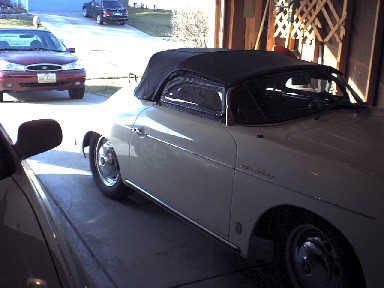
Porsche's 356 Speedster is one of the most desirable sports cars ever built. With only 4,244 Speedsters built by Porsche between 1954 - 1958, the prices for exquisite examples are exceeding $50,000.00. Purchasing and driving a Speedster have become an impossibility for almost all. Those that can afford these cars are placing them in collections where they are not enjoyed as they were designed to be - on the open road, accelerating out of this curve to the next.
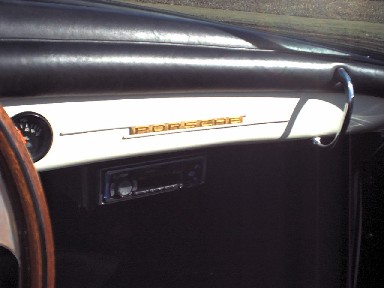
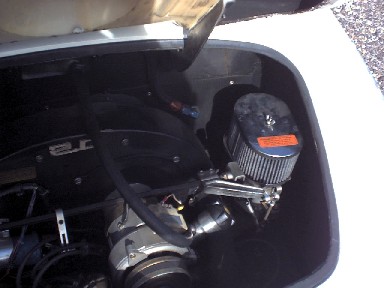
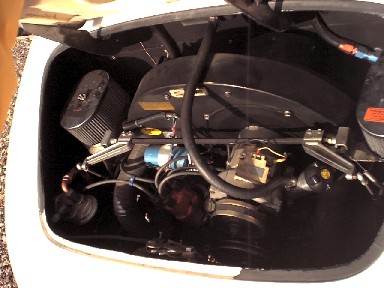
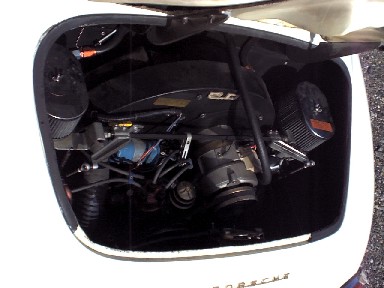
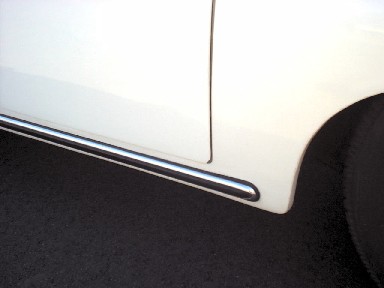
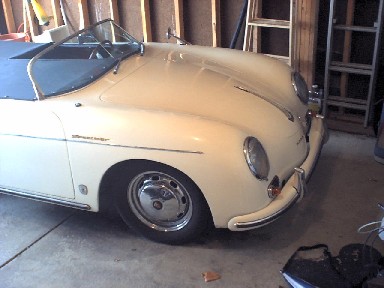
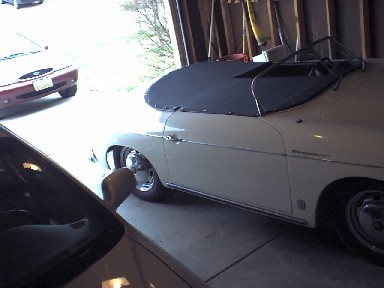
Because of the demand, replica builders have been building Speedsters using VW parts, which surpass the quality of the originals in speed and durability while still offering the correct minimalist car and driver experience. The following are pictures of the Speedster that I used to have.

From the ruins of Germany after World War II emerged a revolutionary VW based
sports-car in 1948, the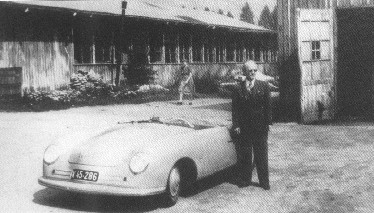
Porsche 356. The Porsche company's factories in Stuttgart were taken over by the US Army and the beginning
of the Porsche company as we know it today started in Gmund, Austria in a sawmill where the company made
ends meet by repairing Kubelwagons. Then they began the design and building of a legend, the 356.
At the same time, in the United States, a Viennese �migr�, Max Hoffman, started selling European cars to Americans from his Frank Lloyd Wright designed showroom on Park Avenue. His first great success was selling the Jaguar XK120, however, as customers developed a love-hate relationship with them and after many a late night call, Hoffman was forced to get an unlisted number. While he still sold these marques he began looking for vehicles that were engineered well and dependable.
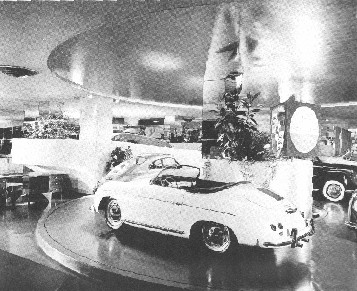
In 1950 Hoffman reached an agency agreement with Porsche and he not only sold the cars, but almost single handedly built the Porsche reputation in the US through promotion and racing. By the mid-1950s he was selling 30% of Porsche's entire production. This is in the days where for the $4,000 it took to buy this small 4 cylinder, air cooled, rear engined car, you could own both a Ford and a Plymouth.
In the 1953 issue of Auto Age, John Bentley said that the Porsche "will climb the back of a modified Jaguar XK120 up to around 70 mph, and will easily out drag a Cadillac from zero to any speed. Correctly driven it will out-corner and out brake absolutely anything in the genuine sports car line, anywhere near its price." While Americans were buying sports cars like crazy in the mid-1950's a good many of them were MG and Triumph convertibles that cost a good deal less then the engineering marvels from Porsche. Hoffman needed something to compete, and he laid down the challenge to build a simple open roadster that he could sell for less than $3,000. Stuttgart responded, and in 1954 the Porsche Speedster was born.
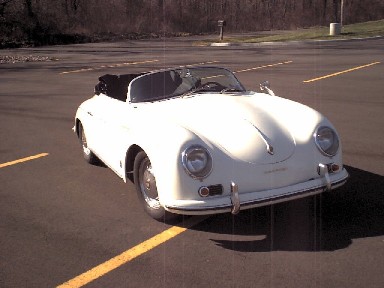
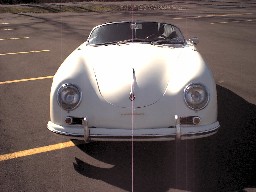
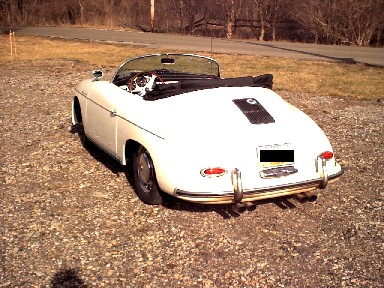
The Speedster, affectionately known as the "bathtub", because
of its distinctive upside down bathtub shape, came with an easy to fold yet
largely ineffective top and side curtains, bucket seats, no heater, and no tachometer
for $2,995 in New York. Without all of
the extra (unnecessary?) equipment the Speedster weighed in 200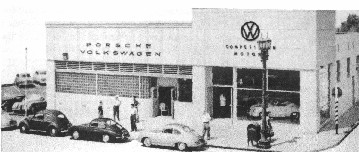 lbs lighter
than its siblings. As racers always
know, lighter means faster which led to the Speedsters success on the racetrack
from Johnny von Neumann (Competition Motors) at Torrey Pines in California to Max Hoffman on
the East Coast. The racing success of
the Speedster extends to the present day in vintage racing throughout the
world. The pinnacle of Speedster
development was 1958, which was also the last year of production, as in 1959 it
was replaced by the Convertible D.
lbs lighter
than its siblings. As racers always
know, lighter means faster which led to the Speedsters success on the racetrack
from Johnny von Neumann (Competition Motors) at Torrey Pines in California to Max Hoffman on
the East Coast. The racing success of
the Speedster extends to the present day in vintage racing throughout the
world. The pinnacle of Speedster
development was 1958, which was also the last year of production, as in 1959 it
was replaced by the Convertible D.
This example is a very accurate 1958
Speedster Replica from CMC. Just as
with the original 356s, the body shape creates a wedge that slices
effortlessly through the air causing sure footed handling with a little bit of
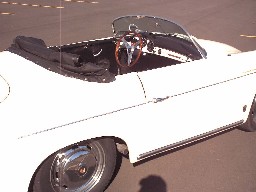
predictable understeer. The setup is
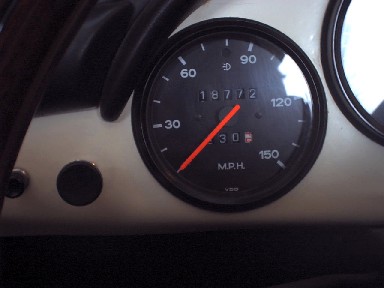
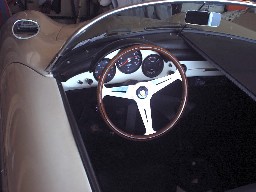
historically correct with 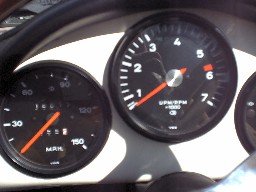 three large VDO gauges in front of the driver with
the most important one, the tachometer in the middle. The odometer shows less than 19,000 miles and the driver can quickly see
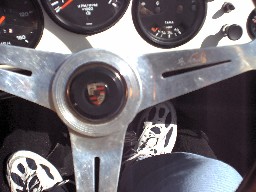
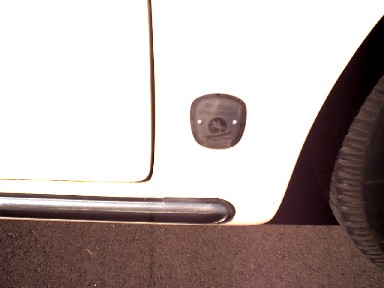
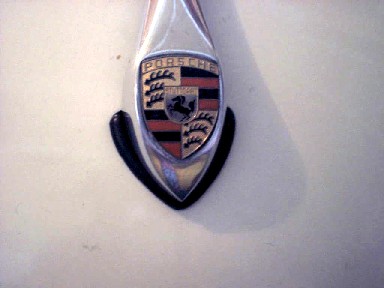
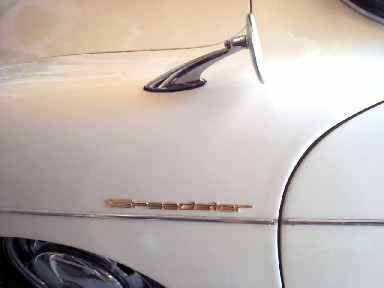
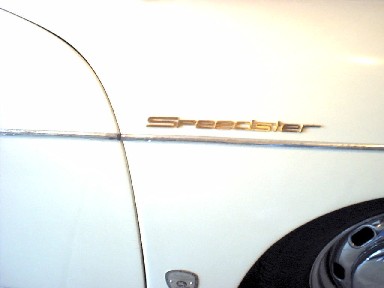
the rpm's, oil temperature, and speed. The car's badging is perfect with
three large VDO gauges in front of the driver with
the most important one, the tachometer in the middle. The odometer shows less than 19,000 miles and the driver can quickly see
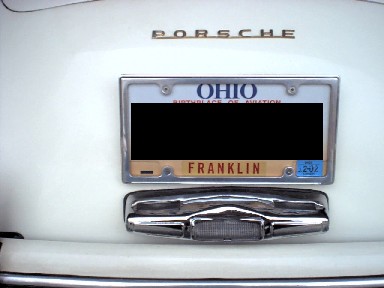
the rpm's, oil temperature, and speed. The car's badging is perfect with 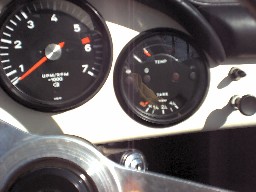 the Porsche
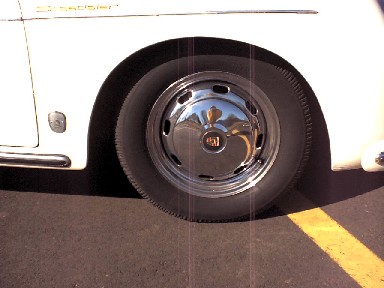
crest on the trunk handle and hub-caps, Speedster
the Porsche
crest on the trunk handle and hub-caps, Speedster