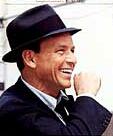
Frank Sinatra ~ The man they call "Ol' Blue Eyes"and "The Chairman of the Board," is basically the American Entertainer/Artist/PopSinger of the 20th Century. Hard to top him... that guy. For most, Sinatra is considered the male romantic vocalist. With that swinging style, he achieved a wide-range of dynamics displaying a delivery that projected any and every possible nuance or emotion in a lyric. His ability to produce those long, flowing musical lines unbroken by pauses for breathing, set him above the rest. Magnificant in his prime. When age turned his act into a parody, Sinatra maintained his grand stage presence that still intimately, captivated his audience. A one-of-a kind...God I miss that guy.
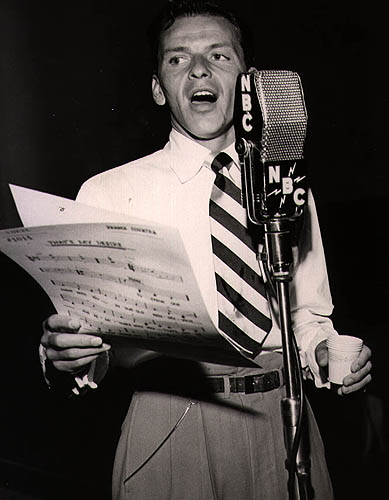
This site will display Frank's most influential albums. There are many, but only a few can make this "A List." Essentially, the Columbia Years (1943-1952) are best summed up in one compilation, for there are quite a few releases which are mostly singles. Difficult to get them all in one package like the Columbia box set. The Capitol Years (1953-1960) are best seen as individual albums. With the advent of microgroove in 1952, Sinatra made these masterpieces, setting a particular mood for his works. The Reprise Years, for me were best summed up in the Reprise compilation for different reasons than the early Sinatra. Most of his latter schtuff were scattered with gems, but filled with so so's. This compilation does a great job in capturing his best schtuff. Avante' !
The "A List"
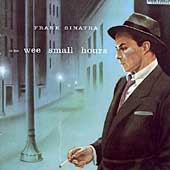
In The Wee Small Hours (1954): The first 12" record from Sinatra. A collection of ballads, this Capitol years showed a more focused and melancholy Sinatra. Tracks such as "Mood Indigo," "I Can Get Along Without You Very Well," and the title track shows Sinatra as lonely and a desolate, broken man. This is perhaps a reflection of his breakup with his love affair of Ava Gardner..."I'm a Fool to Want You," epitomizes that. In the 50's, Sinatra's voice had deepened and become worn down to where his delivery sounds torn and heartfelt. He was living these songs. A great album.
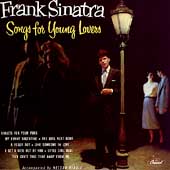
Songs for Young Lovers/Swing Easy (1955): This set combines Sinatra's first two 10" albums that contains some of his best material. This album's tracks set a particular mood that gave producer Nelson Riddle greater freedom in his arrangements. Both added new life to old standards like "My Funny Valentine," "They Can't Take That Away From Me," "I Get A Kick Out of You, " and "A Foggy Day." The style here is light and jazzy especially on the Swing Easy segment. Tunes like "All of Me," and "Just One of Those Things," shows his mastery of his "knock out" delivery with precision. Timeless...Gotta have it.
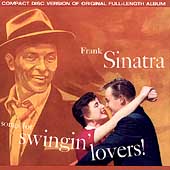
Songs For Swinging Lovers (1956): The best Sinatra album...period. Frank and Nelson speed up the tempo to deliver new and old, revived standards giving a swing feeling to them. "You Make Me Feel So Young," and "Pennies From Heaven," are a delight to listen to while "I've Got You Under My Skin" is of course, the one of Sinatra's all-time standard. The sequencing selection, the arrangement and singing is a piece of art. Romantic and rhythmic at the simultaneouly is the key. The album never loses mometum with other tracks like "It Happened in Monterey," and "Too Marvelous For Words." The great songs keep coming and the performance is breathtaking. A true classic.
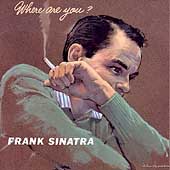
Where Are You (1957): Another all-ballad album that features Gordon Jenkins as producer. Here Jenkins displays his taste for a more lush orchestration that brings out the sad tones of some of these tracks. "The Night We Called It A Day," and "Lonely Town," has Sinatra's voice complemented well with the semi-classical arrangements, making it rich and full of flavor. Not as desolate as "Small Hours" but a majestic sadness making it one of Sinatra's better albums.
[1]