Figures for “Interactions of kaons, pions, and…”
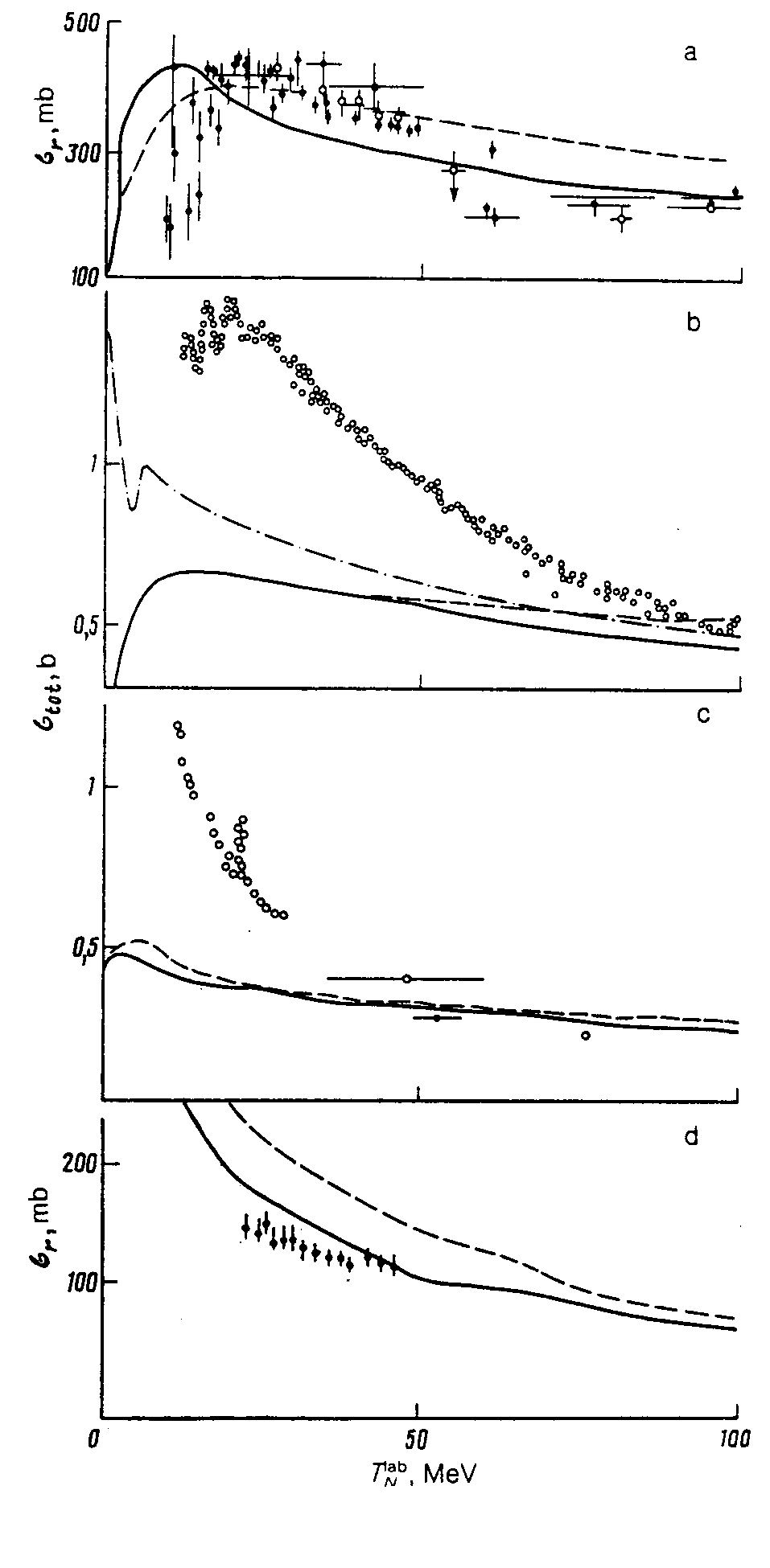 FIG. l. Integrated cross sections for the NA interaction in the region
of laboratory kinetic energies of the nucleon below 100 MeV: a) sr(N
12C); b) stot(n
12C); c) stot(N4He);
d) sr (Nd).
Here and in Fig. 2 the points · are proton experimental
data, o are neutron data, the solid and dashed curves are calculations
for p 12C scattering, and the dot-dash curve is for n
12C.
FIG. l. Integrated cross sections for the NA interaction in the region
of laboratory kinetic energies of the nucleon below 100 MeV: a) sr(N
12C); b) stot(n
12C); c) stot(N4He);
d) sr (Nd).
Here and in Fig. 2 the points · are proton experimental
data, o are neutron data, the solid and dashed curves are calculations
for p 12C scattering, and the dot-dash curve is for n
12C.
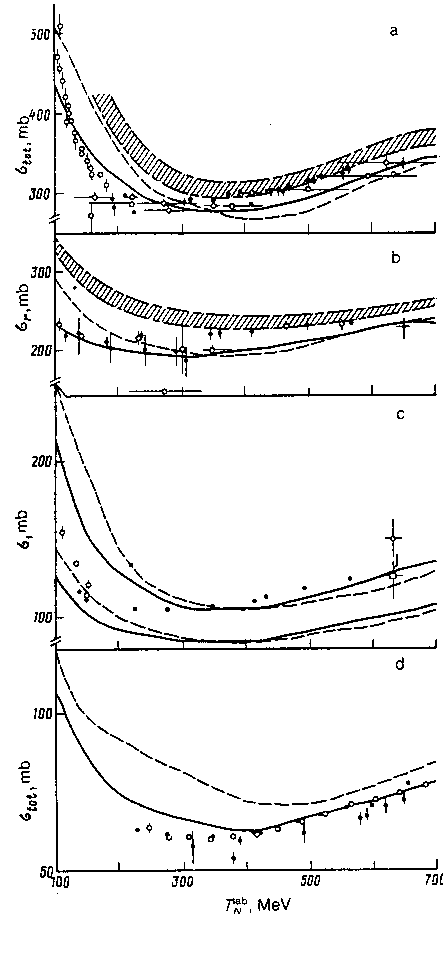 FIG.2. Integrated cross sections for the NA interaction in the region of
laboratory kinetic energies of the nucleon below 100 MeV: a) stot(N
12C); b) sr(N 12C);
c) s (N 4He) (the points o
are experimental results for s r
the upper pair of curves is the calculation for the total cross sections
stot, and the lower pair is for sr
); d) stot(Nd). The hatched
regions are the calculations of Ref. l.
FIG.2. Integrated cross sections for the NA interaction in the region of
laboratory kinetic energies of the nucleon below 100 MeV: a) stot(N
12C); b) sr(N 12C);
c) s (N 4He) (the points o
are experimental results for s r
the upper pair of curves is the calculation for the total cross sections
stot, and the lower pair is for sr
); d) stot(Nd). The hatched
regions are the calculations of Ref. l.
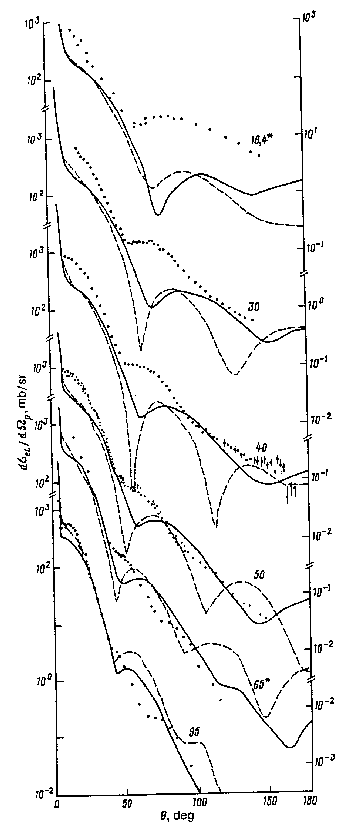 FIG. 3. Differential cross sections for elastic p 12C
scattering in the region of laboratory kinetic energies of the nucleon
below 100 MeV. Here and in Figs. 4-6 the curves are the calculations, and
the points are experimental data; the numbers near the curves are the values
of Tplab in MeV; an asterisk indicates that
we have given the angular dependence in the laboratory system, and in other
cases in the p 12C c.m.s.
FIG. 3. Differential cross sections for elastic p 12C
scattering in the region of laboratory kinetic energies of the nucleon
below 100 MeV. Here and in Figs. 4-6 the curves are the calculations, and
the points are experimental data; the numbers near the curves are the values
of Tplab in MeV; an asterisk indicates that
we have given the angular dependence in the laboratory system, and in other
cases in the p 12C c.m.s.
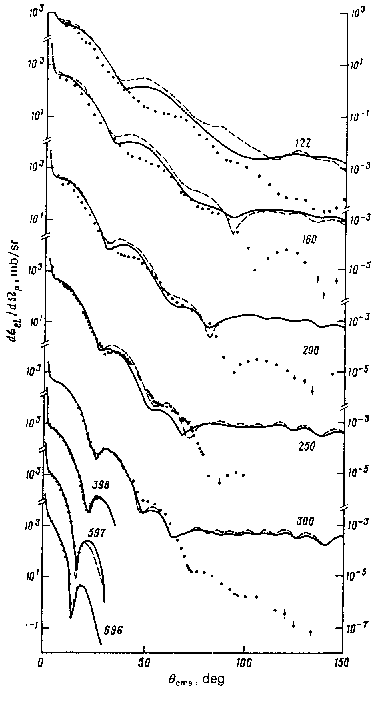 FIG.
4. Differential cross sections for elastic p12C scattering
in the region of laboratory kinetic energies of the nucleon above 100 MeV.
FIG.
4. Differential cross sections for elastic p12C scattering
in the region of laboratory kinetic energies of the nucleon above 100 MeV.
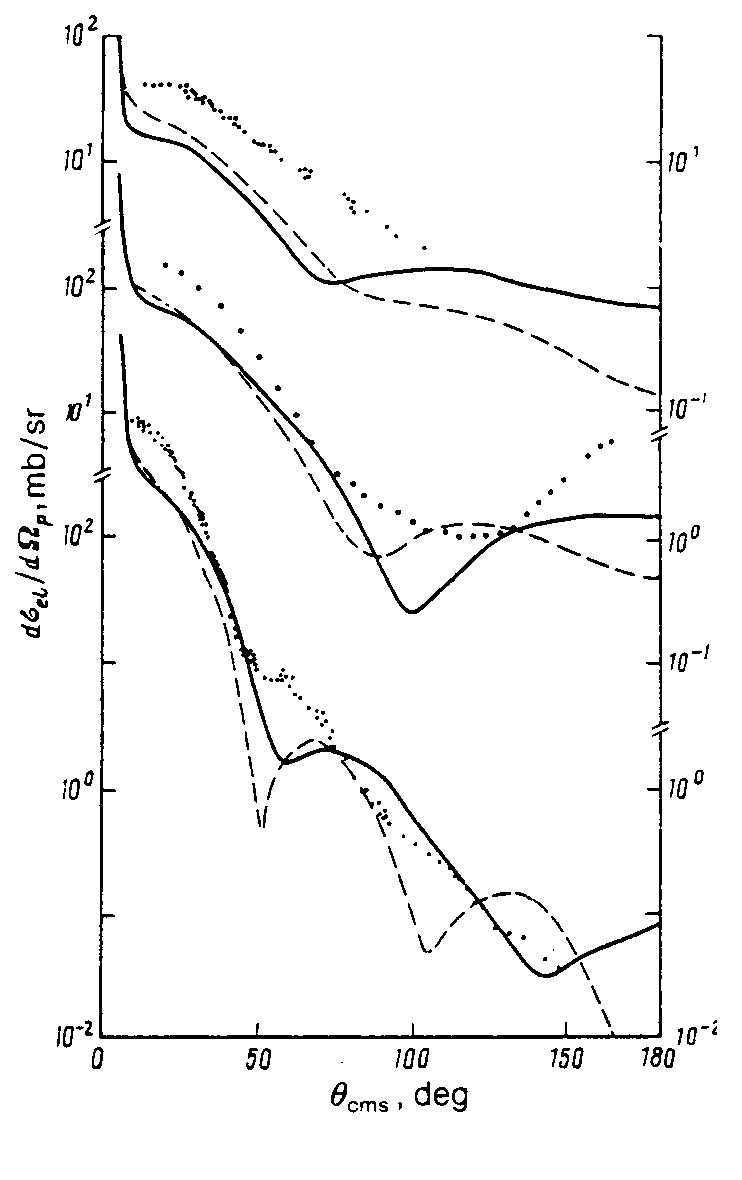 FIG.
5. Differential cross sections for elastic pd, 4He, and
12C scattering (from top to bottom) at Tplab
= 50 MeV.
FIG.
5. Differential cross sections for elastic pd, 4He, and
12C scattering (from top to bottom) at Tplab
= 50 MeV.
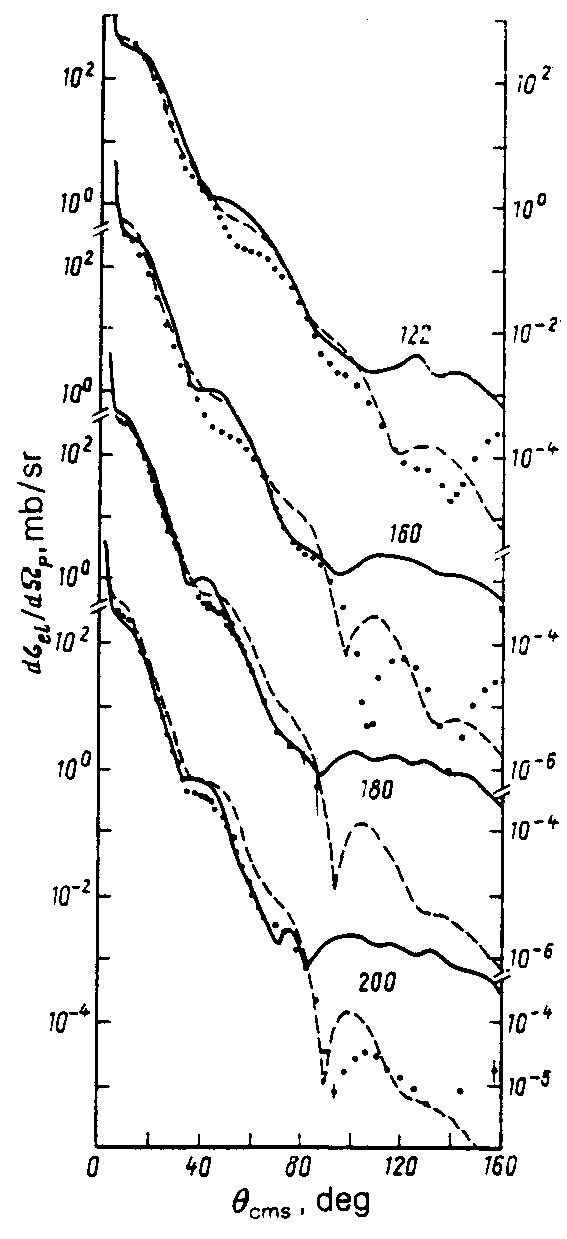 FIG.
6. Comparison of the differential cross sections for elastic p 12C
scattering in the region of laboratory kinetic energies of the nucleon
above 100 MeV, calculated using the kinematically corrected impulse approximation
(solid curves) and the more complex microscopic potential in Ref. 4 (dashed
curves).
FIG.
6. Comparison of the differential cross sections for elastic p 12C
scattering in the region of laboratory kinetic energies of the nucleon
above 100 MeV, calculated using the kinematically corrected impulse approximation
(solid curves) and the more complex microscopic potential in Ref. 4 (dashed
curves).
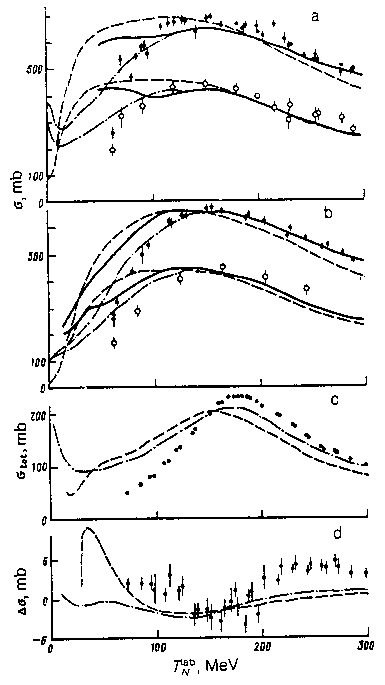 FIG.
7. Integrated cross sections for the nA interaction in the region of laboratory
kinetic energies of the pion below 300 MeV: a) s
(p- 12C); b) s
(p+ 12C); c) [stot(p-d)+stot(p+d)]/2;
d) stot(p-d)-stot(p+d).
The points · are experimental data for stot
and o are data for sr. The dot-dash
curves are the calculations including the corrections of Sec. 4, the upper
solid and dashed curves are for stot
and the lower ones are for sr .
FIG.
7. Integrated cross sections for the nA interaction in the region of laboratory
kinetic energies of the pion below 300 MeV: a) s
(p- 12C); b) s
(p+ 12C); c) [stot(p-d)+stot(p+d)]/2;
d) stot(p-d)-stot(p+d).
The points · are experimental data for stot
and o are data for sr. The dot-dash
curves are the calculations including the corrections of Sec. 4, the upper
solid and dashed curves are for stot
and the lower ones are for sr .
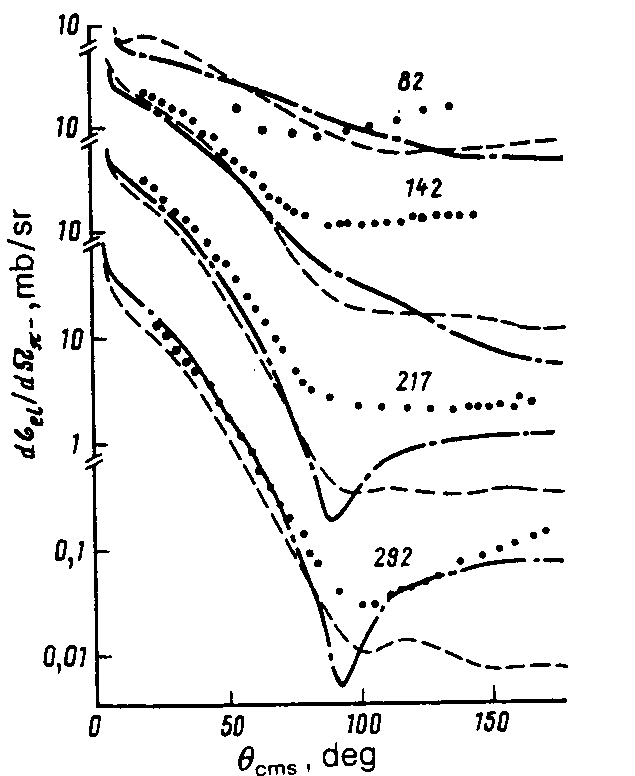 FIG.
8. Differential cross sections for elastic p-d
scattering. Here and in Figs. 9 and 10, the notation is the same as in
Figs. 3 and 7.
FIG.
8. Differential cross sections for elastic p-d
scattering. Here and in Figs. 9 and 10, the notation is the same as in
Figs. 3 and 7.
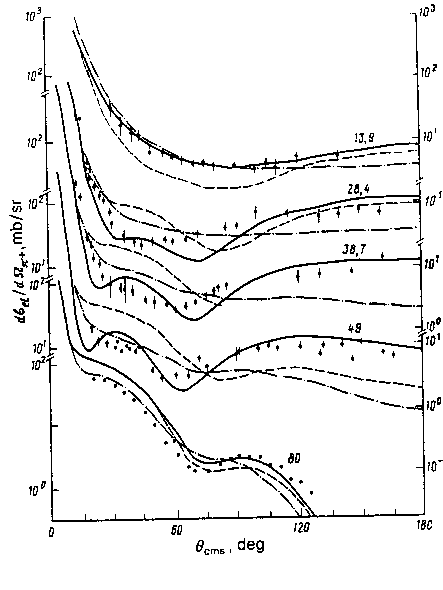 FIG.
9. Differential cross sections for elastic p+
12C scattering.
FIG.
9. Differential cross sections for elastic p+
12C scattering.
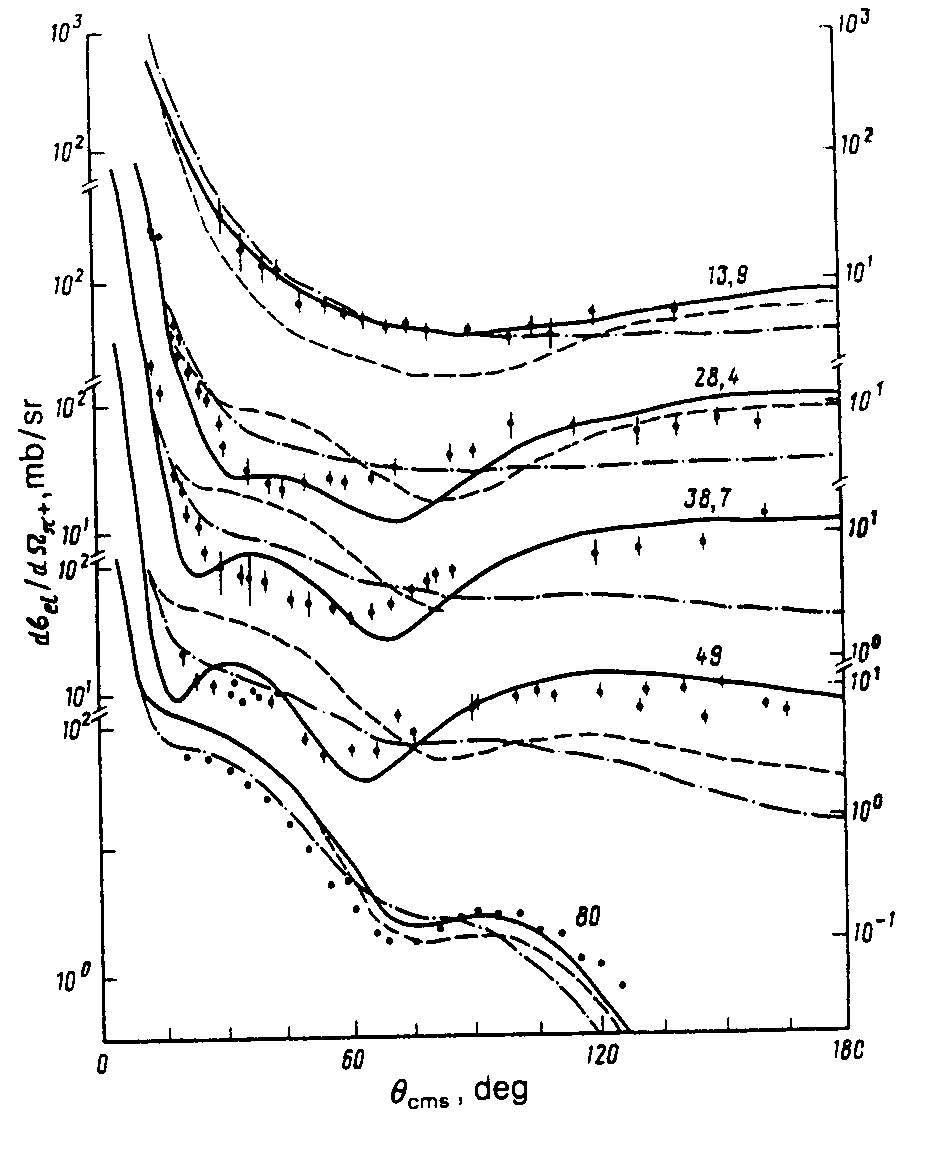 FIG.
10. Differential cross sections for elastic p-
12C scattering.
FIG.
10. Differential cross sections for elastic p-
12C scattering.
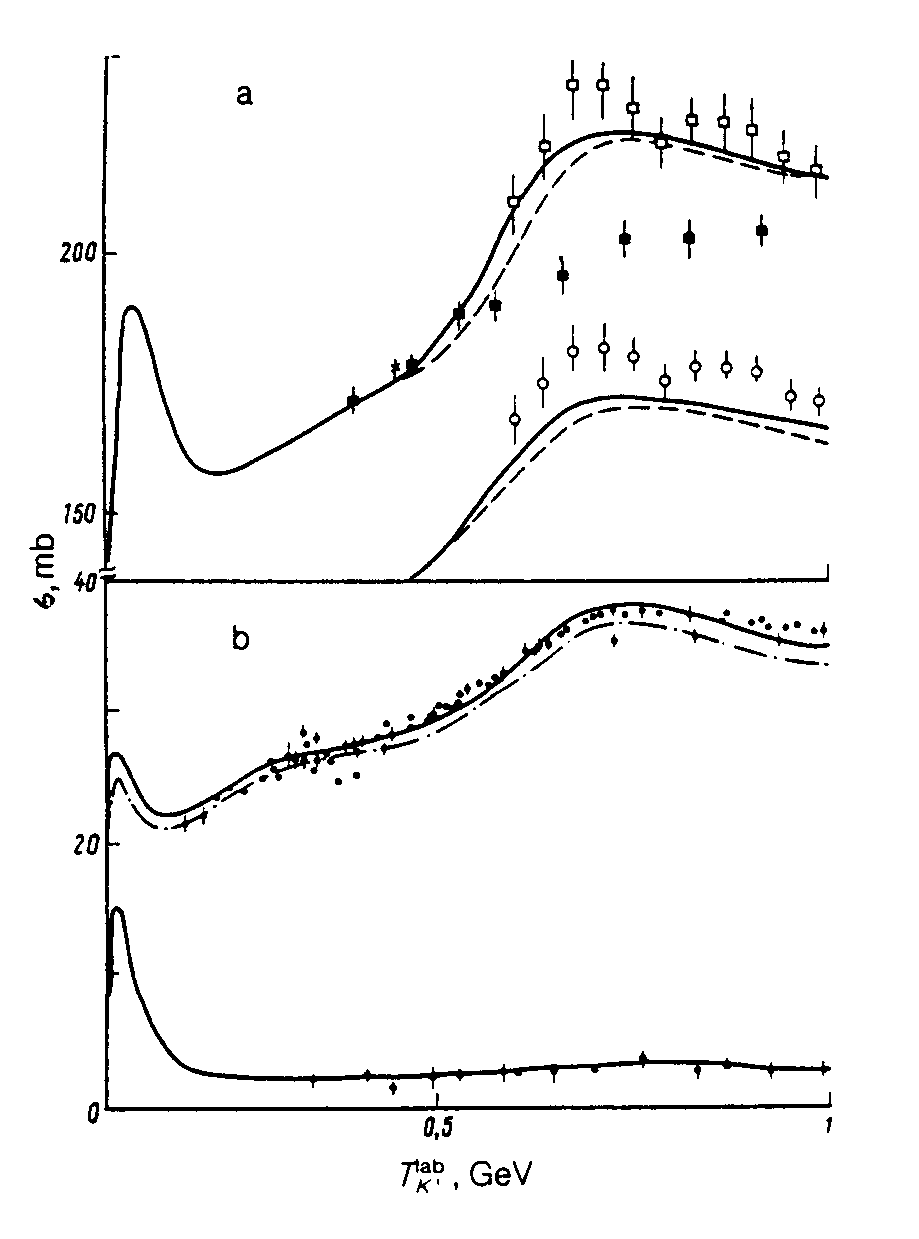 FIG.
11. Integrated cross sections for the K+ A interaction
in the region of laboratory kinetic energies of the kaon below 1 GeV. (a)
s (K+ 12C). Experimental
data for stot: black squares - from
Ref. 82; white squares - from Ref. 83; x- from Ref. 43; for sr
: o - from Ref. 83. The upper solid and dashed curves are for stot,
and the lower ones for sr. (b) stot(K+d)
(upper) and sel (K+
d) (lower); the solid curves are the calculations with the Gartenhaus-Moravcsik
form factor, and the dot-dash curve is with the Hulthen form factor for
d. The points · are experimental data
from Ref. 85.
FIG.
11. Integrated cross sections for the K+ A interaction
in the region of laboratory kinetic energies of the kaon below 1 GeV. (a)
s (K+ 12C). Experimental
data for stot: black squares - from
Ref. 82; white squares - from Ref. 83; x- from Ref. 43; for sr
: o - from Ref. 83. The upper solid and dashed curves are for stot,
and the lower ones for sr. (b) stot(K+d)
(upper) and sel (K+
d) (lower); the solid curves are the calculations with the Gartenhaus-Moravcsik
form factor, and the dot-dash curve is with the Hulthen form factor for
d. The points · are experimental data
from Ref. 85.
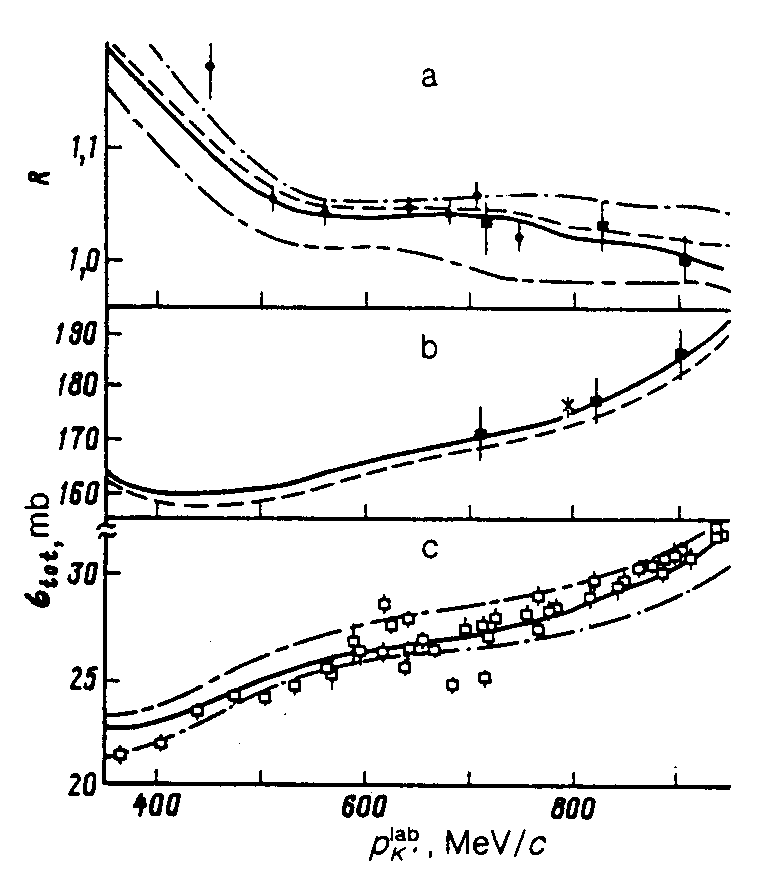 FIG.
12. Total cross sections for the K+ 12C and
K+ d interactions and the quantity R=stot(K+
12C))/6stot(K+d)
in the region of initial kaon laboratory momenta 350-950 MeV/c [(a)-(c),
respectively]. For (b) the notation is the same as in Fig. 11a; for (c)
it is the same as in Fig. 11b, the white squares are experimental data,
and the dot-dash curve is obtained using a deuteron density in the Gaussian
form. The curves in (a) are obtained using the solid curve in (b) and the
corresponding curves in (c); the dashed curve in (a) is obtained from the
dashed curve in (b) and the solid curve in (c). The points ·
in (a) are the experimental data of Ref. 84, and the black squares are
the data of Ref. 82.
FIG.
12. Total cross sections for the K+ 12C and
K+ d interactions and the quantity R=stot(K+
12C))/6stot(K+d)
in the region of initial kaon laboratory momenta 350-950 MeV/c [(a)-(c),
respectively]. For (b) the notation is the same as in Fig. 11a; for (c)
it is the same as in Fig. 11b, the white squares are experimental data,
and the dot-dash curve is obtained using a deuteron density in the Gaussian
form. The curves in (a) are obtained using the solid curve in (b) and the
corresponding curves in (c); the dashed curve in (a) is obtained from the
dashed curve in (b) and the solid curve in (c). The points ·
in (a) are the experimental data of Ref. 84, and the black squares are
the data of Ref. 82.
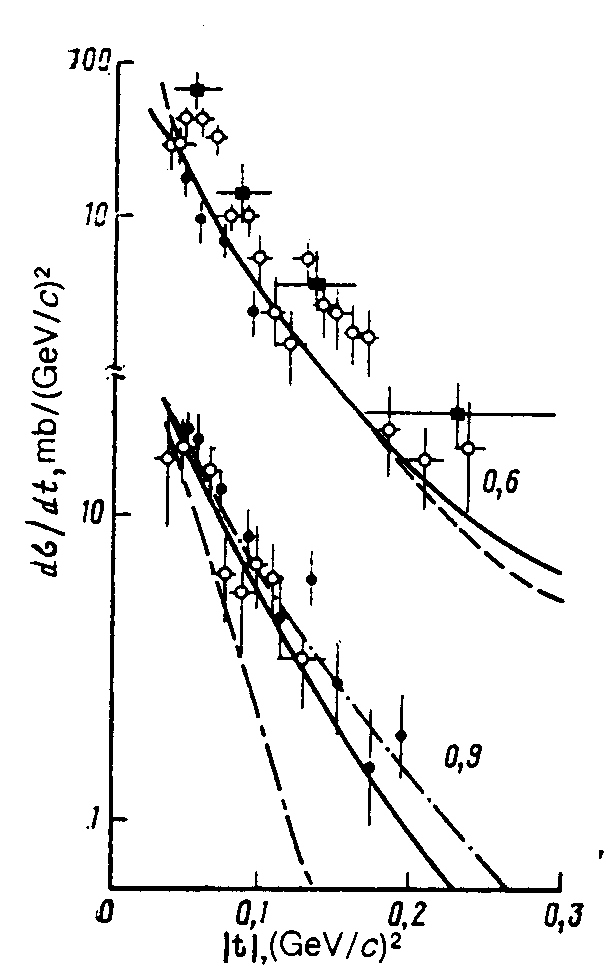 FIG.
13. Differential cross sections for elastic K+ d scattering
at initial kaon laboratory momenta 0.6 and 0.9 GeV/c (numbers near the
curves). The curves are the calculations (as in Fig. 12c); experimental
data: · - Ref. 80; o - Ref. 62; black squares
- Ref. 81. The dashed curve in the uppeer graph at momentum 0.64 GeV/c and
the solid curve at 0.587 GeV/c demonstrate the change in the calculation
with energy for the extreme values of the momenta at which the experimental
data have been taken.
FIG.
13. Differential cross sections for elastic K+ d scattering
at initial kaon laboratory momenta 0.6 and 0.9 GeV/c (numbers near the
curves). The curves are the calculations (as in Fig. 12c); experimental
data: · - Ref. 80; o - Ref. 62; black squares
- Ref. 81. The dashed curve in the uppeer graph at momentum 0.64 GeV/c and
the solid curve at 0.587 GeV/c demonstrate the change in the calculation
with energy for the extreme values of the momenta at which the experimental
data have been taken.
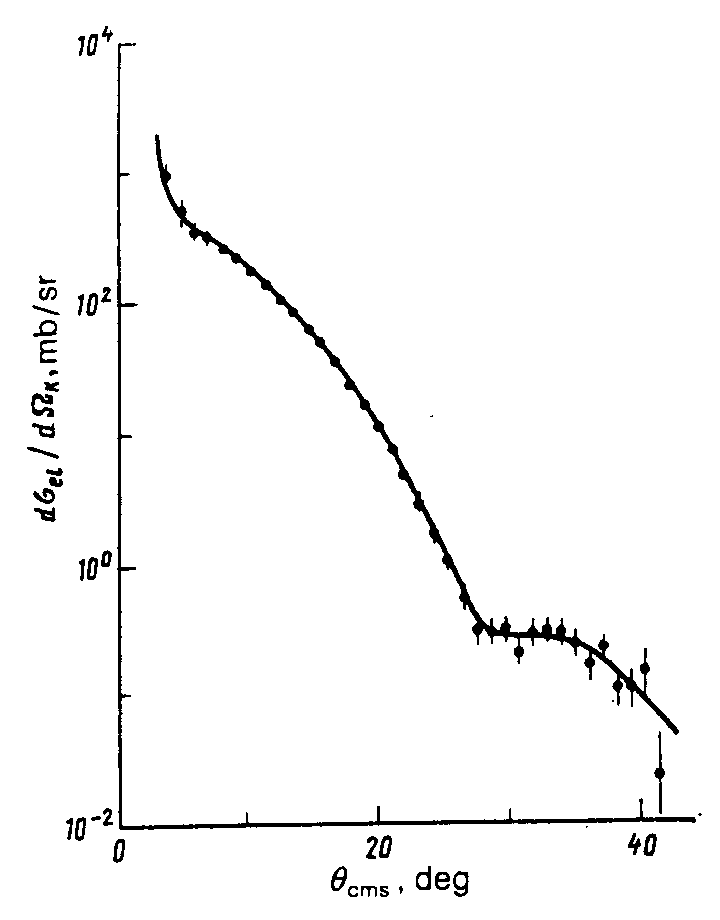 FIG.
14. Differential cross sections for elastic K+ 12C scattering
at initial kaon laboratory momentum 0.8 GeV/c. The notation is the same
as in Fig. 3.
FIG.
14. Differential cross sections for elastic K+ 12C scattering
at initial kaon laboratory momentum 0.8 GeV/c. The notation is the same
as in Fig. 3.
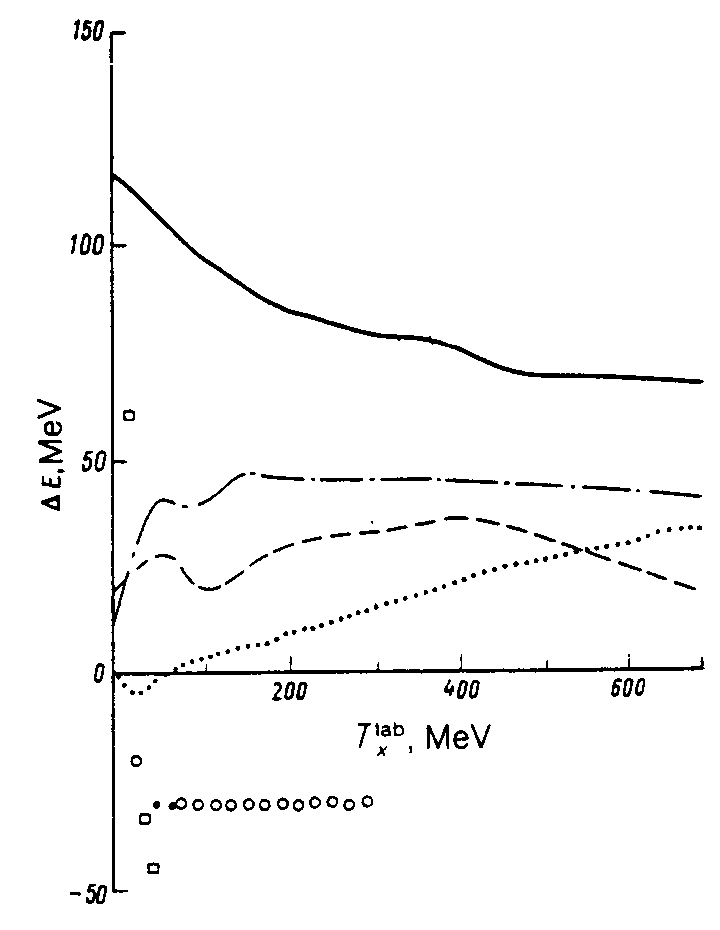 FIG.
15. Dependence of D E on the initial energy
of the particles. The solid curve is for p12C, the dot
- dash curve for p4Hee, the dashed curve for pd,
and the dotted curve for K+ 12C. The points
o show the values of D E for p+,-
12C at the energies at which they are the same for p-
and p+, and the points ·
and white squares, respectively, show the values when they are different.
FIG.
15. Dependence of D E on the initial energy
of the particles. The solid curve is for p12C, the dot
- dash curve for p4Hee, the dashed curve for pd,
and the dotted curve for K+ 12C. The points
o show the values of D E for p+,-
12C at the energies at which they are the same for p-
and p+, and the points ·
and white squares, respectively, show the values when they are different.