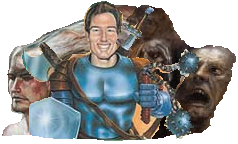
Magic is not just about what cards you have or what strategy you are using. The biggest part of magic that most players often forget is to manipulate the other players mind. If you are able to confuse your opponent, his strategies and judgment will be quite useless. This article includes 5 main parts of the �Mind Tricks� article: Deceiving, Pretending to deceive, when to use cards, when to ascertain wars, and multiplayer competitions.
The first major category is the Deceiving category. Many players need to improve in this section. I have made a list of what to do and what not to do when you want to bluff. While trying to deceive your enemy don�t do any of the following: Make ridiculous compromises, overextend the bluff, act different then you usually do, fiddle with a single card in your hand, move the order of cards (Most new players will shift their land to one side), and do not have a trade (Pushing your glasses up while leaning over to look at the cards).
The second major category is pretending to deceive. There is nothing better in a game of magic when someone thinks that you are bluffing, when you actually aren�t. In order to out wit your opponent in this section you should following the list above. The player will catch these little hints and he/she will be lured right into your trap.
The 3rd important category in magic is when to play cards. Don�t always be too eager to play your best card. It is usually better to play lower powered creatures before executing your bigger creatures. You should play your larger creatures when you have enchantments or other creatures to back it up. Many strategists may disagree with me, but it show you what kind of hand the player has, and what there deck is like before risking the lose of your creatures. Also don�t always play lands when you don�t need too. They may come in handy later in the game. These land cards can act as a decoy to mislead your opponent.
The 4th category in the mental aspect is when to declare a war. This is probably the most important concept to more an experienced player. You should make sure that the player has nothing up his sleeve, and if the attack is beneficial to you. You should also make sure that you are not left defenseless. In multiplayer games, don�t attack people at the start, rather when other people have declared war on each other. Do not declare the first attack unless you know 100% that you will be able to kill the opponent without leaving yourself vulnerable to their attacks.
The last category is specifically to do with multiplayer games. In the multiplayer games you may decide to help another player out, so later the player help you from dieing. However don�t trust the player. In most multiplayer situations the player will backstab you if they will be able to succeed. Also in multiplayer games don�t act so interested and make common newbie mistakes. This will make the other player under estimate you for your �encounter� later on. No matter what you do in multiplayer games, don�t try to take everybody on. If you somehow find yourself in this situation, there are ways to deal with this. You can lower the defenses of another player while keeping your own, then that player will be the prime target of the offenders. Another way deal with this is to kill them one by one. As soon as you choose a target stick with it. Do not be distracted by other players. Remember they together will have way more turns that you will.