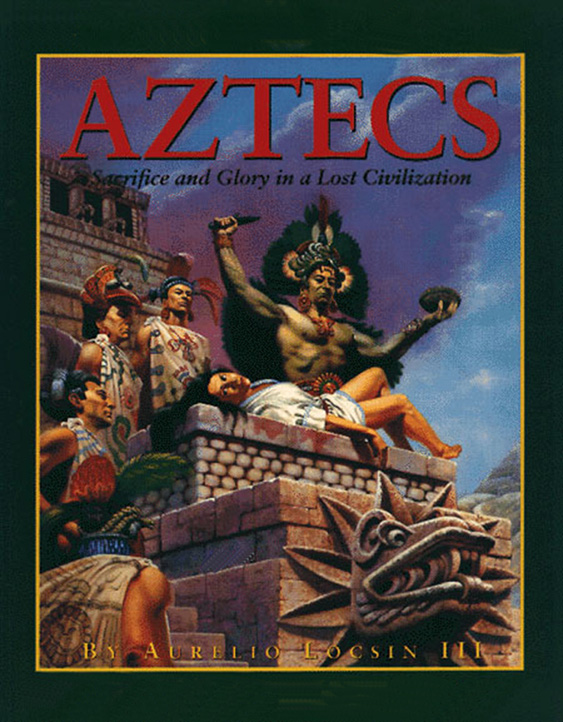
 The Tradition of Religious Human Sacrifice!
Sacrifical Knife

Aztec Life 
 Other Aztec Pages!
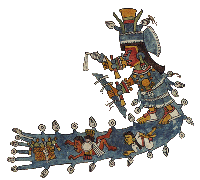
Aztec Web Page
Aztec Creation Story Nahuatl Language Of The Aztecas The Nahuat-l Site
Religion was extremely important in Aztec life. They worshipped
hundreds of gods and goddess,
each of whom ruled one or more human activities or aspects of nature. the people had many
agricultural gods because their culture was based heavily on farming; also they included natural
elements and ancestor-heroes.
CENTEOTL , the corn god
COATLICUE , She of the Serpent Skirt
EHECATL , The god of wind
HUEHUETEOTL , "The old,old deity,"was one of the names of the cult of fire,
among the oldest in Mesoamerica. The maintenance of fires in the Temples was a
principal priestly duty and the renewal of the fire was identified with the renewal
of time itself.
HUITZILOPOCHITLI , (the war/sun god and special guardian of Tenochtitlan)the deified
ancestral warrior-hero, was the Mexica-Aztec patron par excellence. His temple on the
Main Pyramid was the focus of fearsome sacrifices of prisoners captured by Aztec warriors.
Victum's heads were strung as trophies on a great rack, the Tzompantli, erected in the
precinct below.
 MICTLANTECUHTLE , god of death
OMETECUHLTI ,and his wife OMECIHUATL created all life in the world
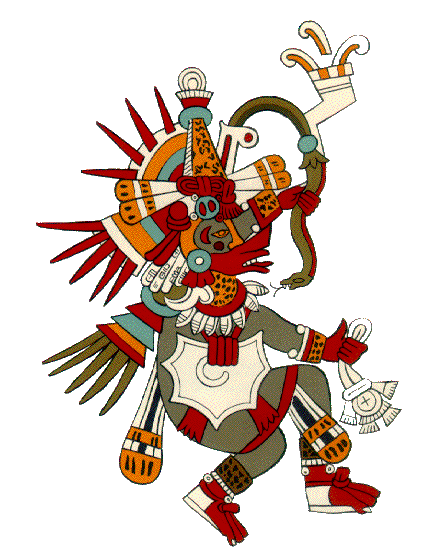 QUETZALCOATL , ( the god of civilization and learning ) " Quetzal-(feather) Coatl-(serpent)," had dozens
of associations. It was the name of a deity, a royal title of high priestly office. But
its most fundamental significance as a natural force is symbolized by the sculpture of a
coiled plumed serpent rising from a base whose underside is craved with the symbols of the
earth deity and Tlaloc. The image of the serpent rising from the earth and bearing water
on its tail is explained in the Nahuatl language by a description of QUETZALCOATL
in terms of the rise of a powerful thunderstrom sweeping down, with raising dust before bringing rain.
QUETZALCOATL , ( the god of civilization and learning ) " Quetzal-(feather) Coatl-(serpent)," had dozens
of associations. It was the name of a deity, a royal title of high priestly office. But
its most fundamental significance as a natural force is symbolized by the sculpture of a
coiled plumed serpent rising from a base whose underside is craved with the symbols of the
earth deity and Tlaloc. The image of the serpent rising from the earth and bearing water
on its tail is explained in the Nahuatl language by a description of QUETZALCOATL
in terms of the rise of a powerful thunderstrom sweeping down, with raising dust before bringing rain.
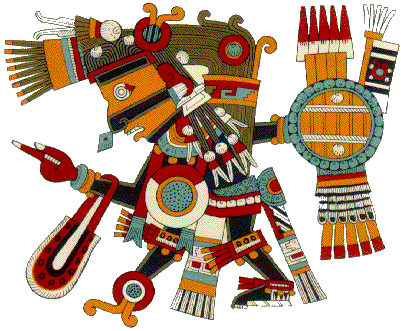 TEZCATLIPOCA , (god of Night and sorcery)"Smoking Mirror"m characterized as the most powerful,
supreme deity, was associated with the notion of destiny. His cult was particularly identiifed with
royalty, for Tezcatlipoca was the object of the lengthy and reverent prayers in rites of kingship.
TEZCATLIPOCA , (god of Night and sorcery)"Smoking Mirror"m characterized as the most powerful,
supreme deity, was associated with the notion of destiny. His cult was particularly identiifed with
royalty, for Tezcatlipoca was the object of the lengthy and reverent prayers in rites of kingship.
TLALOC , the rain deity, belonged to another most memorable and universal cult of acient Mexico. The
name may be Aztec, but the idea of a strom god especially identified with mountaintop shrines and
life-giving rain was certainly as old as Teotihuacan. The primary temple of this major deity was located
atop Mt. Tlaloc, where human victims were sacrificed to fertilize water-rocks within the sacred enclosure.
TONATIUH , the sun, was perceived as a primary soucre of life whose special devotees were the warriors.
The warriors were charged with the mission to provide the sun with sacrificial victims. A special
altar to the sun was used for sacrifices in coronation rites, a fact that signifies the importance
of the deity. The east-west path of the sun determined the principal ritual axis in the design of Aztec cities.
TONANTZIN , "honored grandmother," was among the many names of the female earth-deity.
TEZCATLIPOCA , an all-powerful god: Tonatiuh, the sun god
XILONEN , "young maize ear," and Chicomecoatl,"seven serpent," were principal deities of maize representing
the chief staple of Mesoamerican people
 XIPE TOTEC , the god of springtime and regrowth.
XIUHTECUHTLE , the fire god.

 Back To HomePage