Natural Features
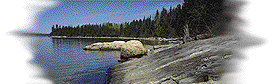 The last of the glaciers receded from Quetico about 12,000 years ago, leaving a landscape dominated by exposed bedrock, rounded, smoothed or scratched, crushed into boulders or shattered to form imposing cliffs. The visitor to this park will find a primeval wilderness of limitless forests, mirror-smooth lakes, and innumerable bogs, all supporting a rich variety of plants and animals.
The northern forest is mainly black spruce, jack pine, trembling aspen and white birch, with sheltered pockets of more southern trees. The park also has magnificent stands of red and white pine. Red squirrels, chipmunks, beaver and mink are among the smaller mammals. Larger species such as wolf, bear and moose also live here, and in summer more than 90 species of birds nest in the park.
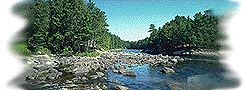 Quetico's many interconnecting waterways were the highway system upon which explorers sought the passage to the West. They were also a vital transportation route that supplied tons of fur pelts to the markets of Montreal and Europe in the mid-17th century. Today these waterways are a wilderness paradise for canoeists.
Park Facilities & Activities
This park is primarily a wilderness canoeing park. Canoeing expeditions may begin at any of the park's six access points. At this ranger stations you may purchase your park permit.There are 2,200 backcountry campsites accessible by canoe, scattered throughout the interior.
The Dawson Trail Campground at French Lake is the only entrance point for visitors who are seeking drive-in camping. The campground has 106 campsites, 38 with electricity, as well as comfort stations, showers, a laundromat and other amentities. Three well-marked, interpretive hiking trails are located along the main campground road.
To learn about Presque'ile Park,"almost an island" established in 1922,a peninsula of limestone and sand molded by glaciers, please continue onto the next page.


This page hosted by  Get your own Free Home Page
