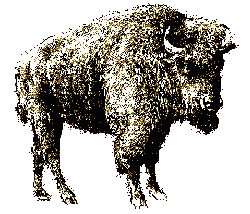
Bison are gregarious and form mixed groups of cows, calves, yearlings and subadults. Bulls often form groups of their own, but a few are part of the mixed herds at all times of the year. The herds are wary and sensitive to changes in their environment. The bison's senses of smell and eyesight are extremely well developed, they can detect movement a kilometer away and distinguish smells from 3 kilometers.
Bison are easily frightened and an alarmed herd may lose control and stampede. When that occurs, the normally slow plodding animals break into a trot and then a rocking gallop, attaining a top speed of 60 kilmeters an hour.
The Fort Providence herd in the Mackenzie Bison Sanctuary is the largest wild herd of wood bison in the world and represents the only entirely successful transplant of healthy wood bison into historically occupied range. The goals are to manage the Sanctuary to maintain a healthy bison population, to use the herd for transplants to other areas and to allow the wise use of some surplus animals by the residents of the Territories. The ultimate goal is to remove wood bison from the list of endangered species.
To learn about the town of Norman Wells please choose the next button.


 Get your own Free Home Page