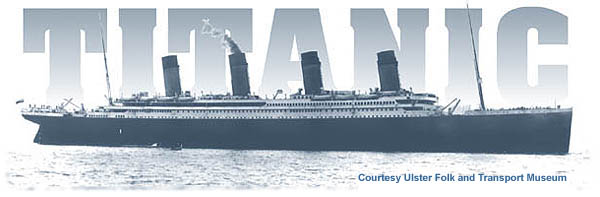
Halifax is where the maiden voyage of Titanic really ended, with the most lasting legacy from the sinking located here.
 The world was stunned in 1912 by the loss of the liner Titanic on her maiden voyage. Halifax, Nova Scotia, located on the eastern coast of Canada, has one of the most moving and intimate connections with the Titanic disaster, playing a key role during the tragedy's aftermath and becoming the final resting place of many of her unclaimed victims.
Three Halifax ships were involved in the grim task of recovering victims - many of whom were laid to rest in three of the city's cemeteries. Rows of black granite headstones, each inscribed with the same date, April 15, 1912, are a stark reminder of the disaster.
 Titanic artifacts at the Maritime Museum of the Atlantic are a touching reminder of the ship's lost luxury, her violent end and the special role the port of Halifax played as the enormity of the disaster unfolded. These artifacts were all pulled from the water within weeks of the sinking by ships from Halifax searching for Titanic victims. The exhibit features wooden artifacts collected at the scene of the disaster, including the only known intact deck chair. Elsewhere in the city and across Nova Scotia one can experience reminders of Titanic and other courageous stories about Nova Scotia's people and their intimate connection with the sea.
To acquire facts regarding Halifax choose the next button, otherwise choose home to return to the table of contents.


This page hosted by  Get your own Free Home Page