FUR TRADE & SETTLEMENT
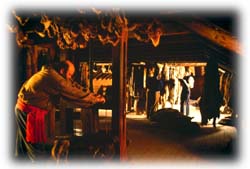 It was a seasonal ritual; the natives of the northwest interior would hunt and trap beaver and other fur-bearing animals in the winter, load their canoes in the spring and travel north to trade with the Hudson's Bay Company. In the autumn, loaded with the fresh supplies they had received in exchange for their furs, they would make the long journey home, and begin preparations for the upcoming winter trapping season.That ritual changed when the North-West Company entered the fur trade in 1783. Travelling by way of the rivers and portages from Fort William (Thunder Bay) on Lake Superior, they established trading posts in the northwest, trading directly with the Indians. As competition between the two rival companies heated up, so did tensions among the people. One of the most critical "intersections" of the early river highways was the forks of the Red and the Assiniboine rivers.
JEAN-BAPTISTE LAGIMODIERE
Action against the settlers continued, and in 1816, following the Battle of Seven Oaks, Jean-Baptiste Lagimodiere journeyed from Red River to Montreal to bring word of the settlers plight to Lord Selkirk. With about 100 mercenaries Lord Selkirk started West. He seized the North-West Company grand depot at Fort William where he stayed the winter. Others of his mercenaries pushed on to Red River, where they easily recaptured the settlement. Lord Selkirk marched into Red River in June of 1817, and went to work putting the colony's affairs in order. For his part in saving the colony, Lord Selkirk rewarded Lagimodiere with a land grant at the junction of the Red and Seine Rivers, now St. Boniface, as a farmer and trader, Lagimodiere, became extrememly influential in Red River.
THE RIEL REBELLION
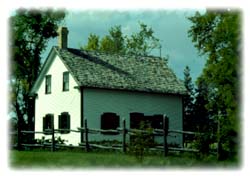 In 1869, when the Hudson Bay Company sold its land rights, including Red River, to the new Dominion of Canada, the Metis felt their way of life would be threatened and resisted. They needed a leader. Providence delivered them Louis Riel, grandson of Lagimodiere. He was educated and eloquent, with a strong sympathy for their cause. Under Riel's direction, the Metis rebelled and took control of Red River. A provisional government was established with Riel as president. His negotiations with Ottawa resulted in Manitoba becoming the first new province of the Dominion. Three years later the Red River settlement was incorporated as the City of Winnipeg. By 1878, with the arrival of the railway, a new era of expansion and prosperity was underway.
CHICAGO OF THE NORTH
With the entry of Manitoba into the Dominion of Canada, Winnipeg's immigration boom was underway. Waves of immigrants flooded into Manitoba from Iceland and Eastern Europe, eager to put their "old country" grain growing experience to the test in the rich prairie soil. Soon, they were producing bumper crops which the Winnipeg Grain Exchange sold to markets around the world.
Winnipeg's commercial boom and explosive growth were under the direction of businessmen who used American cities- such as Chicago-as their model of success. Their business ventures were energized by the driving demand for merchandise, lumber, and agricultural implements from the rapidly expanding population. In 1871, federal census figures showed Winnipeg, was a population of 241 and ranked 62nd among all urban centres in Canada. By 1891, it had risen dramatically to eighth place. And by 1911, Winnipeg was ranked as Canada's third largest and fastest growing city with a population of over 136,000. In a few short years, the "little village" had grown into a major Canadian city, a thriving commercial centre and the West's most vital transportation and distribution hub.
WINNIPEG TODAY
Today, few cities in North America match Winnipeg's prairie charm and cosmopolitan flair. Its diversified economy includes technology-based industries such as aerospace. Winnipeg is also a recognized centre of excellence in medical research and health technology. There is something for everyone in Winnipeg, so much of everything in fact, that whenever you visit, you will find Winnipeg is ONE GREAT CITY!!
To learn why Winnipeg is the Christmas Capital of Canada continue onto the next page


This page hosted by  Get your own Free Home Page