The Writing of the Poem
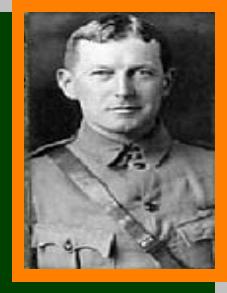
Lieutenant-Colonel John McCrae
Lieutenant-Colonel John McCrae of Guelph, Ontario, was a Medical Officer who served with the Canadian Forces during the First World War. He joined the McGill faculty in 1900 after graduating from the University of Toronto. He wrote the now famous poem "In Flanders Field" thus making him responsible for the adoption of the poppy in Canada.
John McCrae was an artillery veteran of the Boer War in South Africa prior to having served in the battle at Ypres. McCrae served with the 1st Field Artillery Brigade as a surgeon. He went into the battle on April 22, 1915 at Ypres. The enemy kept them under attack for the next 17 days who were using poison gas for the first time. It was during this time that McCrae wrote, "One can see the dead lying there on the front field. And in places where the enemy threw in an attack, they lie very thick on the slopes of the German trenches."
During this time McCrae and his unit worked diligently dressing hundreds of wounded soldiers and burying those who had died. Although being a doctor for several years, seeing a lot of suffering, he never got used to it. "I wish I could embody on paper some of the varied sensations of that seventeen days. Seventeen days of Hades! At the end of the first day if anyone had told me we had to spend seventeen days there, we would have folded our hands and said it could not have been done." When his unit was finally relieved he wrote home stating, "We are weary in body and wearier in mind. The general impression in my mind is one of a nightmare". It was during this time that he wrote the words for his poem "In Flanders Field".
Lieutenant-Colonel John McCrae died of pneumonia on January 28, 1918 at the age of 44 in a Military Hospital at Wimereux near Boulogne, France, which is on the French Channel Coast. It is said that his last thoughts were of the poem he had written and the words he murmured were: "And now the torch and Poppy red Wear in honour of our dead."
The deep meaning of this poem is not lost. It speaks of the fear that those who died would be forgotten and the reason for their death would be in vain. But, this will never happen as long as we observe Remembrance Day and the reason behind wearing poppies on this day. "In Flanders Fields" continues to remain the most memorable war poem ever written. It is an eternal legacy of the appalling battle, which took place at Ypres in the spring of 1915.
"In Flanders Fields" was first published by an English newspaper Punch on December 8, 1915 after The Spectator, in London rejected it. The poems was sent to the newspapers in England by a fellow officer who retrieved it after McCrae had tossed the poem away not being satisfied with it. The poem was actually circulated as a folk song to begin with. It was spread by word of mouth and left a lasting impression of all that heard it. Many of the soldiers related "In Flanders Field", to their own thoughts and hearts. This poem reflected the innermost feelings and thoughts of all those who had served with Lieutenant McCrae during his time in Ypres.
When John McCrae wrote this poem, he and anyone else reading it at the time had no idea of the impact it would have on soldiers fighting in the war or those who had a loved one they had lost due to fighting. It is a poem that was written from the heart and shows the depths and despair of the men fighting at Ypres. The poem tells the whole story and also brings with it the hope that those who fought for their country will never be forgotten.
Comments
Cyril Allinson - 22-year old Sergeant-major who was delivering mail on the day McCrae wrote the poem. When McCrae finished writing he took his mail from Allinson, handed him the pad with the poem written on it, never exchanging a word. Allinson was very moved by what was written and later commented:
"The poem was exactly an exact description of the scene in front of us both. He used the word blow in that line because the poppies actually were being blown that morning by a gentle east wind. It never occurred to me at that time that it would ever be published. It seemed to me just an exact description of the scene."

Index
Table of Contents


This page hosted by
 Get your own Free Home Page