In February 1865, the 12th Ind. Cav. was assigned to the 1st Brigade, 1st Cavalry Division, Military Division of West Mississippi. The regimental history as listed in Chapman's History and elsewhere indicates that on the 11th of February 1865 the regiment embarked on board transports and steamers with orders to proceed to New Orleans Louisiana stopping at Vicksburg Mississippi. Harper said that they went by land to the Kentucky side of the river near Cairo and by boat down the Mississippi to Vicksburg. Judd Coomer related that they went by boat down the Cumberland to Cairo so apparently the mounted troops "marched" and the dismounted boarded boats. Henderson also mentions going down the Cumberland in the steamer "Argyle" when they ran into the "Ollie Sullivan" and got stuck on the shoals. (Another source indicates the ship was the "Duke of Argyle"). He further writes: "There are about 700 men aboard, we make Clarksville and tie up. We are all making coffee and feeling good. Sat. 11th leave Clarksville at 9 a.m. pass Fort Donaldson 4h 30m p.m. Sunday 12 th ran into Smithland early this morning & leave at 3h 25m p.m. took on 4000 bushels of coal. Made Paducah 4h 35m p.m. 12 miles from Smithland & 212 from Nashville. Monday Feb. 13th we reach Cairo 272 miles from Nashville here we are allowed to go ashore and take a romp, here we have a pretty good view of Mound City 2 miles up the river. Here we cooked and eat our suppers in Illinois.
At Cairo the bigger boats on the Mississippi would also accommodate their horses (Harper mentioned 400 horses were brought along and that they would get more later). In a humorous vein Coomer tells of two of their boats colliding in a fog which interrupted their card game when Major Calkins overturned the table. Perhaps Henderson's boat was involved as he relates: "Feb 14th at 1/2 past 9 we are all aboard & off. We are run into by the Foresythe tearing off our wheelhouse the larder (ladder?) & gard 2/3 the length of the boat & knocking a large hole in the side. The pilot ran in shore & in the morning we were alloweed to go ashore."
His narrative continues: "15th (Feb.) 5 p.m. all on board the Maddison a poor & dirty boat & on our way down the Mississippi. Feb 16 the day is fine the sun shines warm. The Miss is the largest brook I ever saw & is full of islands & sandbars. 2h 15m (we) pass Fort Pillow. Our fleet begins to come up the(re are) 35 vessels & transports in all. Friday 17th We land on Arkansas shore opposite Memphis here we wash & cook while the officers take a spree up town.
2h 30m we are moving down the river again the day is splended warm as summer& all are in fine spirits. Sunday 19th the day is fine we pass some of the largest plantations I ever saw there are as high as 30 negro houses on a farm. Monday Feb 20th landed at Vicksburg at 9 a.m. & go to camp 3 miles from town. People are making gardens. We are 650 miles from Cair(o) & 922 from Nashville. Feb 28th received our saddles & other horse equipment. March 2nd drew 61 horses. Monday March 6th 2 p.m. we are ordered to strike tents in about one hour we are in our saddles & on our way to Vicksburg. Here we go aboard the boat Able with 450 horses & 500 men. Tues. 7(th) we weigh anchor & again shove down the Mississippi."
After being in camp near Vicksburg for a short time, Coomer says that they took a cotton boat to New Orleans. This boat was also carrying commissary supplies which were stacked up on the bow and covered with a canvas. Some of these supplies came up missing prompting the ship's captain to remark that "the 12th Indiana Cavalry would steal Christ off the cross and then go back after the nails." Perhaps the captain had never heard of the army's midnight requisition or scavenging policy. On March 2nd Harper writes from Vicksburg that gray horses were issued to his company that day in preparation for a raid. According to regimental history they were to engage in a raid along the Mobile and Ohio Railroad but these orders were countermanded and the regiment was newly mounted, arms changed, and embarked again for New Orleans where it arrived on March 12th. March 10th per Harper who writes that it took 3 nights and 2 days stopping often to load cotton. (Henderson's boat arrived at New Orleans the evening of March 8, 1865)
During January, February, and March, 1865 while the Twelfth Indiana Cavalry was encamped at Nashville and later on their way to New Orleans, the following was occurring over the rest of the country: In January only skirmishing had occurred on most fronts except for the attack by the Federals on Fort Fisher North Carolina (Jan 13-15) and the start of Sherman's march from Savannah through South Carolina. General Hood had resigned in January and General Robert E. Lee became the General-in-Chief of the Armies of the Confederate States after an act of the Confederate Congress on January 23. The battle of Hatcher's Run Virginia started on February 5. By February 17 Sherman had captured Columbia, South Carolina and by nightfall the city was in flames. An argument has raged like the fire ever since as to who was responsible for this conflagration. The South blamed Sherman but Sherman wrote that it was the South's Wade Hampton who set the fires. Charleston, South Carolina was evacuated by the confederates at the same time that Columbia burned.
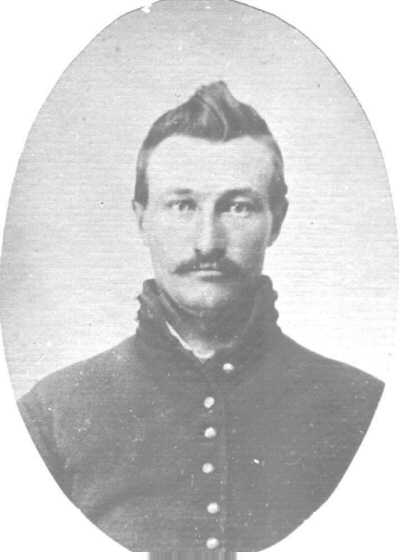
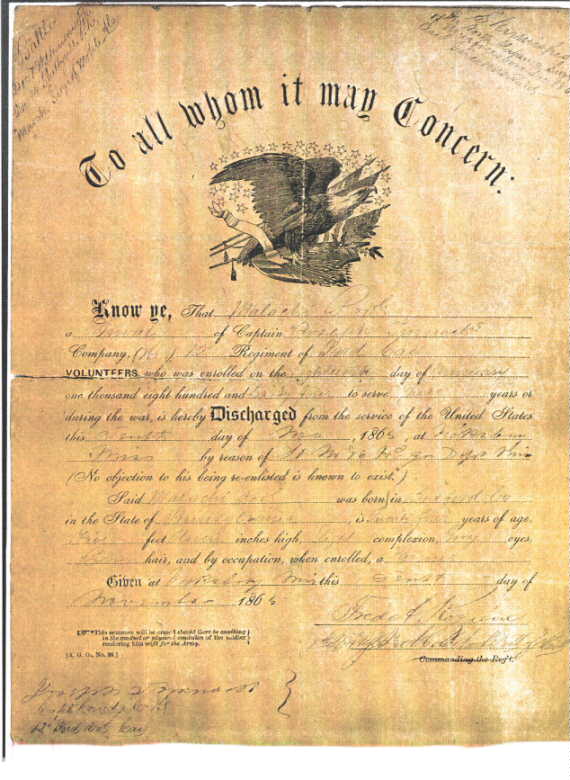
The Twelfth Indiana Cavalry left New Orleans about March 20-29 and headed for Navy Cove, Mobile Bay. Harper wrote from New Orleans on the 28th saying that they were heading for Mobile after exchanging their carbines for Burnsides which would stand up better. According to the bugler, Judd Coomer: "We boarded the `Alabama' on the 20th of March, '65, at Lake Ponchetrain, a few miles from New Orleans, and landed at Harrisons Landing on the beautiful Bay of Mobile in sight of Spanish Fort." (Henderson's Company E was also aboard the Alabama.) The regimental history records show that after arriving at Mobile Bay they reported to Major General Canby and participated in the operations against the forts and defenses of Mobile Alabama. Another 12th Ind. Cav. history in "Battle Flags and Organizations" has recorded it as the Campaign against Mobile and its defenses, March 22-April 12 and Siege of Spanish Fort and Fort Blakely, March 26-April 9. A portion of the Twelfth Indiana Cavalry acted as an escort to Major General Canby and the balance were engaged in running a courier line into Florida from near Fort Blakely. Malachi Pool's discharge shows the Siege of Mobile under the list of battles that he had participated in with the Twelfth Indiana Cavalry.
General Canby had 32,000 men under his command to take Mobile and out numbered the rebels at least 4 to 1, though Spanish Fort and Fort Blakely stood between Canby and the city. About March 25, in a drenching rain, the Federals neared the fortifications of Mobile Alabama on the east side of the bay. Skirmishing occurred as they came close to Spanish Fort but within two days Canby had a tight grip on the outer defense. Once Spanish Fort and Fort Blakely fell, and they were sure to fall considering his advantage, the city of Mobile would be taken. On April 2nd the siege of Fort Blakely began while the siege of Spanish Fort continued.
The fields, roads, and woods around the forts were heavily mined. The mines were called torpedoes in Judd Coomer's reminisces and he reported: "The next day I was detailed as bugler for Captain Comstock, who was inspector of breastworks, gopher holes, lookouts, etc. One day as we were going down toward Ft. Blakely there was a supply wagon just ahead of us. We heard a boom and saw a man and mule, or pieces of them, going up in the air. The mule had struck a torpedo which had been buried in the road. The woods and roads were full of them. In two days, I think we found about 500 torpedoes, and we threw them in a small creek. Here we captured a johnny, who was very useful to us in finding where the explosives were buried. Whenever you found a blaze on a bush, tree, or a rag on a limb there was a torpedo. Here I had a good view, the last two days of the fight, of Mobile, as I was in the saddle early and late and on the go all the time."
After a heavy bombardment of Spanish Fort a weak point opened in the Rebel line and the Federals charged in. Using a narrow escape passage the Southern defenders evacuated during the night. The combined Federal army of Canby attacked Fort Blakely now that Spanish Fort had fallen. The assault was completed successfully and the city was ready to fall though Forts Huger and Tracy were still in action against the federal forces. On April 11 1865, those remaining two forts were abandoned and the evacuation of the city itself began. By Wednesday, April 12 the final major city of the Confederacy fell and the union forces of General E. R. S. Canby entered Mobile. Though the defenses were strong, the rebel strength had been too low to adequately man them. In the various operations against Mobile the Federal losses were 232 killed, 1303 wounded, and 43 missing.
During the time of the Mobile siege the following events were going on in other parts: Soon after the fall of Columbia, South Carolina, the last major port of the South, Wilmington, North Carolina was lost by the Confederacy. Early in March the rebs were beaten at Waynesborough, Virginia. Also in March, Sherman captured Fayetteville North Carolina and fought successful battles at Averasborough and Bentonville North Carolina. The Appomattox Campaign began on March 29. On April 2nd, 1865 Selma Alabama was captured by the Union and by the next day Federal troops were occupying Petersburg and Richmond. The last major engagement between the Army of Northern Virginia and the Army of the Potomac occurred at Sayler's Creek Virginia on April 6. On April 9, 1865 Lee surrendered to Grant at Appomattox Court House. Henderson said they received the official report of Lee's surrender on Sunday, April 16.
The assassination of Lincoln on the 14th of April was one of the darkest days in our history and Judd Coomer's reminiscence describes the feeling: "After the siege we started up the Alabama river to Selma, Montgomery and on to Eufaula. Between the latter places we were met by a courier bearing a flag of truce. He had good and bad news for us. The first news revealed to us was, that Lee had surrendered. This was received with such a hurrahing as I never heard before. But the noise had hardly died away when we were apprised of the assassination of Uncle Abe. For some time everything was as quiet as the grave."
The last action shown on Malachi Pool's discharge paper is "Grierson's Raid". Major General Benjamin Grierson was the music teacher who had hated horses, and made his more famous raid two years before. This second raid would be easier and he had more time for playing the jew's harp which he carried in the pocket of his blouse. The Twelfth Indiana Cavalry reported to General Grierson on the 17th of April 1865 and participated in a raid of over 700 miles through Alabama, into Georgia, and then back across the state of Alabama to Columbus Mississippi where it arrived on the 20th of May 1865.
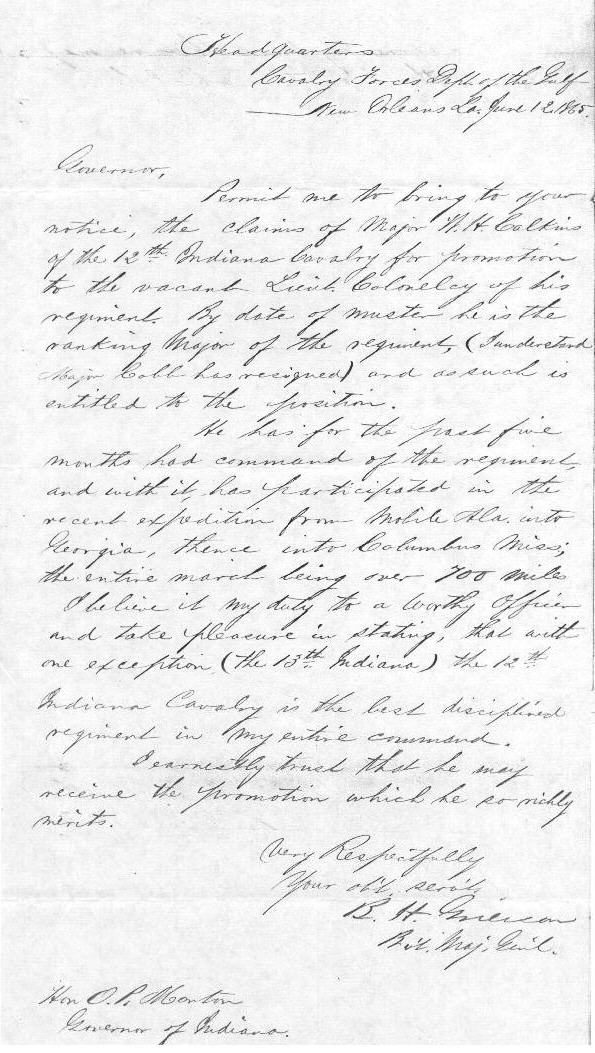
A copy of a letter from Gen. Grierson to Governor Morton was obtained from the Indiana Commission on Public Records. This letter requests promotion for Major Calkins and states: "He has for the past five months had command of the regiment, (12th Ind. Cav.) and with it, has participated in the recent expedition from Mobile Ala. into Georgia, thence to Columbus Miss.; the entire march being over 700 miles. I believe it my duty to a worthy officer and take pleasure in stating, that with one exception `the 13th Indiana', the 12th Indiana Cavalry is the best disciplined regiment in my entire command."
The purpose of this last raid by General Greirson is not known since the war was basically over. Perhaps it was reconnaissance to flush out any Confederates who had not yet surrendered. We have detail of their travel on this raid in John Henderson's own words: "April 18th took up our line of march at 6 o'clock a.m. & made about 20 miles & halted for the night. Wed 19 the bugle called us this morning at 20 minutes before 4 o'clock we were soon in the saddle & off. 20th up & off early this morning. Halted at night at an old Secesh (Secessionest) house. We took 12 mules & 3 horses one wagon & harness. We went for something good things. Ham, Eggs,Corn & wheat bred, sweet potatoes, Honey, Onions, Chickens, Ducks, Turkey & other things too tedious to mention.
21(st) in saddle at 8 o'clock & off on march. 25(th) passed through Greenville a small rebel town remarkable only for its poverty & came up to our command. 26th went in camp near Troy, a small pretty town filled with Rebs. Here we found 7 of our boys in jail as prisoners. A live yankee is a great curiosity here. Thurs 27th go in camp at Lewisville Ala., a small town of some 75 buildings. 28th pass Clayton a pretty town of 800 inhabitants. Here we take possession of a grist mill & grind out 150 or 200 bushels of corn for us boys. A barrel of melases (molasses) a lot of bacon & ham.
29th went in camp last night 3 miles from Eufalla Ala & 2 miles from Georgetown, Ga. Tues. May 3 receive official notice of peace between North & South. May 4 start for Montgomery the roads are very dry & dusty. May 5th Halted last night at 8 o'clock had marched 33 miles. Noon halt at Hurdsville a small town. The day is very hot. Sat 6th halt at noon a(t) Tuskegee, Macon Co's fine county seat. Here we take a slave girl skin fair hair sandy & blue eyes. The country is most beautiful, fine buildings & yards. Corn fields with from 200 to 300 acres in. We meet Gen. Pillow on his way home. He says the war is over. Monday 8(th) halted last night in 10 miles of Montgomery. 2 p.m. we mount & go in 4 1/2 miles of town & camp.
May 11th striked tents & shove for Miss. We pass through Montgomery quite a fine town but like most other southern towns has suffered by fire. 12th we marched from 5 a.m. to 11 p.m. making 42 miles. Sat 13th pass Mapesville (Maplesville) a city of 3 dwellings 14th they marched us last night till 12 o'clock & up this morning at 5 o'clock. We pass Centerville, county seat of Bib (Bibb) Co. 15(th) go into camp at noon for the balance of the day. 16th up at 1/2 past 3 this morning & in saddle at 1/2 past 5 & march hard untill 12 at night. It is raining hard & so dark I can't see my own horse. We lay down in the woods, wet, tired & hungry. 18th crossed Blackwarrior River on Pontoons. It rains hard & the roads are getting bad.
Pass Eutaw, a town of some noteriety & 1000 (100?) negroes. Friday 19th pass through Clinton, Pleasant Ridge & Tobridge all small places. 20th in saddle this morning at 5 o'clock we pass through Pickens(ville) a small town with two fine churches one on either side of the road. 4p.m. pass the Alabama line into Miss. Sunday May 21st reach Columbus. Cross the Tombigby on Pontoons & go in camp. We all need rest . June 13th have received 4 months pay & one bounty. June 21st Co. C& K leave camp for Starkville 25 miles off.
(In this last paragraph He appears to have his dates mixed.) July 5th Turned our horses over to the government. The boys say we are dismounted infantry. June 3rd left Starkville for Artesia, 21 miles. We leave with many regrets for we have had a good time. Reach Artesia the 5th & go in camp in a fine grove. June 26 orders to strike tents & be at the depot in 2 hours ready to take the train for Okolona 43 miles. Pass Prairie Station & Egypt. Sept 13th leave Okolona for Columbus so here we are again on our old camping ground but the most of us want to go home."
While Greierson and the 12th Indiana Cavalry were on their raid, General Johnston surrendered his troops to General Sherman on April 26, following the terms set by Grant at Appomattox. The last large army to surrender was that of General Richard Taylor who met with General Canby some 40 miles north of Mobile. It was early in May when they laid down their arms. Minor skirmishing continued through most of May but the war of the rebellion was essentially over.
After "Grierson's Raid" six companies of the Twelfth Indiana stayed at Columbus, Mississippi and were engaged in protecting Government cotton and other property. From his pension papers there is record of Malachi Pool being a guard at the jail in Columbus. The other three companies of the Twelfth Indiana, "D", "K" and "L" proceeded to Austin on the Mississippi to perform the same type of duty. Both Harper and Coomer and numerous others did not make it as far as Columbus since they had to recuperate at Montgomery Alabama and Harper later was moved to the 1st Division Hospital at Selma Ala. In his letter home Harper mentions being run down from improper food and hard marching through the heat and dust. He was mustered out July 6, 1865.
The six companies at Columbus were eventually ordered to Vicksburg, Mississippi arriving on November 2nd, and being mustered out on the 10th of November 1865. They then proceeded to Indianapolis where on the 17th of November they were honored with a public dinner by the citizens of the city. They were welcomed home by a reception at State House Grove and by speeches given by the Governor and the Secretary of State.
The losses of the Twelfth Indiana Cavalry during service were 16 enlisted men killed and mortally wounded, and one officer and 154 enlisted men died of disease. (See the Honor Roll link below or on the main page.)
Those in Company H dying of their wounds were: The brothers John and Reuben Herman along with Horton McNabb and Jacob Martin at Vienna Alabama August 11 1864. Emerson Woodbury was killed at Murfreesboro Tennessee on December 20 1864.
Those dying from disease of Company H were: William P. Ellis, Frederick D. Metz, and Martin G. Robinson at Huntsville Alabama on July 7, August 11, and August 15 respectively. Thomas Claffey died at Gallatin Tennessee on Jan. 10 1865. David H. Smith died at Andersonville Prison on Feb. 3 1865. Richard Maxwell died at Fort Gaines Ala. on May 1 1865. James Goit was apparently missing but no record has been found.
Chapman's History indicates the following promotions of St. Joseph County men: First Lieutenant Joseph Turnock to Captain; Henry R. Fields, from Second to First Lieutenant; Alden Whitney, from the ranks to Second Lieutenant; Daniel N. Dressler, from the ranks to Second and then First Lieutenant; Hansom M. Beck, from the ranks to Second Lieutenant; William Augustine, Josiah Morrow, William M. Reece, were mustered out as Sergeants; Daniel M. Castellen, as Q.M. Sergeant; John Noel, as Com. Sergeant; Andrew J. Cruthers, as Bugler; David Augustine, David Baker, Daniel H. Cotton, Peter W. Herman and George W. Wright, as Corporals.
After the war and returning to their homes, many continued to meet regularly thereafter at reunions or "Camp Meetings of the Grand Army of the Republic" living out the rest of their lives with the memories of their participation in this strange war of the rebellion.
THE HONOR ROLL OF THOSE GIVING THEIR LIVES.
THE OFFICERS COMMISSIONED IN THE 12th CAV.
ADDITIONAL ITEMS
PHOTO OF MALACHI POOL
COPY OF DISCHARGE PAPER
GEN. GRIERSON LETTER to GOV. MORTON
12th CAVALRY BATTLE FLAG
Please address any comments to:
[email protected]
 Get your own Free Home Page