Tom Organ on The War
At the age of 17, Tom left his home and traveled overseas, to work with the forestry. He recalled eight one men from Bay d'Espoir leaving to go overseas with him. At first you had to be between the age of 15 to 60 before you were allowed to go. It was then changed to 18 to 50 years of age because they were expecting 5000 men to volunteer, instead they got 8000 because the pay overseas was very good ($52.00 per month). Tom told us that half of his cheque was sent home to his family and he kept the rest for himself. Tom went overseas for four years, he left in 1941 and returned in 1945.
Tom and the other men left St. Alban's by boat, and traveled to North Sydney. Tom tells us that the weather was fine on his travels. But it was a little bit rocky going across the Gulf to Sydney. They then went by boat to Montreal and stayed there for eight days. Then they boarded a large ship to Scotland. Tom said it was a French ship that was captured from Germany. "Hitler said she would never make her maiden voyage, but she did." Tom said, "she got we across." There were a total of ninety ships in the convoy sailing across the Atlantic. While on board the ship, an aid raid alarm sounded and all the men ran up to the deck. They didn't realize they were in a war zone. One of the nearby ships had sank and bodies were floating everywhere. The name of the ship was the SS Caribou, it had a total of 137 passengers and 31 crew members.
Tom spent his eighteenth birthday between Iceland and Ireland. Tom can remember being stuck on a train, in a tunnel, for five hours just outside of Scotland. They were threatened with an air raid alarm.
It wasn't long after that incident, Tom went to work. Tom didn't have to bring his own food, it was already supplied to him on the boat. However, he did have to buy his own work clothes from Mr. P.D.H. Dunn. He was the person who gave out the news about recruiting, and working in Scotland.
While over in Scotland, Tom worked in the forestry. Tom recalled a badge on his shoulder, with the word "homeguard" written on it. He couldn't understand this because he was not guarding his home, since he was 2500 miles away.
There was a camp set up, where they could eat their meals. A cook would be on hand to serve them. For pastimes, some of the men would play the accordion, others would watch movies, and hang around the bunk house. They also had parades on Sundays.
Henry Poole on the War
When Henry was twenty years old, he went overseas to work in the forestry, ( 1941 to
1946 ). He was a truck driver over there and he would haul wood. He also would drive people to
the hospital if they were injured or sick. About 700 or 800 went overseas from Newfoundland.
They stayed in camps over there and food was supplied for them. Some of the men went
overseas with Henry were; Jack King, Clyde Sutton, Jack Brushed, Sam Kearley, Matt Kelly,
Sam Kelly, Allan Kendall and George King. Also, George Organ was from St. Alban's.
Luke Marshall on The War
During the second World War Luke went overseas to Scotland for five years along with
another 3300 Newfoundlanders to work in the sawmills. The lumber was needed to build
hospitals and bunkhouses ECT . . . for the war effort. Work was long and hard! You had no
choice. You had to go. If your name was picked, you went. In order to get to Scotland Luke,
along with others from the Bay, went by boat to Argentia and then boarded a train to Port aux
Basques to Nova Scotia where he boarded a bigger boat ( SS Caribou ) that held hundreds of men
for the rest of the trip. This boat held up to 2500 passengers. This took about a month to travel.
Abraham King on The War
Abe went over in the second draft in 1941. I think there were 85 of us from the Bay, the
one time. That was a big clear out for this Bay at that time because the Bay wasn't populated like
it is now you know. We left here in a long boat and went to St.Pieere and from that went to
Montreal. Left Montreal and crossed the Atlantic to Liverpool. He came back safe and sound.
The weather wasn't too bad for that time of year. I came back in April. I was use to the seas and
didn't mind the bad seas. Jack Peters was Sherri's grandfather, he was over there, I didn't know
him very well. But knew his brother Frank, he got married over there and never came back.
When in the army you were trained to do whatever you had to do. Every weekend you
had to work only a scatter weekend you got of, it was tough going. Our country is better of for it
anyway.
Sam Kearley on The War
Sam also volunteered to go overseas for 5 years during 1941 until 1946. They went on a
boat called the Mandosa and the boat took 13000 passengers all together but only 7600 went on
the boat.
Breakfast was at 7 o'clock and supper was at 5 o'clock. 84 men from the Bay area went
overseas that same year, and in 1939 there were 19 men from the Bay who went overseas. Sam
recalls a long trip to North Sydney it took them 17 days and it took them a total of 34 days to get
to Scotland. Sam said they left here in June of 1941 and returned on the 4 of May 1946.The
men got $2.00 per day for a little bit until they got over there and got $2.40 per day. The men
stayed in camps, there was a cook house, canteens, recreation. There was plenty of food to eat
and it was like the things you got home, for example: sausages, milk, vegetables, salt beef.
Scotland wanted the timber badly. Mr. Kearley worked in the sawmill for 10 months, he also
cut pulp wood which he said was better ground for cutting and better timber.
If you wanted a day off you would probably have to go to town by bus which was thirty
miles away. After being over there the navy was looking for some men and the forestry crowd
was the first ones to go. Sam was one of the men to go into the navy. A total of 6900 men came
back from overseas that year of 1946. Sam owned a car overseas for 8 months and sold it before
he came back to Newfoundland. He also drove a tractor over there.
Gordon Long on the War
Gordon worked in the woods until seventeen. Then he left and went overseas to work in
the Forestry Unit at Scotland. It took a total of thirty-one days to cross the Atlantic. Men from
all over went overseas. They left the Bay on the Backaloon and went to North Sydney. From
North Sydney they went to Montreal where they stayed for nine days and from there they went
down to the St. Lawrence River. From there they went to Scotland. Over there the weather was
much like back home.
Over Scotland they had to sleep in camps. These camps held about twenty men per cabin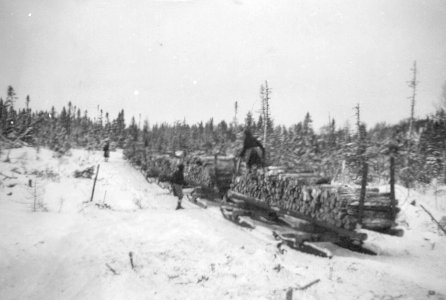 and at first they had to sleep on boughs. There were rats everywhere, at one time a rat scratched
Richard Willmontt's nose and it became infected and so therefore he had to be taken to the
doctor. There was a separate camp where they would eat and food would be supplied to them.
and at first they had to sleep on boughs. There were rats everywhere, at one time a rat scratched
Richard Willmontt's nose and it became infected and so therefore he had to be taken to the
doctor. There was a separate camp where they would eat and food would be supplied to them.
He got paid $50.00 a month which was good money back then. You would get a fifty-cent bonus if you worked in the Miesel. But if you missed a day's work, you would be charged a
dollar for board and lose a day's wages. You could get out on a pass anytime you wanted and
sometimes a bus would take them out of the camps on the weekends. They would also get a
two-week leave a year. Gordon said he liked it over there and he had a good life, he felt bad to
leave. The men came back on a passenger ship called the Mandosa. Gordon was over there from
28, 1941 to April 16, 1946 which was a total of four years and ten months.
Primus Snook on the War
Primus went overseas in 1941 at the age of 17. Had to be 18 but I lied about my age
because everyone else was going so I wanted to go. There was work home but no money. We
only got 25 cents an hour over there. 60% of the Bay men went; almost all were of a young age.
There were 10 of us that were 17 years old. We didn't know the difference. We didn't where we
were going. We knew we were going overseas to make some money. We went from Sydney,
from that to Montreal by train, we spent 9 days in Montreal. Then got on a ship for 33 days to
Liverpool. I got seasick from here to Halifax. The Caribou was the name of the boat we went
on. All the supplies and food were there for you. We got 1 ounce of butter a day, no sugar.
Every 8 days we got half a pound of butter, it was mostly all beef over there to eat. I had a bunk
on the way over but a lot of people never, you got on the boat and ran for a bunk. There were a
lot of submarines in the water, but we had no problems. We had two jobs, in the woods and
training for the war if they needed us. We used buck saws too cut our logs for the England
government. I worked on a sawmill for one year, wherever they wanted you to go, you had to
go. We never knew what the logs were for. It was all jennifers and planted timber. We were
allowed to leave camp but had to tell where we were going. Use to be a lot of fights over there.
We were young and didn't care what the food was like, every now and then we would hauler at
the cook. But I really liked it over there, I wouldn't go back now because I 'm too old.
Tom Benoit on The War
Tom left for overseas when he was nineteen years of age on June 25th, 1941. He left on
a coastal boat to North Sydney. He then took a train from North Sydney to Montreal, from there
he took a boat called Mandosa to Liverpool England. When they were into Liverpool bodies
were floating everywhere because of the bombing the night before. He then took a train to
Scotland where he started working with the forestry. They would use buck saws and horses to
haul logs out of the woods. Tom recalls when they left they had homemade suitcases for their
clothes. When they got their first pay of $ 2.00 they bought a new suitcase and threw the other
suitcase overboard. On the way over they struck bad weather and everyone on the boat got sick
except for the captain. Everyone that went overseas was mostly eighteen or nineteen years old
because that was the required age but some were younger and still pass for eighteen, they also
had to have a medical.
On the boat the food was supplied for the men. Tom recalls Paul MacDonald being the
cook at that time. Also, they had to bring their own clothes. Tom's first camp was six and Leo
Collier was the foreman. Tom had to sleep in a bunk house where they had to sleep in beds made
out of wood and horse hair, they looked like little squares so they called it biscuits because they
were hard. So after a while they got a bed and mattress.
When you signed up overseas you had to stay for the full duration, the only way you
could leave was if someone got really sick then they would send you home. The men would
sometimes get to leave for a long weekend or a week and they would go into town. The men
from the navy or army would get leave and come home for a big celebration. They would receive
$52.00 a month. But they would have to send $26.00 back home to family and the other $26.00,
they would keep themselves.
During the war some food was rationed such as a quarter pound of butter would have to
last you for eight days. Even back home people would have to make it last. Tom recalls having
plenty of beans and peas to eat during the war.
Even though there was a war going on they still had their parties which included beer,
dances and girlfriends. At the dances they would have accordion music. Tom also joined home
guard and they had parades every Sunday. Some men married women overseas, some came
back home and others stayed and settled there.
Gordon Willcott On The War
I was overseas for five years from 1940 to 1945. There were only five men from
St. Alban's, Joe Willcott, Tom Snook, Norman Hull and myself, I can't remember the other
one. We spent a week in Hermitage waiting for the news to go. I was getting fit up with the
waiting, so I would go to a dance every night at Dawson's Cove. I stayed with uncle Charlie
Robert's. Then the coastal boat came in and pick us up. We went to all the little ports like
Harbour Breton, Marystown and places like that. It took us seven days because we had no
convoy. One night before we got to Liverpool, Josh Roberts from the Head of Bay d' Espoir and
a few of the boys on the stern gave us the signal to stop because the Germans were up a head.
We just opened her up, the next morning you could see the turkeys, people cut right in half
floating in the water, but we were lucky.
When we got to Liverpool, we were safe. I was 29 years old. The big crowd came over
the next year. The ship we were on was so big you didn't think anything could hurt it. That night
the submarines attacked us, there were some sad people, people crying and praying on their
knees. We never had sense enough to be afraid. The food was good on the boats but we had to
carry our own clothes. There were a lot of people on the boat, people from the troops, army and
the forestry. We all had our own bunks, that's how big she was. Just like you were staying in a
hotel. When we first got over there, we stayed in a cotton tent for a couple of months and then
we built our own bunk houses.
We did our training as home guards when we got over there. The timber was wonderful
and good land for cutting. As we cut the logs they would have somebody hauling them to the
Canadian mills which were close to where we were cutting. When I signed up, we got paid
$52.00 per month and half of that was sent home. That was the agreement because my father did
not want me to go, he tired to stop me from going. My father didn't want to hear about sending
money home but I went any way. The money was taking out of our pay and then gave to the
Newfoundland Government who delivered it home to our parents.
A few jobs we done were to load trucks, sawmills and others hauled wood with tractors.
The timber was cut to finish bridges. As we cut down trees, a fellow was coming behind us and
replanting the bud. That fellow wasn't very young. We were only here to Gordon Leroux's from
the first settlement. We went there for dances every night. There would be lots of fights and
heavy drinking. The only reason we went was because they were looking for volunteers, so we
decided to volunteer.
Reginald Organ on the War
On June 24, 1941, he left St. Alban's and spent the next four years overseas in Scotland.
He remembers the first night they left. There was the big storm that welcomed them on their
journey. This was considered a bad omen by the men on the boat. There was further evidence of
this when they tried to dock into Sydney, Nova Scotia. They could not get into the port because
of security reasons. Eventually, they were allowed into the harbour and from there they went to
Montreal. This was a very different place to what I was use to. Here he saw a car for the very
first time. They next went to Halifax and then went to Great Britain; it took 21 days to get to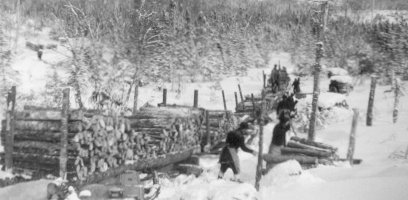 Scotland. Once they past St. Pierre they never saw any land until they reached Iceland.
The convoy he left with contained 90 ships, 31 of those were lost along the way. He
recalls talking about an attack on the ship that occurred a few days into the trip. It was attacked
with torpedoes that were discharged close to the ship. Fortunately none hit the ship, but there
were many drills and long hours spent on the deck watching for submarines. The ship itself was
a German boat. ( It was said by the German's that it would never cross the Atlantic. ) It
contained about six or seven thousand people. They slept four to a room; some even slept in
hammocks. For a pastime he would go on the deck and also peel potatoes.
Once they finally arrived in Great Britain they found that the channel was blocked. They
got through and began training for a few weeks. He found this hard, especially walking and
running with a gas mask on. However, he soon got use to wearing the mask.
The work we did in the woods was similar to what it was at home. They used the same
tools, buck saws mostly. They worked for a period of a month or so, from five a.m. to eleven
p.m., seven days a week. After this they would go on leave.
He recalls many stories about the war and his experiences over in Scotland. There were
bombing drills conducted all the time. No bombs actually fell on the camps but the men had to
be ready. Most of the bombs were targeted on major centres and military compounds. I was
once in Edenborough one time and air a raid siren went off. He went to the nearest bomb shelter
but discovered there was not even enough room for the women and children.
One incident he talks about is a time when he was on leave in Edenborough. He went to
a hotel to stay the night. He had two bottles of whiskey with him. The hotel manager did not
allow anyone to bring any alcohol into the hotel. After arguing about this for a while, the fellow
gave in and he stayed at the hotel with his two bottles. He later learned about the bar that was
situated at the back of the hotel. The owner didn't mind about drinking at the hotel, as long as
you bought the drinks from his bar.
Another incident occurred when he replaced a cook who was on holidays. He didn't mind
doing this because it paid more than working in the woods. In the woods he got $2.00 a day,
while in the kitchen he got $ 3.00 a day and of course his grub and board was free. When he
started work, he noticed the plates, cups etc. , was all dented and not in good shape. He went to
the officer in charge of supplies and demanded new dishes. He would not serve any meals with
the ones they had. Eventually they gave in and he received 65 plates, cups and saucers. He was
also able to get other things such as beans and tablecloths. Among the meals he served were
fishcakes which were very popular. He was good at this and the workers didn't want him to
leave. He liked the change from the woods, but he went back to it later. On September 9, 1945
he returned home.
Clyde Sutton on The War
I spent 5 years overseas from 1941 to 1946 working in the woods and sawmills. I was 19
when I went overseas to Northern Scotland. They were calling for volunteers. There were 13
people who signed up for the navy in March and in June they still never had a call. Then they
went to the forestry because they were also looking for people, so they went to the forestry.
There were 3 people who didn't bother with the forestry. They were Henry Snook, Ralph Collier
and Wallace Collier. Ralph and Wallace got as far as St. John's but got turned down for some
reason. But Henry Snook went on into the navy.
When I went overseas, it was quite the trip. We left here on the 25th of June 1941. We
arrived at the British Isle on the 28th of July. We left St. Alban's and went to Burgeo and then on
to North Sydney. He went from Sydney to Montreal on a train. We were in Montreal for nine
days and then went aboard a ship named Mandosa. Sunday night and Monday morning we sailed
down the St. Lawrence River and arrived in Halifax on Friday. Then we joined the convoy. We
had to do duties such as being on lookout. They arrived in Liverpool on July 28th. Then we
went to Northern Scotland, from there we went to our camp. The food on the boats wasn't that
good but you had to put up with it.
From here across the Gulf was rough, almost everyone was seasick. They didn't get sick
after that because we didn't have rough seas. They entertained us on the way across. They had
concerts and dances.
There were almost 4000 people in the forestry crew as well. They were from all over
Newfoundland and Jury's had a forestry crew along with Canada. They were under Military
rules. Newfoundland Forestry was under Military rules because they wanted the men right away
because there was an urgent call for timber. Before the war, Britain was exporting the timber.
Now the Atlantic was full of submarines that sunk a lot of ships.
Every one of the 98 ships in the convoy made it over. There where 84 men who went
overseas from the Bay d' Espoir area, 19 went to work in the forestry. About 120 went. Some
joined the forestry and army. The boat wasn't really crowded on the way across. Everyone had a
Birth ( bed ). There were 250 men on the ship going to the forestry. A bunch of nurses brought
refugees back to Canada. ( Good times ) The food was provided but they had to bring their own
clothes, the rest the forestry provided. We stayed in camps. There were 5 bunkhouses in that
camp, close to 100 people stayed in each camp.
We had been training for home guard. You had the Military training. You were issued
rifle, respirators, bant, ammunition and uniforms. On Saturdays and Sundays you would have
been training, then you went out on manoeuvres.
Most materials were sawed up by sawmills and used for the mines. The tops were call
"props." They were sawed different lengths 2 1/2, 3 1/2 and 5 feet they were used in the mines.
That was the purpose for the logs. They had to keep everything because Britain was in a
desperate situation. You cut wood and probably drive a truck for a couple of weeks. You would
take turns, perhaps they wanted someone on the sawmill. It was hard to keep one particular
person on a job. It was all forestry related, but some people had to work on the roads
( construction ). You would have roads to truck your wood. Clyde was overseas for 5 years and
got back May 3, 1946.
It was better working over there because it was all planted timber, the land and ground
were mostly good because it had no under brush. You would cut your timber and burn the brush
in the season and everything was cleaned up. There was only one main road. The small roads
were used for horses haul wood down to the main road. They used a buck saw and simon saw.
A simon saw is like a crosscut saw. It is a big long saw with a handle on each and they had drags
on them that is what you call a simon saw. If you could not cut a big tree with the buck saw they
would use the simon saw. A John Knife was used to rhine the bark of the logs. The people had
canteens over there at camp 3 and camp 6. Although there were more canteens overseas, they
were further away. They also had billiards, darts and card playing and you could get a cup of
coco or coffee.
First when they were in Scotland everything was bleak. No transportation and everything
were rationed. There was no way of getting out of town. The closest town was 30 miles away.
However, Kenlog Lake you could work to that place. Kenlog Lake there was not much there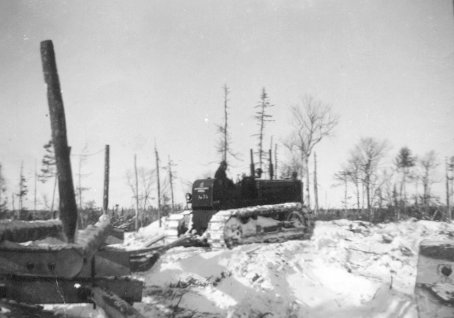 only a couple of houses and a Post Office and sometimes they could have a dance. As time went
on Welfare made it possible that the unit trucks would take them out to town on Saturday. Also
the bus would usually go out to town on Saturday and would leave to come back around 5
o'clock. It would not be good to go by bus. They had coupons to buy chocolate bars. If you had
coupons, you could use them all at one time or use them at different times. You could use your
coupons for some suit clothes, shoes, sock and whatever you needed.
only a couple of houses and a Post Office and sometimes they could have a dance. As time went
on Welfare made it possible that the unit trucks would take them out to town on Saturday. Also
the bus would usually go out to town on Saturday and would leave to come back around 5
o'clock. It would not be good to go by bus. They had coupons to buy chocolate bars. If you had
coupons, you could use them all at one time or use them at different times. You could use your
coupons for some suit clothes, shoes, sock and whatever you needed.
When I was overseas the big day was New Years, what they called Hangomere. They
would go to a dance on New Years Eve night that was considered a big "do".