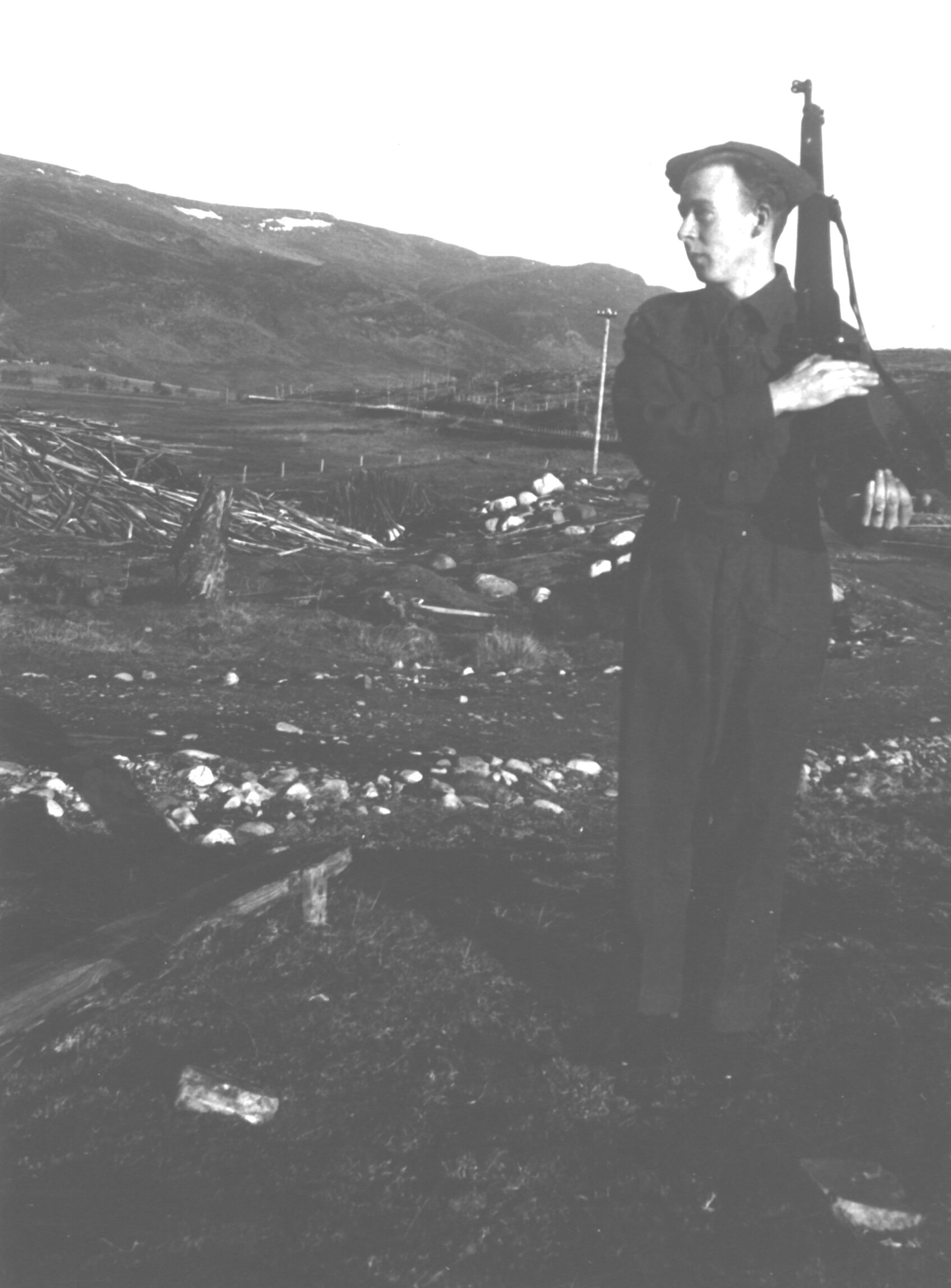
Interview #38
Name: Reginald Organ
Sex: Male
Age: 79
Date of birth: September 1919
Place of birth: St. Alban's
Education: Grade 4
Religion: Roman Catholic
Occupation: Lumberjack
Number of children: 1
Names of children and where they live:
Theresa Dollimont - Stephenville
Phone: 538-3867
Place of interview: Long Shore
Date of interview: March 4, 1999
Interviewers: Colin Pittman and Curtis Hoskins
Reginald Organ was born in St. Alban's on September, 1919 in his grandparent's home. They were John and Sarah Organ. Their house is still standing and is now occupied by Roland Organ. His parents, Frank Organ and Mary Rachel MacDonald (originally from Gaultois) and had six children.
When he was younger, he remembers playing a lot of football (soccer). One place they played was where the St. Alban's Inn is now. They cleared all the brush away so they could play further away from the shore. They kept kicking the ball into the water.
He went to school in the old doctor's house. He walked to school everyday and brought wood for the stove that heated the school. He also had to clear snow away from the wood house and school. Some teachers he had were Miss Flynn and Miss Dally.
Reg went to work when he was twelve years old. He had always done chores around the house such as getting water, chopping wood and tending to the garden. However, when he turned twelve, he began working in the woods for a wage.
Reg's parent's house was heated by a wood stove located in the kitchen. They also had a pantry where a pump was later put in. A long hallway and living room completed the lower level of the house. There were four bedrooms upstairs. The house was taken down in 1989.
When illnesses occurred, they usually turned to an older woman who knew a home remedy. For example, turpentine was put on cuts, and bark from a spruce tree was used for sore throats. Yellow root and the sour tasting salt peter was also used for sore throats.
There was no doctor around, maybe just a nurse. Coastal boats such as the Lady Anderson and Christmas Seal use to come in every few months or so.
Coastal boats were very important back then. They usually provided the only means of contact from outside the bay. They carried supplies and passengers. Before the wharf was built, they used to dock in the bay. People would come out in skiffs to meet it and bring the supplies ashore. In the winter time, Reg recalls skating out to meet the coastal boats.
Church was an important part of the people's lives in the past, more so than today, because traditions and rituals have changed. Reg says they had to go to church when they were children. The priest played a bigger part in the community than today. They had a lot of control over the people. For example, Reg remembers one time during a funeral, there were not enough altar boys present. Father Hayes didn't continue with the funeral until he went and got nine or ten other boys.
Reg worked most of his life in the woods. His first paying job was for fifteen cents an hour. That's $1.50 he use to make during a ten hour work day. His walk to work was over an hour long. "This made for long work days and hard work," says Reg.
Along with working in the woods, Reg kept animals and a garden. His animals included a few sheep that they used for making clothes and getting milk. They also had a horse they used for hauling wood.
His father and grandfather use to be schooner builders. He remembers them building three schooners. The first one he can't remember the name of , but the others were the "Shamrock" and "Francis Mary Jane." The latter one was lost at St. Pierre.
Holidays were celebrated in the usual fashion. During Christmas they drank moonshine, and had a dance each night. St. Anne's Day was celebrated by going to Conne River. Easter was mainly Church services. In 1941 at the age of twenty-two, Reg Organ enlisted in the Newfoundland Forestry Unit. During this time the allies had given a general call for the need of forestry workers to work overseas. Reg answered this call. On June 24, 1941, Reg left St. Alban's and spent the next four years overseas in Scotland.
He remembers the first night they left. There was the big storm that welcomed them on their journey. This was considered a bad omen by the men on the boat. There was further evidence of this when they tried to dock into Sydney, Nova Scotia. They could not get into the port because of security reasons. Eventually, they where allowed into the harbour and from there they went to Montreal. This was a very different place to what Reg was use to. Here he saw a car for the very first time. They next went to Halifax and then went to Great Britain; it took 21 days to get to Scotland. Once they past St. Pierre they never saw any land until they reached Iceland.
The convoy he left with contained 90 ships. 31 of those ships were lost along the way. Reg talks about an attack on the ship that occurred a few days into the trip. it was attacked with torpedoes that were discharged close to the ship. Fortunately none hit the ship, but there were many drills and long hours spent on the deck watching for submarines. The ship itself was a German boat. (It was said by the German's that it would never cross the Atlantic.) It contained about six to seven thousand people. They slept four to a room; some even slept in hammocks. To past the time Reg use to go on the deck and also peel potatoes.
Once they finally arrived in Great Britain they found that the Channel was blocked. They got through and began training for a few weeks. Reg found this hard, especially walking and running with a gas mask on. However, he soon got use to wearing the mask.
The work they did in the woods was similar to what it was at home. They used the same tools; bucksaw mostly. They worked for a period of a month or so; from five Am. to eleven p.m. , seven days a week. After this they would go on leave.
Reg remembers many stories about the war and his experiences over in Scotland. There were bombings drills conducted all the time. No bombs actually fell on the camps but the men had to be ready. Most of the bombs were targeted on major centers and military compounds. Reg recalls being in Edenborough one time and the air raid siren went off. He went to the nearest bomb shelter but discovered there was not even enough room for the women and children.
One incident Reg talks about is a time when he was on leave in Edenborough. He went to a hotel to stay the night. He had two bottles of whiskey with him. The hotel manager did not allow any one to bring any alcohol into the hotel. After arguing about this for awhile, Reg eventually got his way and stayed at the hotel with his two bottles. He later learned about the bar that was situated at the back of the hotel. The owner didn't mind about drinking at the hotel, as long as bought the drinks from his bar.
Another incident occurred when Reg replaced the cook who was on holidays. He didn't mind doing this because it paid more than working in the woods. in the woods he got $2 a day, while in the kitchen he got $3. of course his grub and board was free. When he started work, he noticed the plates, cups, etc. , were all dented and not in good shape. He went to the officer in charge of supplies and demanded new dishes. He would not serve any meals with the ones the had. Eventually they gave in and he received 65 plates, cups, and saucers. He was also able to get other things such as beans and tablecloths. Among the meals he served was fishcakes which were very popular. He was goo at this and the workers didn't want him to leave. He liked the change from the woods, but he went back to it later. On September 9, 1945 he returned home.
Reg got married on May 2, 1949. Another important event that year was Confederation
with Canada. He voted at Jack Macdonald's house which was the justice of the peace. It is now
occupied by Effort Young.
Slang - Jacko'Lanterns > > see them during a storm
jimmey > > buns
pitsaw > > saw lumber with it