
The Keddy Coat of Arms is officially documented in
Burke's Encyclopedia of Heraldry
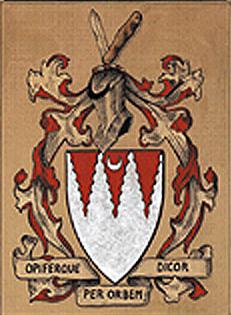
HOW AN EARLY KEDDY WAS GRANTED A COAT OF ARMS
Since the early 13th century, Coats of Arms and Heraldry have been a source of great fascination as well as a subject of true historical importance.� Researching the Keddy Coat of Arms is associated primarily with European medieval culture and has been recorded in heraldic archives.� Germany, France and Italy have no current heraldic system.� There are approximately 100,000 English arms, including Wales and the six northern Irish counties, on the rolls of the Royal College or Arms in London.� The Scots maintain their own heraldry, governed by their own tradition and rules.
Under most heraldic rules, only first sons of first sons of the recipient of a Coat of Arms are permitted to bear their ancestor's arms.� Younger sons may use a version of their father's arms, but the rules of heraldry say that they must be changed somewhat.�
Our research indicates that there was undoubtedly more than one Keddy Coat of Arms.� The earliest for Keddy which we could find was described as follows and became unique to an early Keddy: "Ar. three piles issuing from the chief engr. gu. the centre one charged with a crescent of the field." When translated the blazon also describes the original colours of the Keddy arms as: "Silver, three red triangle engrailed issuing from the top, points downward, the center one charged with a silver crescent." Above the shield and helmet is the crest which is described as: "A lancet, open, naturally coloured."
I still haven't positively made a connection of our Keddy ancestry to either England or Scotland and the Latin motto "OPIFERQUE DICOR PER ORBEM" translated means "I am called a bringer of help throughout the world."