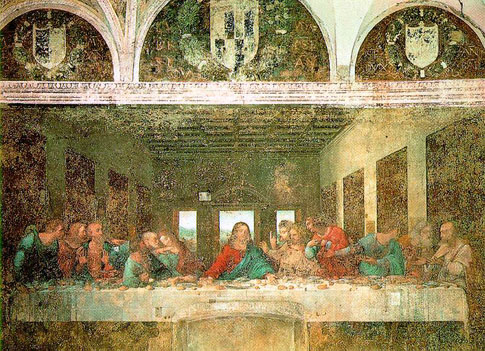
The Painting of the Last Supper
The story behind painting of the Last Supper is extremely interesting
and
instructive. Two incidents connected with this painting afford a most
convincing lesson on the effects of thought in the life of a boy or
girl, or
of a man or woman.
The Last Supper was painted by Leonardo Da Vinci, a noted Italian artist.
The time engaged for its completion was seven years. The figures
representing the twelve apostles and Christ himself were painted from
living persons. The live model for the painting of the figure of Jesus
was
chosen first.
When it was decided that Da Vinci would paint this great picture,
hundreds and hundreds of young men were carefully viewed in an
endeavor to
find a face and personality of unaffected by sin. Finally, after
weeks of
laborious searching a young man, nineteen years of age, was selected
as the
model for the portrayal of Christ. For six months Da Vinci worked
on the
production of this leading character of the famous painting.
During the next six years Da Vinci continued his labors on his
sublime
work of art. One by one, fitting persons were chosen to represent
each of
the eleven apostles, space being left for the painting of the
figure
representing Judas Iscariot as the final task of this masterpiece.
This was
the apostle, you remember, who betrayed his Lord for thirty pieces
of silver
with $16.95, in our present day currency.
For weeks Da Vinci searched for a man with hard callous face,
with a
countenance marked by scars of avarice, deceit, who would betray
his best
friend. After many discouraging experiences in searching for the type
of
person required to represent Judas, word came to Da Vinci that a man
whose
appearance fully met the requirements had been found. He was
in a dungeon
in Rome, sentenced to die for a life of crime and murder. Da
Vinci made the
trip to Rome at once, and this man was brought out from his imprisonment
in
the dungeon and led out
into the light of the sun. There Da Vinci saw before him a dark,
swarthy
man, his long shaggy and unkempt hair sprawled over his face.
A face which
portrayed a character of viciousness and complete ruin. At last the
painter
had found the person he wanted to represent the character of Judas
in his
painting. By special permission from the king, this prisoner was carried
to
Milan where the fresco was being painted.
For six months the prisoner sat before Da Vinci, at appointed
hours each
day, as the gifted artist diligently continued his task of transmitting
to
his painting this base character in the picture representing
the traitor
and betrayer of the Savior. As he finished his last stroke, he turned
to the
guards and said, "I have finished, you may take the prisoner
away." The
prisoner suddenly broke loose from their control and rushed up to Da
Vinci,
crying as he did so; "Oh, DaVinci,
look at me! Do you not know who I am?"
Da Vinci, with the trained eyes of a great character student,
carefully
scrutinized the man upon whose face he had constantly gazed for
six
months and replied; "No, I have never seen you in my life until
you were
brought before me out of the dungeon in Rome."
Then lifting his eyes toward heaven, the prisoner said, "O God,
have I
fallen so low?" Then turning his face to the painter he cried,
"Leonardo
Da Vinci, look at me again, for I am the same man you painted
just seven
years ago as the figure of Christ!"
This is the true story of the painting of the Last Supper that teaches
so
strongly the lesson of the effects of right and wrong thinking of an
individual.
He was a young man whose character was so pure and unspoiled by
the sins of
the world, that he represented a countenance and innocence and
beauty fit
to be used for the painting of a representation of Christ. But
during the
seven years, following a life of sin an crime, he was changed into
a perfect
picture of the most notorious character ever known in the history of
the
world.