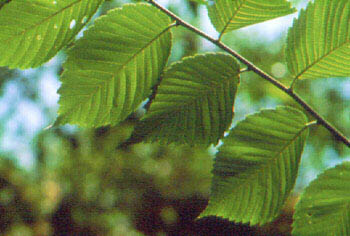
Folk Names: Indian
Elm, Moose Elm, Red Elm.
Gender: Feminine
Planet: Saturn
Element: Air
The medicinal part of this herb, (Tree.) is the inner bark. The active constituents are, the mucilages and the tannins. Its propetrties are as Yin tonic, as a nurtritive, as a demulcent, an expectorant, an emollient, an astringent, and a vulnerary. It is used to treat sore throat, dryness of the throat, coughs, bleeding from the lungs, and other lung problems. Waisting diseases, digestive problems and nausea. This is one of the most mucilaginous herbs known to man/woman, and a gruel may be made by slowly mixing warm (Blessed.) water to the powdered herb until a consistency of a thick porridge is achieved. You will want to add honey or maybe cinnamon as the taste is rather bland. Think of it as a really healthy Cream of Wheat. Slippery Elm is good for colitis and ulsers. It is a strengthening herb and may be eaten freely. The bark is much better to make tea with as the powdered herb is too mucilaginous and will turn your tea to gruel. The powdered herb may be used as a healing poultice for burns and all inflamed surfaces. The North American Indians were the first to discover the healing powers of this native tree. Wiccan lore tells that if Slippery Elm is burned and a knotted yellow cord or thread is thrown into the mix, all gossip against you will stop and when the bark is worn around a child's neck it will give them a persuasive tounge when fully grown.