 |
||
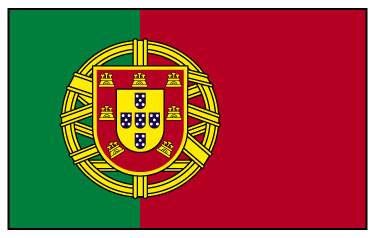 |
PORTUGAL | |
 |
Demographic Information | |
|
|
Freight Forwarders & Cargo Agents | |
|
|
Back to Freight Forwarder (Previous Page) | |
|
||
|
|
PORTUGAL | |
|
|
Demographic Information | |
|
|
Freight Forwarders & Cargo Agents | |
|
|
Back to Freight Forwarder (Previous Page) | |
|
Demographic Information |
|
PORTUGAL. Republic, SW Europe, situated in the W portion of the Iberian Peninsula, bounded on the N and E by Spain and on the S and W by the Atlantic Ocean. The Azores and Madeira Islands in the Atlantic are considered integral parts of the republic. The total area of metropolitan Portugal, including the Azores (2335 sq km/902 sq mi) and the Madeira Islands (796 sq km/307 sq mi), is 92,082 sq km (35,553 sq mi). Portugal has one overseas territory, Macau (Macao), in E Asia near Hong Kong. Government. Portugal is governed under a constitution promulgated in 1976 and revised in 1982. Although the constitution initially called for the creation of a "classless" state based on public ownership of land, natural resources, and the principal means of production, this socialist language was stricken in 1989. The right to strike and the right of assembly are guaranteed, and censorship and the death penalty are proscribed. Land and Resources. The frontiers of Portugal are defined by mountains and rivers, and the interior is largely mountainous. In the W and S the mountains descend to a large coastal plain that is intensively cultivated. The highest range is the Serra da Estrela in central Portugal, rising to almost 2000 m (almost 6562 ft). Portugal is traversed by three great rivers, which rise in Spain and empty into the Atlantic Ocean. The Tagus (Tejo), with Lisbon situated at its mouth, is the largest river; followed by the Douro, with Oporto at its mouth; and the Guadiana, which forms part of the E frontier. A fourth river, the Minho, forms part of the N frontier. Climate. The climate varies according to altitude, and high temperatures occur only in the comparatively low regions of the S. The mean annual temperature N of the Douro R. is about 10š C (about 50° F); between the Tagus and Douro, about 15.6° C (about 60° F); and in the valley of the Guadiana, about 18.3° C (about 65° F). Rainfall is heavy, particularly in the N. Natural Resources. The most valuable of Portugal's natural resources are its minerals. Much of this wealth was not developed until after World War II. Among the mineral resources are coal, copper, gold, iron ore, kaolin, tin, and wolframite, which is a source of tungsten. Although a substantial segment of the population supports itself by agriculture, the land is not particularly suited to this occupation. The plants and animals of Portugal are virtually identical with those of Spain. The most abundant trees are the evergreen oak, cork oak, poplar, and olive. Grapevines flourish in the arid soil, and port wine from Oporto and Madeira wine from Madeira are world famous. Wild animals include the wolf, lynx, wildcat, fox, wild boar, wild goat, deer, and hare. Birdlife and insects abound. Portugal also has an abundance of waterpower resources in its rivers and mountain streams. Population. The Portuguese are a combination of several ethnic elements, principally Iberians, Romans, Visigoths, and later Moors. The people still live, for the most part, in rural villages. Population Characteristics. The population of Portugal, including the Azores and Madeira islands, was (1989 est.) 10,372,000. The overall population density was about 113 persons per sq km (292 per sq mi). Political Divisions. Mainland Portugal is divided into 18 districts for administrative purposes: Aveiro, Beja, Braga, Bragança, Castelo Branco, Coimbra, Évor a, Faro, Guarda, Leiria, Lisbon, Oporto, Portalalegre, Santarém, Setùbal, Viana do Castelo, Vila Real, and Viseu. The Azores and Madeira each constitute an autonomous region. Principal Cities. Lisbon (pop., 1981 prelim., 812,385) is the capital, largest city, and leading seaport of Portugal. Other important cities include Oporto (329,104), the second-largest city and seaport; Coimbra (56,568), an industrial center; and Faro (20,687), in the Algarve resort area. Religion and Language. Roman Catholicism is the faith of more than 94% of the Portuguese people. The constitution guarantees freedom of religion, and some Protestant churches have been established. The official language of the country is Portuguese. Culture. Portuguese culture is closely related to Spanish culture and has been influenced by the three primary cultures from which it derives: the Latin, the Visigoth ( see Goths), and the Muslim ( see Islam). Lisbon has a number of important libraries, including the Library of the Academy of Sciences, the Ajuda Library, the National Library, and the Military Library. The National Archives of Torre do Tombo, also in Lisbon, is noteworthy for its collection of historical documents dating from the 9th century. The provincial libraries in Oporto, Évor a, Braga, and Mafra contain many rare old books and large manuscript collections. Various specialized libraries are attached to the universities. Economy. Although the Portuguese economy grew by 5.3% annually during 1965-80, the economic growth rate slowed to less than 1% during the 1980s, and Portugal remains the least developed nation in Western Europe. The country's gross national product in the late 1980s was $29.6 billion, or about $2890 per capita. The estimated annual budget in the late 1980s included $8 billion in revenue and $11.1 billion in expenditure. Currency and Foreign Trade. The unit of currency in Portugal is the escudo, consisting of 100 centavos (150 escudos equal U.S.$1; 1990). In the late 1980s annual Portuguese imports totaled about $17.9 billion and exports about $12.8 billion. Principal imports included mineral fuels, machinery and transportation equipment, and food and livestock. Principal exports included clothing, textile yarns and fabrics, and wood and paper products. Among Portugal's chief trading partners were Germany, Great Britain, the U. S., France, Spain, and Italy. Foreign exchange receipts from tourism, amounting to more than $2 billion annually in the late 1980s, help to compensate for the chronic trade deficit. |
|
Freight
Forwarders & Cargo Agents |
|