
Display of the above banner does not constitute endorsement

Betta
(Betta splendens) Also called Siamese fighting fish
Dwarf
Gourami (Colisa lalia)
Pearl
Gourami (Trichogaster leeri)
Blue
Gourami (Trichogaster trichopterus)
Kissing
Gourami (Helostoma temminicki)
SIZE: Up to 3 inches, females smaller
TEMPERATURE: 78-80 degrees F
This fish is probably one of the most widely recognized anabantoids. The
brilliant colors
and long fancy finnage of the male Betta has made it an aquarium delight
for both the
beginner and advanced hobbyist. It's ability to swim to the surface and
take in air makes
keeping the Betta in tiny fish bowls possible. Two male Bettas can't be
kept together.
If place in the same aquarium they will fight intensely until one dies.
Breeding the Betta
can be achieved with great sucess. The male begins the spawning process
by building
a bubblenest at the aquarium surface. This nest which fertilized eggs are
placed following
nuptial embrace beneath the nest. The female is best removed from the tank
after
Spawning. Tank water temperature then can be raised a couple of degrees.
This will cause
the eggs to hatch in 2 to 3 days. Males guard the fry, he can be removed
about 1 week
after the fry become free swimming. Betta fry may be fed infusoria, newly
hatched
brine shrimp, and whiteworms.
SIZE: 2 inches
TEMPERATURE: 74-80 degrees F
The male is one of the most brilliantly coloured of all tropicals, with
altenating bars of metallic
blue and red over the whole body. The female is much more dull in coloration.
They
have peaceful dispositions and will rarely show any signs of aggression.
They are not
a very active fish, so they appreciate a well planted aquarium to give
them some cover. The
Breeding habits of Dwarf Gouramis are very similar to the other bubblenest
builders
with one exception. The Dwarf will include a very deep substantial bubblenest
consisting of
vegetation, twigs, and other debris. They are not fussy eaters but altenating
live food
wih both frozen and dry foods is helpful.
SIZE: 4 inches
TEMPERATURE: 73-80 degrees F
The Pearl Gourami is one of the most praised of all the Gouramis. An aquarium
that is
well planted and roomy caters to their somewhat shy personality. When fully
grown
the male may occasionally chase other fish, but rarely if ever does any
harm to them.
The 'feelers' actually modified ventral fins, are frequently used as sensory
aids at
feeding time, when approaching other fish and to examine new items placed
in the
aquarium. During spawning the Pearl Gourami doesn't induldge in aggresive
behavior
that is sometimes typical of other related species. Once the eggs are laid
the female
can be removed as the male will tend to the nest. The size of the bubblenest
and the
number of eggs are both large. A thousand eggs uncommon.
SIZE: 4-6 inches
TEMPERATURE: 73-80 degrees F
The Blue Gourami for the most part will make decent community tank fish
if not
housed with fishes that are too small. Any fish that has a mouth bigh enough
to
eat a smaller fish say a neon, will eventually do it! They willingly accept
most foods
whether they be dried, frozen or live. A large well heated aquarium supplied
with
plenty of vegetation ensures the best opportunity for a pair to spawn.
SIZE: 5-12 inches
TEMPERATURE: 74-80 degrees F
The Kissing Gourami will grow extremely large in the aquarium and therefore
should
be provided with large enough living quarters. For the most part they make
reasonably
good community fish when kept with species of their own size. The Kissing
Gourami is a
timid fish that dislikes a brightly lit tank. The 'kissing' action often
seen between two
fish is probably territorial behavior. The protruding lips are also used
to scrape algae
from the sides of the tank.They are ravenous eaters that require enormous
amounts of
food which usually consists of brine shrimp, bloodworms, and varieties
of greens.
Aquariums rich in algae are beneficial in catering to their vegetarian
eating habits. If
algae is unavailable, lettuce or spinach make suitable substitutes. When
all else fails
regular basic flake food is almost never turned down. They are a difficult
fish to breed.
They are one of the few members of the Anabantidae family which does not
produce
a bubble nest, although eggs float at the surface.
 Top
of Page
Top
of Page
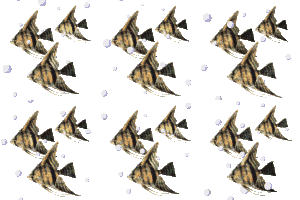
Angelfish
(Pterophyllum scalare)
SIZE: 5 inches
TEMPERATURE: 76-82 degrees F
Angelfish are probably one of the most popular egglaying cichlids ever
known. Millions
of tank raised fishes are commonly sold all over the world. Beware that
when purchasing
this species it is best to acquire ones that are tank raised and not imported.
They are
much easier to acclimate. The Angelfish is suitable for the community tank
as long as
its other inhabitants are also of the quiet and peaceful variety. But some
specimens can
bully other slow swimming or long finned fish. They swim at all levels
of the aquarium.
They become quite tame after awhile, recognizing their owner's approach at
feeding time.
Breeding is moderately easy. By feeding frozen brine shrimp, and raising
the tank
temperature will usually encourage a pair to spawn. Modern breeding methods
include
using empty tanks with no substrate. A piece of acrylic placed on an angle
provides a
spawning surface for the breeding pair. Up to 1,000 eggs laid over a small
area, during
a 2 hour spawning period are fanned by the female while the male stands
guard. The tank
water usually should be treated for fungus a a preventative for the eggs
before they hatch.
In some instances angelfish ignore all the spawning surfaces offered and
deposit eggs
on filter and heater tubes. The fry will usually hatch after 3 days. The
parents will take
great care of their young as they gather them in tight schools at the bottom.
Later, after
the egg sac has been absorbed, they must be fed fine foods in the form
of infurosia and
newly hatched brine shrimp.
Jack
Dempsey (Cichlasoma octofasciatum)
Oscar
(Astronotus ocellatus)
Blue
Zebra (Pseudotropheus zebra)
Auratus
(Melanochromis auratus)
SIZE: Up to 7 inches
TEMPERATURE: 74-78 degrees F
The Jack Dempsey is very popular with the beginning hobbyist who has a
fancy
for any of the larger cichlids. They have incredibly bright light blue
spots which are more
noticeable on the males in comparison to the females. It's tankmates must
consist of fish that
are of compatible size, for any smaller fishes are certain to be bullied.
Its common name
honouring a great boxing champion, is a particularly accurate guide to
its own
belligerant behavior. They are primarily a lower level swimmer which needs
lots of space.
If your looking for a peaceful fish the Dempsey is certainly not your best
pick. A large,
well decorated aquarium with plenty of rocks and driftwood is strongly
recommended. This
allows for plenty of hiding places and enough area for the Dempseys to
establish their
own territories. They have a hearty appetite like most of the larger cichlids
pelleted
cichlid food, beef heart, brine shrimp, and both tubiflex and bloodworms
are taken. Spawning
the Jack Dempsey is not difficult. Most eggs will be laid on stones or
pieces of wood that have
been thouroughly cleaned by the parents. 1000 newborn fry are not uncommon
and they
will grow very rapidly if raised on daphnia, tubiflex, and other finer
foods.
SIZE: Up to 7 inches
TEMPERATURE: 74-78 degrees F
The Oscar is one of the most popular of the larger cichlids. Perhaps its
the special bond
that aquarist often develop between the fishe and themselves. Oscars appear
to have a
more intelligent and friendly attitude than most other fishes. More likely
it's their constant
search for food that makes them appear so intent on following the owner's
every move
outside of the tank. A spacious tank with a deep samdy bottom provided
with rock, wood,
and caves will satisfy the Oscar's habitat needs. They will often be seen
habitually
digging on the bottom of the aquarium leaving most plants uprooted. The
Oscar is a
voracious fish and will eat almost anything including beef heart, dried
food, and any live
food, such as small fishes and insects. The Oscar is like the Dempsey and
must be kept
with larger cichlids that are similar in size. Smaller, defenseless tankmates
will be
harassed and, in a more common scenario, swallowed.
SIZE: Up to 4 inches
TEMPERATURE: 76-80 degrees F
The Blue Zebra is certainly one of hte most popular of the African cichlids.
It offers a lot of
color and can be kept successfully in the home aquarium. The Blue Zebra
is primarily a
middle to bottom level swimmer. Although, only a small growing cichlid,
this is one of the
most destructive members of the family, both in it's attacks on other fish
and its assaults
on the aquarium furnishings. This species is very territorial and should
be provided
with a well decorated aquarium. The Blue Zebra is omnivorous and requires
a balanced diet
of both animal and vegetable matter. A wide variety of foods will be taken
by the Blue Zebra.
From flake, frozen, live and pelleted. Also a various of vegetable substances
such as
algae, spinach, or lettuce. Breeding the Blue Zebra can be done only if
you have a
compatible pair. They are known as a Mouthbrooder. Mouthbrooders carry
their eggs and
young in their mouths. The newborn fry use their parents as refuge until
they are capable
of surviving on their own.
TEMPERATURE: 76-80 degrees F
The Auratus is another common African cichlid. The Auratus isvery territorial
and
aggressive fish that requires a large aquarium. Bigger tanks with well
secured rock structures
provide adequate retreats. The Auratus, like the Blue Zebra, is a mouthbrooder
and is
easily bred by the beginner. They will accept all standard aquarium foods
including frozen,
freeze dried, and live food. Additional feedings of vegetable matter such
as algae, lettuce,
and spinach are also taken.
Top
of Page
Corydoras
Catfishes (Callichthyidae)
Size: 3 inches
Suckermouth
Catfishes (Hypostomus) or commonly called Plecostomus
TEMPERATURE: 72-78 degrees F
These small and peaceful catfishes are not only commonly available, but
are easily
maintained in the home aquarium. They are primarily a bottom to mid water
swimmer.
The Corys have the remarkable ability of swallowing air from the aquarium
surface and
absorbing its oxygen through the intestinal lining. In the aquarium they
may rest
peacefully on the gravel bottom and without further warning will race to
the surface for
a gulp of air. Corys that make numerous trips to the waters surface may
be the first
sign that the water quality has begun deteriorating. Corys may be kept
with varieties of
tetras and livebearers. A school of at least 6 corys is best since they
have a tendency to
be uneasy and shy if kept alone. Corys will eagerly accept all kinds of
flake, frozen, and
live foods. They make an excellent bottom feeder cleaning up what has fallen
to the bottom.
Corys have an unusual method of group spawning. Three males to one female
should
be placed in the chosen breeding tank. Sexing the corys can be done easily.
Females are
generally bigger and broader than the males. Lowering the water temperature
will usually
trigger spawning. Depending on the species of cory being bred, eggs may
be deposited on
plants or flat rocks, but most often on the sides of the tank glass.
SIZE: Up to 12 inches
TEMPERATURE: 76-80 degrees F
Most of these are seen relatively small when sold in pet stores. Their
claim to fame in the
hobby is definately not their overwhelming attractiveness, but likely
that they do an excellent
job of cleaning the algae that will often grow on aquarium glass, plants,
and rocks. Not only do
they require large amounts of vegetable matter in their diet, but they
will also feast on
live or frozen bloodworms and tubiflex worms. Although, it should be emphasized
that without
vegetable matter as the main source of diet they will not survive long.
Most of the
Suckermouth cats will become active at night following their nocturnal
instincts. For the most part
small suckermouth cats make perfect community fishes and will rarely show
signs of
aggression with the exception of an occasional dispute among themselves.
On the other hand,
larger ones may become aggressive toward smaller tankmates and may even
be seen
sucking the protective slime coating off of other fishes.
Top
of Page
Where do you want to go from here?
 Back
to Livebearers Page (Tropical)
Back
to Livebearers Page (Tropical)
 Forward to Aquarium Page


 Comments and suggestions
are always welcome
Comments and suggestions
are always welcome
e mail me & I will see what I can do to help you out
 Proud
member of the GeoKidz Club
Proud
member of the GeoKidz Club


 Get
Your Own FREE Home Page
Get
Your Own FREE Home Page