Dear Friends,
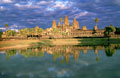
Since returning from Angkor Wat, I have been reflecting on
this kingdom of Angkor.
My thoughts went to the glory of this kingdom, and the ultimate decline
in the thirteenth century, mainly due to strife of power and war.What puzzles me is the cause of this
discontent that led to the decline of Angkor
in the thirteenth century. In my mind,
an advanced civilization in a land of plenty should sustain itself for a long
time; and power and politics should just be the sequence of events. It really puzzles me that a great
civilization with intense cultural heritage would decline to nothing; that a
population of two millions in a great kingdom called Angkor
would become a jungle.
It was just this week that I came across a documentary that
gave me some answers to my queries.It
seems that we, ourselves, are the worst enemies of our heritage.The richness of our land is fully exploited
by us; but we do not know the limit of our exploitations.We only know about advancement and
technologies, but not the limitations of our paths to our goals. In Angkor,
for example, in the early part of this century, our ancestors knew about the
richness of the land.They tore down
trees and cultivated the rich soil.
During the course of the years, the sun scorched the earth; the rain
flooded the land. Natural disasters
created strives and miseries. Unhappy
people turned to war and politics.An
entire kingdom was abandoned as population scattered. At the very least, in this case, Nature won.She reclaimed her land and the human
civilization was left to ruins. This was
what became of a great civilization called Angkor.
My thoughts are that we should learn from our past while we
look to our future.We should not only
delve with our own lifetime, but we should think about our future
generations.Angkor
should be a lesson to all of us.
linda,
hongkong, 30th November,
2005