Seven Wonders of the World
The Seven Wonders of the World were works of art and architecture considered by the ancient Greeks and Romans to be the most fabulous creations of antiquity. They were the Pyramids of Egypt, the Hanging Gardens of Babylon, the Temple of Artemis, the Statue of Zeus, the Mausoleum of Harlicarnassus, the Colossus of Rhodes, and the Pharos of Alexandria.
The Pyramids of Egypt (built circa 2700-c. 1000 bc) are the oldest of the seven wonders and the only ones remaining intact today (see Pyramids).

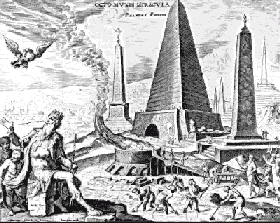
The famous pyramids located in Giza, near the city of Cairo, Egypt, are the oldest and best preserved of the seven wonders of the world. Ancient Egyptian kings had them built as their tombs, although ancient Greeks and Romans believed the structures to be purely ornamental. The largest pyramid, called the Great Pyramid, now stands 137 m (450 ft) tall. This is one of three other pyramids, built from about 2600 to 2500 bc, which are the best remaining examples the Egyptian architectural feat.
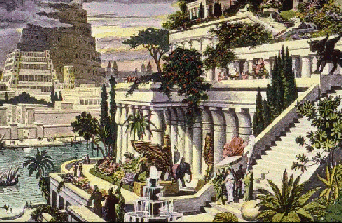
The Hanging Gardens of Babylon are depicted in this hand-colored engraving by Martin Heemskerck. Possibly built by King Nebuchadnezzar II about 600 bc, the hanging gardens were considered to be one of the Seven Wonders of the World.
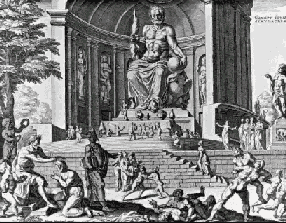
The Greek sculptor Phidias created the Statue of Zeus in about 435 bc. The statue stood in Olympia, and was perhaps the most famous sculpture in ancient Greece. Phidias made the 12-m (40-ft) tall god’s robe and ornaments from gold and carved the body out of ivory.
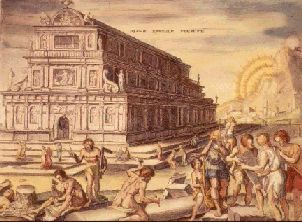
The Temple of Artemis is depicted here in this hand-colored engraving by Martin Heemskerck. Built in Ephesus in Greece in 356 bc, the temple was considered to be one of the Seven Wonders of the World. It was destroyed by the Goths in ad 262.
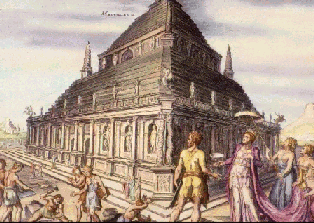
The Mausoleum of Halicarnassus, depicted in this hand-colored engraving by Martin Heemskerck, was built about 353 bc. The mausoleum was a huge marble tomb built for King Mausolus of Caria in Asia Minor. It was considered to be one of the Seven Wonders of the World.
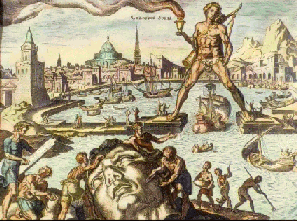
The Colossus of Rhodes, depicted in this hand-colored engraving by Martin Heemskerck, was built about 280 bc. Standing 30 m (100 ft) high, it was built to guard the entrance to the harbor at Rhodes. The ancient Greeks and Romans considered it to be one of the Seven Wonders of the World.
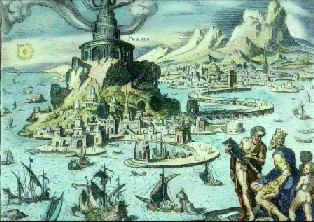
The Pharos of Alexandria, an ancient lighthouse, is depicted in this hand-colored engraving by Martin Heemskerck. The lighthouse stood on an island in the harbor of Alexandria and was over 134 m (440 ft) tall. It was considered to be one of the Seven Wonders of the World.