RC Slope Soaring


This Page is always under construction.

Another one of my great hobbies is flying RC gliders. I started some years ago
by purchasing a two-channel RC balsa glider, and now I design and build some
all fiberglass sailplane models by myself.
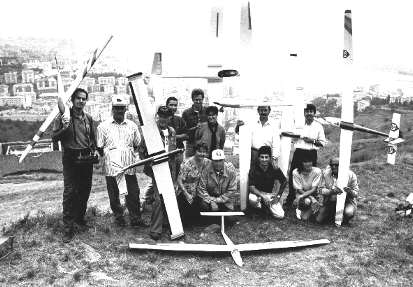
I fly with my friends as time permits. Our soaring group, called V.I.P., is
not really a Club, but just some people with the same fanatical hobby interest
that meet together every weekend to fly in silent tranquillity. Our group is
composed of a large number of different people with the same interest in R/C
soaring. We would rather not fly competition, but we prefer to exchange ideas
and help one other . It's amazing how many people are fascinated with this
hobby and come to see us fly and perform aerobatic tricks.
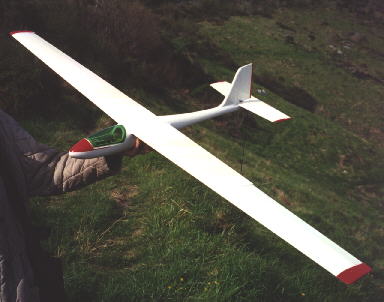
Below are construction details for the © SBAM sailplane, a small 3 channel
RC glider (wing span 170 cm. and RITZ 2-30-10 airfoil) that I have built.
Here we are.....
Specifications SBAM
Wingspan 1680 mm.
Fuselage Length 700 mm.
Wing Area 20,16 sq dm.
Weight 910 gr.
Wing Loading 45,1 g/sq dm
Wing Section RITZ 2-30-10
Tailplane Section Flat Plate
Here is the plan of the © SBAM. The fuselage is fiberglass, reinforced with
carbon fiber. The wings are polystyrene foam core covered with Obece (light
weight).
After many tests, I decided to use the RITZ 2-30-10 airfoil instead of the
more traditional Eppler. The Ritz is bi-convex, but if you pay attention
during construction to the planarity of surfaces, incidence, etc., the model
will be stable and it will fly well in adverse conditions too.
If the wind is strong enough, the © SBAM can be totally aerobatic (loops,
snaps, rolls, inverted flight, etc.).
Although the © SBAM is easy to fly, it's not recommended for beginners.
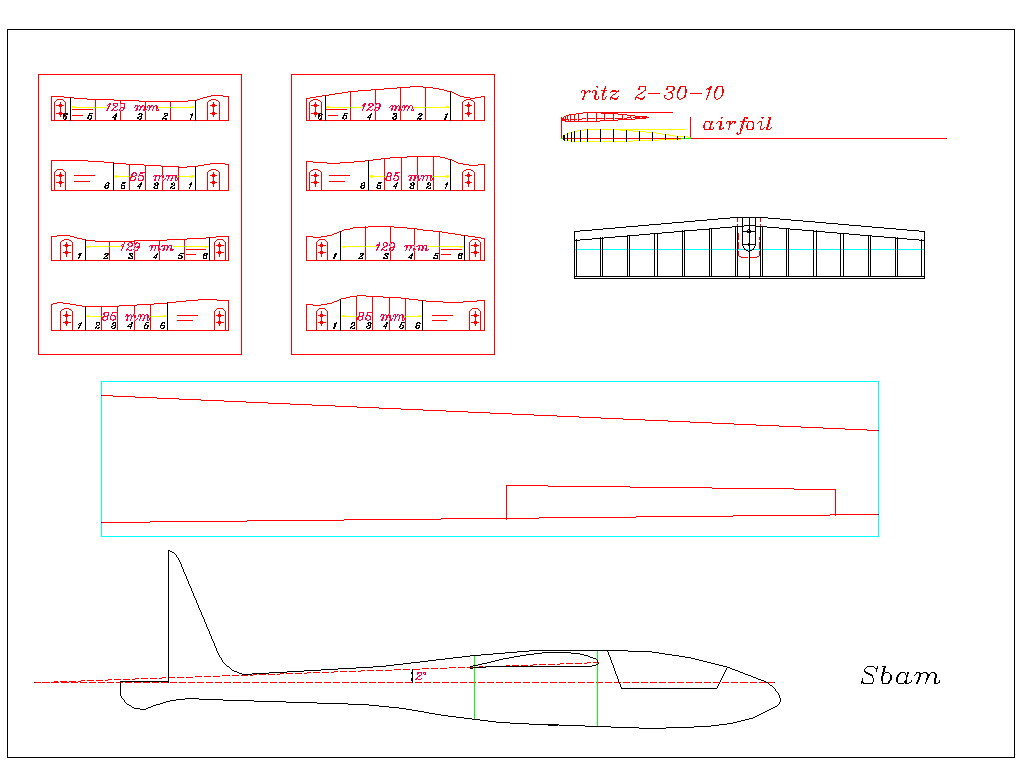
Construction's plan
The model was totally designed using Computer Aided Design (AutoCad v.12) and
plotted to a scale of 1:1.
After having finalized the design, I started construction by cutting out the
wing rib templates from Vetronite, a material used to make printed circuit
boards. To get better precision in wire cutting the wing's airfoil, I divided
the RITZ 2-30-10 airfoil into two halves, upper and lower. (look at the plan)
The fuselage is made of hand layed fiberglass and took me a lot of work. I
started by making a wooden plug model from balsa. If you do the same, pay
great attention to the finest detail because even the smallest imperfections
here will be visible in the final molded model.
The second step was to make the two female half molds for the fuselage. Make
sure to use a good release layer when doing fiberglass work (I use polyvinyl
alcohol), otherwise it will never come apart and you'll throw away all your
work!
If everything turns out OK, then you can mold the final fiberglass fuselage. I
used 180 gr/mq fiberglass cloth reinforced with carbon fiber. After curing,
open the mold and behold your fuselage! (I know that it's easier said than
done). With this method, you can make a lot of fuselages, but if you need only
one, there are easier ways to go. For more information and comments please
E-mail me.
Pictures : click on pictures to see big images
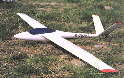 SH101 Salto
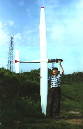 Pilatus
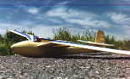 Habicht
 SH101
SH101
 LO100 flying
 LO100....
 LO100
LO100
 Salamandra WW-S1
 Real thing...
 Schweizer 1-26C
Other Links
 R/C Web Directory
Lincoln Area Soaring Society
Toine Martens R/C pages
Jerome Meugnier R/C Gliders (french) 
 Return to my Home Page.
For any comments:
 [email protected]
© 1996-98 [email protected] last update 2 Jun 98
 Return to GeoCities Colosseum
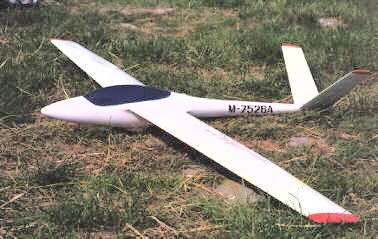 SH101 Salto
 Pilatus
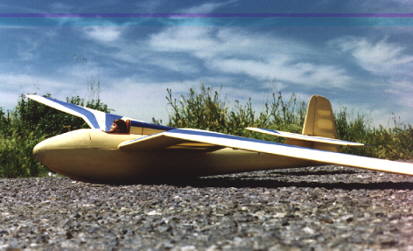 Habicht
 SH101
SH101
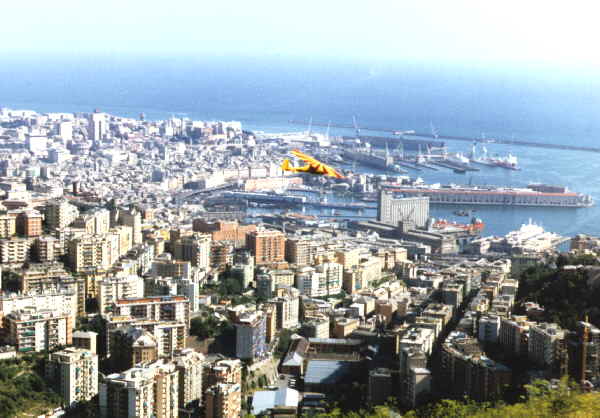 LO100 flying
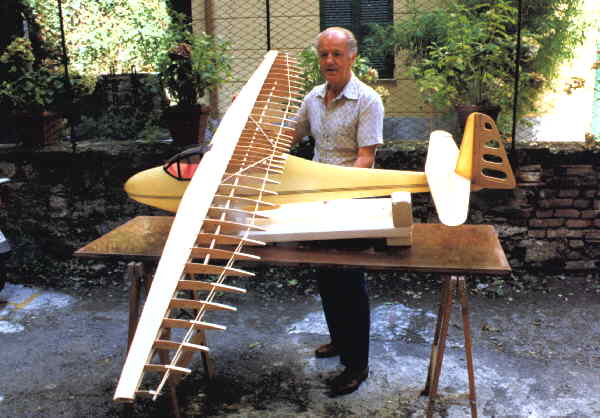 LO100....
 LO100
LO100
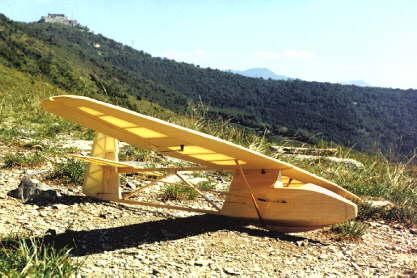 Salamandra WW-S1
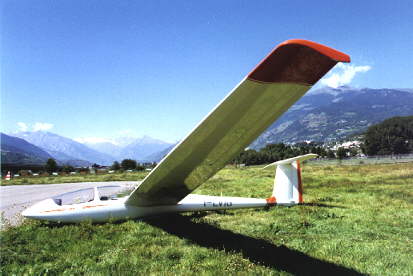 Real thing...
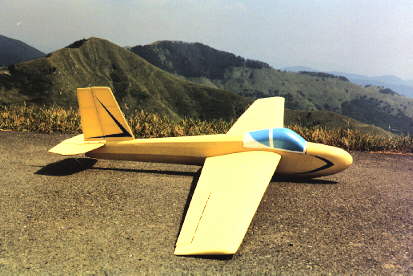 Schweizer 1-26C