|
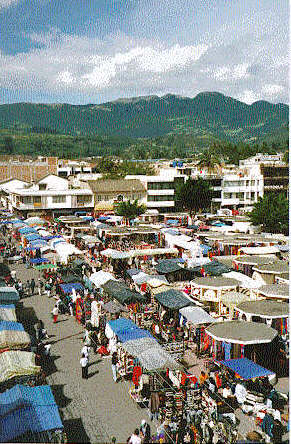
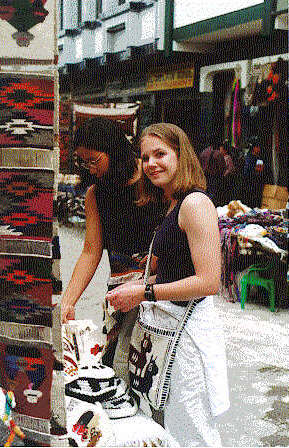
It is rare to see so much color and activity concentrated in one
place. The Saturday market at Otavalo was remarkable. There were
embroidered shirts, weavings, wall hangings, wool sweaters, jewelry, beads,
dolls, bags, food, yarn, cloth, and music. I didn't know where to start, so
I decided to just start walking and let the market show me what it had to
offer. I think I've finally learned how to bargain without embarrassing
myself! My semester of Spanish certainly came in handy. I got all kinds of
beautiful things for myself, my family and my friends. The wool goods
especially were really remarkable. I liked being able to wander around, see
what I wanted to see and buy in a leisurely fashion, and lose myself in my
surroundings on a sunny day. --Kathryn Hull | |
|
Perhaps the most well-known aspect of the indigenous culture of Ecuador is
its artesania. The handmade arts and crafts of the natives are sold not
only all across Ecuador, but also all over the world. Many of the
artisans who market their work outside the country come from Otavalo, a
city in northern Ecuador. The Otavale�o tradition of craftsmanship began
centuries before the Incan conquest of the region and continues to thrive
to this day. We visited the market in Otavalo and were amazed by the
items we found. The variety was astonishing--exquisitely woven blouses
and tablecloths were juxtaposed with beautifully carved wood and stone
pieces. More information on the indigenous crafts of Otavalo Purchase Ecuadorian crafts through a group that provides non-profit support for the education and development of indigenous craftsmen and their way of life. --Amita Hazariwala | |