 Re-Engineering Education
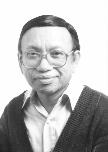
By Leonardo Leonidas, MD, FAAP
Class �68 UP-PGH
| Friends of the University of the Philippines Foundation in America |
Re-Engineering Education
By Leonardo Leonidas, MD, FAAP
Class �68 UP-PGH
Except for the blackboards, printed handouts, and slide projectors, the methods used by Socrates when he gave his talks in the streets of Athens, was exactly the same as most of our teachers and professor are using now. Socrates and our modern teachers used canned information and ideas then stood in front of their students and gave the well planned lecture. After their lecture, they ask the students, �Any questions?�
From Monday to Friday, in almost every classroom in America, our teachers and professors are trying to impart their knowledge to their students the old fashion way: they ensure the transfer of knowledge from the notes of the teacher to the notebooks of the student, with only about 5 to 10% retained in the students mind.
The present classroom teaching methods should be re-engineered. It is boring, soporific, inefficient, ineffective, and expensive.
We are extremely lucky that we are living in the era of great hope and possibilities courtesy of the rapid advances in telecommunications, computers, and software. Just a few years ago, it would be impossible to drastically change our traditional teaching methods.
Traditionally, most of our schools and universities produce students of "knowers". They accumulate facts and concepts. They are passively waiting for information to be given to them. And they are tested by the amount of information they have retained in their head. They are the students of yesterday.
Unfortunately we no longer need "knowers". Today we need learners, not human databases or robots. We need students who can project information into the future. Proactive students who will search for knowledge and new experience with little guidance from their teachers. They are the students of the 21st century.
We need learners because we have to compete globally. To stay ahead we can not stand still on the pedestal of traditional schools and universities. We have to provide our students the necessary vehicle to ride onto the information super-highway of the 21st century.
This new vehicle is e-Edu (education) which can travel and be parked in the �learning environment.�
What is e-Edu? It is the pen, pencil, crayola, blackboard, library, laboratory, classroom, and teacher compressed into a silicon micro-chips. e-Edu can be everywhere, in the classroom, laboratory, home, garden, beach, gym, golf-course, car, school bus, airplane. It can be where the learner wants to be.
The best thing about e-Edu is it is fun. The student can interact with it without fear and feeling embarrassed. There is fun because the student can discover new and varied things with ease in an instant. The instant gratification of the Nintendo games can be there, fun.
Students don�t need to memorize. They will learn by doing - which is more effective. Students at Carnegie-Mellon University and the MIT Sloan School use a simulation of a live trading room with links to real time stock quotation from Reuters. The trading environment is also linked to business schools in Mexico City and Tokyo. With the use of advanced simulators, Burlington Northern Railroad in Fort Worth, Texas has increased its training productivity by 15% per year and improved quality. One reason why our commercial pilots have prevented many mishaps in the air and in the land is their regular training using computerized simulators. In the next century, medical schools will need patient simulators because there will less and less patients being hospitalized.
Learning can be interesting, useful, and fun if what we need now can be there just-in-time. The e-Edu can provide this new concept of just-in-time learning rather than the traditional just-in-case teaching method. Knowledge, according to Davis and Botkin, �is doubling about every seven years, and in technical fields in particular, half of what students learn in their first year of college is obsolete by the time they graduate.� Our schools and universities in order to attract and retain students, should provide the skill of just-in-time learning.
With e-Edu students will no longer need certificates to show their accomplishment. What the students of the 21st century will do is to demonstrate their skills or work products rather than pass a set of written tests. With multi-media CD-ROM and virtual computers, students can easily show and apply what they have learned. Certainly this is better and less soporific than answering a multiple choice question.
Students using e-Edu will not be limited to one school or university. She can enroll at different electronic colleges of her choice. The first semester she can enroll at New York University and the second semester at Phoenix University. And she can do this even without leaving the comfort of her living room.
Big businesses and universities can work together. Students can link with mentors from the real world of business in real time. They can collaborate on projects that can help the business and at same time enhance the student�s chance of getting an employment.
With e-Edu life-long learning is bound to happen. Because it is fun and easy, learning will become addictive, and people will get hooked to it, just like children and teenagers being hooked to Nintendo.
What will make e-Edu possible? The Internet, lap top computer, de-regulation of the telecommunication, improved software, and global competition. The business world and innovative private educational companies will provide the engine for the e-Education vehicle.
Big corporations are ahead of many universities in riding the e-Edu vehicle. Motorola University, Sprint�s University of Excellence, MacDonald University, and National Semiconductor University, and Hewlett-Packard have started employee e-Education. These corporations can do it because their organizational culture can allow them to.
What about our schools, colleges, and universities? Paradoxically, progress will be snail pace in applying e-Edu in our very own educational system. Because of the organizational culture in promotion and tenure system it would be difficult to bring about rapid and radical changes.
Whether our educators and school boards like it or not, the silent revolution in our education will come upon us. It is already here gradually infiltrating the fabric of our old fashion schools, colleges, and universities. The silent education revolution is in the �classroom� near you, your home computer.
This article originally appeared in the Bangor Daily News. Dr. Leonidas lives and practices in Bangor, Maine. He and his wife support an Educational Foundation in Aklan which allows students from poor families to get technical education.
