CURRENT EVENTS |
 |
| Bishop Cotton
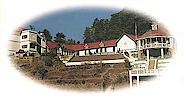
School, Shimla, India is a residential school for boys, governed by a Board of Governors
in conformity with the original charter of the School laid down by George Edward Lynch
Cotton himself, Metropolitan Bishop of India, Burma and Ceylon. It is situated in Shimla,
which is the capital of Himachal Pradesh. The school is affiliated to the Council for the
Indian School Certificate Examination and admits boys from Class one (age six) and
prepares them for the ISC Examination taken at Class twelve in the Sciences, Commerce and
Humanities. The medium of instruction is English
|
|
Term |
Usually starts by
the 3rd of March and ends early in December. In April the entire school goes out for
expeditions, treks excursions and camps. All groups are escorted by members of staff and
the ratio is usually 1:10.There is a week's break at the end of the first term, after the
first Saturday of June, and another at the end of the second term, towards the end of
September. Children are not expected to be taken to the plains during these breaks. Most
boys utilise this time for camping.
|
THE UNIFORM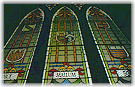 |
Consists of grey
trousers and blue blazers in winter. For summer they wear light grey trousers with blue
short sleeved shirts. Saturdays, Sundays and holidays are for casual wear which consists
of regulation blue denim jeans, school tee shirts, sweat shirts or track suits.
|
RESIDENCE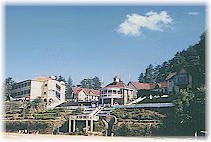
|
From classes one to
eight the boys live in newly built dormitories under the direct care and supervision of
Matrons and boys of the same age group are together. Our dormitories are: Linlithgow for
classes I, II & III, Remove A for classes IV & V , Remove B for classes V and VI,
Remove C for classes VI and VII and Remove D for classes VII & VIII. Each dormitory
has about 34 boys with adequate locker, cupboard, toilet, common room and linen room
space. From class IX onward the boys move up to the Main School, which dates back to the 1860's, and live in Houses ( Curzon, Ibbetson, Lefroy and Rivaz) with all boys of a particular house together. They are under the direct control and supervision of their Housemasters. The Main School Matron is in charge of the box room and sees to the cleanliness of clothes, issue of personal items and other pastoral requirements. Each Housemaster has between eight and ten House Tutors working with him. Each House Tutor has about ten boys from classes VI to XII attached to him or her. These tutorial groups usually don't change so as to foster the ward / guardian relationship. The tutors are responsible for the emotional, spiritual, physical and intellectual health of their wards. Housemasters and their tutors meet at least twice a month. Tutorial feed back is reviewed by the Senior Master (Vice Principal) and Headmaster (Principal) at least three times in the year. In the Junior School, from classes I to V, pastoral requirements are met and control and supervision of the boys is by the Matrons who live next to the boys in the dormitories. The children have Class Teachers who function like House Tutors for the children of their classes. Matrons and teachers work in tandem and feedback is a continuous process monitored by the Head: Junior School. The Prefectorial System in India originated at Bishop Cotton and prefects are appointed by the Headmaster after consultations with the boys and senior faculty. Every care is taken to appoint boys of calibre and responsibility and the Prefects are entrusted with a good deal of authority which is closely monitored to see that there is no abuse. The Prefects are led by a Captain of School, his Vice Captain and the four House Captains. It is a great honour to be appointed prefect.
|
| The testing system
|
The year is divided
into three terms. The Spring Term starts in March and ends in the first week of June.
During this time the boys have class tests and the first report, a Short Report reflects
his grades. This has a weightage of 10 marks. At the end of the term there is an
examination which has a weightage of 20 marks. The summer (IInd) term also consists of
tests and an examination and the weightage for these is 30. The final term is similar but
the weightage for the tests and exam is 40. This makes a total of 100 and a boy's
promotion is based on how he fares in his tests and exams. For the Junior School there are
no exams till class III but a boy's progress is continually assessed through class work
and tests. In classes IV and V the boys sit for the Second term and Final exams but a
greater emphasis is placed on their performance in class throughout the year. Tutorial and
full academic reports which include an annual infirmary report are sent home three times
in the year. We expect the boys to enjoy their years at School and for their School years to be an indelible and memorable part of their lives. For the teachers, their return as Old Boys year after year, is what makes the whole ffort worth a lifetime's experience.
|
Information / Contacts | School History | Current Events | |
|