Chasing the Butterflies
by Julia Alvarez
Presented on September 4, 1997 at Appalachian State University
I first heard about the Mirabal sisters when I was ten years old. It was four months after we arrived in this country. My father brought home a Time magazine because he had heard from other exiles in New York City of a horrifying piece of news reported there. My sisters and I were not allowed to look at the magazine. My parents still lived as if the SIM, Trujillo's dreaded secret police, might show up at our door any minute and haul us away.
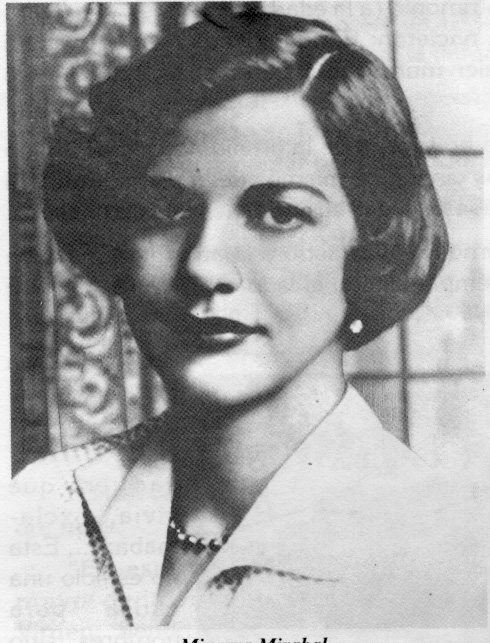
Years later, doing research for the novel I was writing , I dug up that Time article. I stared once again at the lovely, sad-eyed woman who stared back from the gloom of the black-and-white photo. As I read the article, I recovered a memory of myself sitting in the dark living room of that New York apartment secretly paging through this magazine I was forbidden to look at.
It was December 1960. My first North American winter. The skies were gray and my skin was turning a chapped, ashy color that made me feel infected by whatever disease was making the trees lose all their leaves. Every evening my sisters and I nagged our parents. We wanted to go home. They answered us with meaningful looks that we couldn't quite decipher. "We're lucky to be here," my mother always replied. "Why?" we kept asking, but she never said.
We had arrived in New York City on August 6 ,1960. My father had participated in an underground plot against our dictator, Trujillo. The plot had been uncovered and we had barely escaped capture. We were lucky to be in the United States.
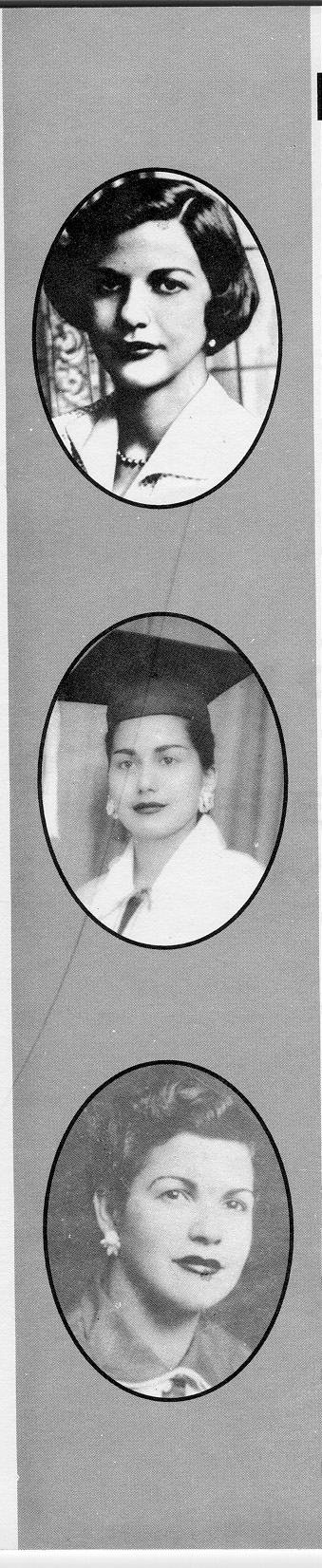
When my father read of the murder of the Mirabal sisters, he must have felt a shocking jolt at what he had so narrowly missed. The sisters were members of that same underground he had bailed out of in order to save his life. Here, just four months after we had escaped, they were murdered on a lonely mountain road. They had been to visit their jailed husbands, who had been transferred to a distant prison so that the women would be forced to make this perilous journey.
And so it was that my family's emigration to the United States started at the very time the Mirabal story ended. These three brave sisters and their husbands stood in stark contrast to the self-saving actions of my own family and of other Dominican exiles. Because of this, the Mirabal sisters haunted me. Indeed, they haunted the whole country. They have become our national heroines, and November 25, the day they were killed, has been declared by the United Nations the International Day Against Violence Against Women.
But I did not become personally involved in their story until a trip I made to the Dominican Republic in 1986. A woman's press was doing a series of postcards and booklets about Latina women, and they asked me if I would contribute a paragraph about a Dominican heroine of my choice. The Mirabal sisters came instantly to mind. Looking for more about them, I visited Dominican bookstores and libraries, but all I found was a historical "comic book." It was disconcerting to read about heroine with balloons coming out of their mouths. On the other hand, any shoeshine boy on the street or campesino tilting his cane chair back on a coconut tree knew the story of the Mirabal sisters, "Las muchachas," everyone called them. The girls.
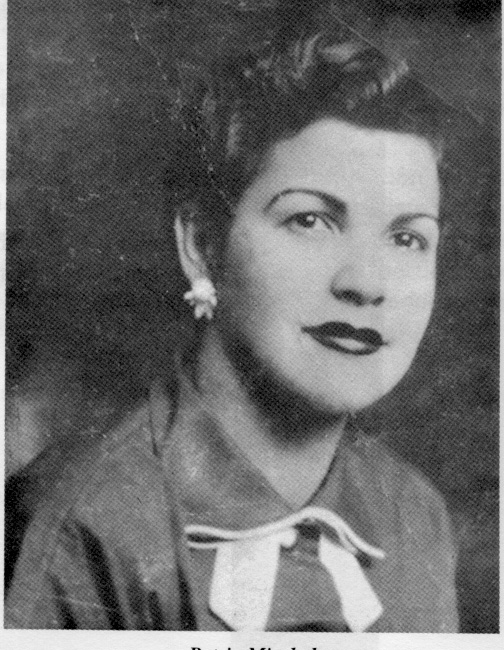
When I complained to a cousin that I couldn't find enough formal information about them, she offered to introduce me to someone who knew someone who knew one of the Mirabal "children." Six orphans - now grown men and women - had been left behind when the girls were murdered. That's how I met Noris, the slender, black-haired daughter of the oldest sister, Patria. In her early forties, Noris had already outlived her mother by six years.
Noris offered to accompany me on my drive north to visit the rich agricultural valley where the girls had grown up. She would take me through the museum that had been established in their mother's house, where the girls had spent the last few months of their lives.
In the bedroom: The little clothes that the girls had made in prison for their children are laid out on the beds. Their jewelry - bracelets, clamp earrings, the cheap costume type - lies on the dresser under a glass bell that looks like a cheese server. In the closet hang their dresses. "This one was Mami's," Noris says, holding up a matronly linen shift with big black buttons. The next one she pulls out she falls silent. It's more stylish, shirtwaist style with wide blue and lavender stripes. When I look down, I notice the pleated skirt has a bloodstain on its lap. This was the dress Patria carried "clean" in her bag the day she was murdered so she could change into something fresh before seeing the men.
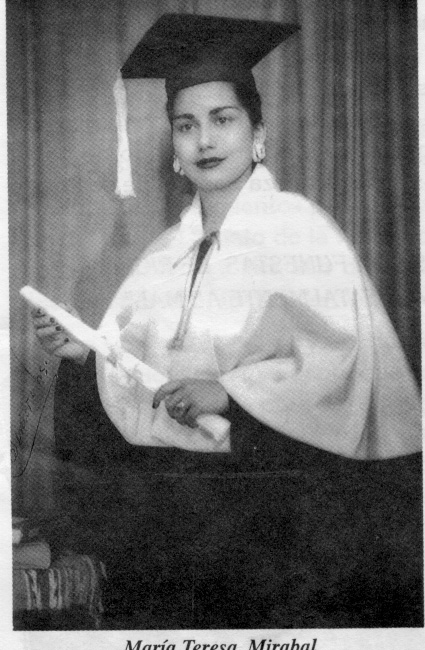
María Teresa's long braid lies under a glass cover on her "vanity." There are still twigs and dirt and slivers of glass from her last moments tumbling down the mountain in that rented Jeep. When Noris heads out for the next room, I lift the case and touch the hair. It feels like regular real hair.
We walk in the garden and sit under the laurel tree where "the girls used to sit." Noris says it is too bad that I am going to miss meeting Dedé.
That is the first I hear there is a fourth sister who survived.
Dedé was away in Spain and wouldn't be back until after I had returned to the States. Maybe the next trip, Noris said. "Meanwhile, there are a lot of people you can meet now."
"It's just for a paragraph on a postcard," I reminded her, for I was a little ashamed to be taking so much of her time.
She waved my politeness aside. "It will inspire you," she promised me. Indeed. Maybe she could sense that more than a postcard was already cooking in my head.
One of those people I met was the dynamic and passionate Minou, daughter of Minerva Mirabal. She was four years old on the day her mother was killed. I remember her sitting in that chair. I remember her leaning down to kiss me, laughing. Eventually, Minou would share with me a folder of the love letters her parents had written each other during their many separations. Among them, letters they had smuggled back and forth in prison:
I also met Marcelo Bermúdez, another member of the underground who was in the torture prison with the other men. Again, from my journal:
Marcelo tells the story of the day the girls were captured and brought to the torture prison. The men were already there, naked, packed in cells behind thick walls of stone, silent and afraid. All of a sudden, the girls spoke out in code and the prisoners took heart. "We are the butterflies!" (Las Mariposas, their code name.) "We are here with you. If any of you would like to identify yourselves, do so now." Marcelo said that voices started to call out, "I am the Indian of the Mountains." "I am the Hunter of the North Coast." And so on. That's how the group found out that people believed long dead were still alive.
Back in the capital, I recounted the story for my aunt and cousin. "What did the guards do?" my aunt asked.
I had been so caught up in Marcelo's story that I couldn't remember what he had said had actually happened. "Let's see," I told my aunt. And I think that's when I realized that I was bound to write a novel about the Mirabals rather than the biography I had been vaguely contemplating.
But after I wrote my Latina-postcard paragraph, I put the project away. The story seemed to me almost impossible to write. It was too perfect, too tragic, too mythic, too awful. The girls' story didn't need a story. And besides, I couldn't yet imagine how one tells a story like this. Once upon a holocaust, there were three butterflies. It sounded maudlin, both reductive and inflated, junky. A paragraph of this stuff was quite enough.
What I was forgetting - and not forgetting - was the fourth sister. It was my curiosity about her that led me back to the Mirabal story. In 1992, during my annual trip "home," I met her - the surviving sister. Dedé, as everyone calls her, invited me out to the house where she and her sisters had grown up and where she still lives.
This meeting opened up the story for me. It was late afternoon, the light falling just so, a deepening of colors in the garden, the rockers clacking on the wooden patio floor. Dedé, very modern in black culottes, a hot-pink shirt, wire-rimmed glasses, recalled this and that in a bright, upbeat voice as if it were the most normal thing to have had three sisters massacred by a bloody dictator and live to drink a lemonade and tell about it. I realized this was her triumph. She had suffered her own martyrdom: the one left behind to tell the story.
It was after this meeting that I decided, once and for all, to write a novel about the Mirabal sisters. I wanted to understand the living, breathing women who had faced all the difficult challenges and choices of those terrible years. I believed that only by making them real, alive, could I make them mean anything to the rest of us.
And so I began to chase the butterflies. With my husband, Bill, at the wheel of our rented car, we traversed the island, meeting the people and visiting the places that had been a part of the girls' lives. There were always surprises.
In the National Archives I combed for information about the Trujillo regime. I found many volumes missing and the radio distracting. The "librarians" (two young girls doing each other's nails) offered to help. We found a stack of yellowing El Caribes. In the one published the day the girls were killed, November 25, 1960, a warm day was forecast throughout the island with possible rains in the north. A Japanese doctor had registered a machine that proves that human beings snore in thirty different patterns. In Confidencialmente it was reported that everyone has the same measurement at the fattest part of the calf as at the neck. María Teresa, the youngest sister, might have read her horoscope for the day: Libra, Do you realize how much effort and materials you've lost? Try to find a way to save your efforts. Her two sisters had better luck predicted: Pisces, This is your lucky time. Neptune is now in a benevolent angle for your sign.
Leaving the capital and driving north, we stopped at Salcedo. I wanted to see the church where the girls had gone to mass, gotten married, baptized their children, mourned their father. From Dedé, as well as from local campesinos, I had heard about Patria's legendary faith. Indeed, in the purse Patria carried the day of her murder I had found her small prayer book. It was held together with a rubber band, the binding falling apart from constant use. Tucked between the pages were scraps of paper with handwritten prayers that Patria had either composed herself or written down as especially efficacious. One to San Marco de León for protection against imminent danger made tears come to my eyes.
Were the others sisters religious? Dedé had raised an eyebrow when I questioned her. "The rest of us were up and down," she admitted. But she confessed that those last few months Minerva began finding her religion again. "When she saw the priests entering the movement, her faith found faith again. It made Patria so glad. Her prayers were answered. Minerva had wanted Patria to join one revolution, the one they would fight with arms. And Patria wanted her sister to join the other revolution, the one you fight with the spirit."
In Salcedo, Bill and I found the church that had housed the girls' passionate or turbulent life of faith. It showed no signs of either commotion: a gray adobe with a red bell tower, quaint and pretty, a place for fairy tales. We wanted to see the inside, but the big wooden doors were locked. We stopped an old man who asked Bill in Spanish if he was a priest. Cura, one who cures? Bill deduced. Bill, a doctor, nodded, "Sí, cura." No, I shook my head. "Honey, he's asking you if you're a priest."
"He's not a priest," I said. Then, more bluntly, "He sleeps with me."
"That's okay," the old man said, slapping Bill on the back. Way to go.
We found out why priesthood and pleasure didn't necessarily jar the old man. In order to get inside the locked church, we had to find the priest with the key. He wasn't in the rectory, the old man told us, but over in the discotheque. Bill and I looked at each other, daring each other not to laugh.
A young woman came out on the sidewalk. Her mother owned the pharmacy behind us. Did we want to come in and get out of the sun? Many thanks, but we were headed to the discotheque to find the priest so we could get inside the church. She was too polite to ask what we were up to. But I offered her our story. I was interested in the Mirabals. I wanted to visit the church where they had been married and had gone to mass. The mother came to the door from behind the counter. If you're interested in the Mirabals, why don't you talk to Doñla Leila? She lives right across the street.
Who's Doña Leila? my look said.
"Their aunt. She knew the girls since they were this high." The proprietress of the pharmacy gestured toward her thongs.
"Let's go," Bill said. He had understood enough Spanish to know we were being invited into another story.
So that's how we met the girls' aunt , and how we met many others who had been important to the Mirabal sisters. We even got the priest to come out of the discotheque. ("I get invited to these darn things I have to go to," he explained himself.) He opened the church doors, chatting all the while about his parishioners. "By the way," he asked - and my ears had learned to perk up at the phrase in Pavlovian anticipation of a choice tip or tidbit - "do you know one of Minerva's compañeras in prison lives in town? Doña Sina. Shall I give you an introduction?"
Just past the town of Salcedo, we turned off the main road and headed down a dirt road shaded by a canopy of interlacing amapola branches. Here and there we stopped to admire one of the lovely ranchos, small wooden houses painted bright Island colors with Victoriana bric-a-brac on the gables and shutters of tiny wooden slats for windows. A man and, in a moment, a woman, who had been tying a scarf stylishly around her head, stepped out of one of the ranchos. Her makeup matched the extravagant colors of some of the houses: bright lipstick and heavy eyeliner with little tadpole tails at the corner of her eyes. Did we want to come inside the gate?
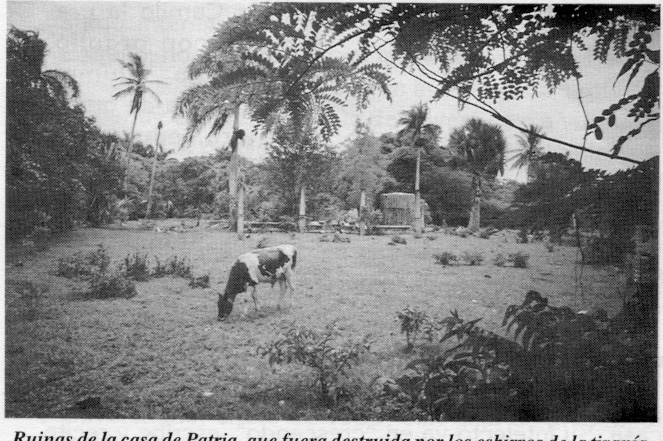
We sat on their verandah and told them what we were after. We had heard that down this road we'd find Patria's husband's farm. It had been a magnificent, thriving spread, but when the girls were captured, the house was destroyed and the farm confiscated. Did they know where the place was?
Why, of course they knew where the González farm was! "We're all related," the woman explained. "Their mother and my paternal grandmother..." They went on to recount how the girls' deaths were reported the very next day in El Caribe as a car accident. "We felt those girls' deaths. Trujillo pretended his hands were clean. Such a tragic accident, he said when he was here. Oh yes, he was here. He made us throw him a big party. And the girls not a month in the ground. Imagine, all of us dressed up like there was something to celebrate, our hearts so heavy, ay."
![[Back]](arrleft.gif) |
![[Home]](homebut.gif)
|
![[Forward]](arrright.gif) |
For more
information,
please contact us at [email protected]
Copyright © 1997 Appalachian State University Summer Reading Program