
Stratification of Time-Frequency abnormalities in the Signal-Averaged High-Resolution ECG in Post-infarction Patients with and without Ventricular Tachycardia and Congenital Long QT syndrome.
Jean Philippe Couderc, MSc,* Samir Fareh, MD,** Philippe Chevalier, MD,**
Jocelyne Fayn, PhD,* Gilbert Kirkorian, MD,** Paul Rubel, PhD,*** Paul Touboul, MD,**
* INSERM U121, Hôpital Cardiologique, Lyon, France
**Electrophysiology Department, Hôpital Cardiologique, Lyon, France
***Information Systems Engineering Laboratory (LISI), INSA-LYON, France
Short title: Stratification of time-frequency abnormalities in HR-ECGs.
Reprint requests:
Prof. Paul Rubel
INSERM U121, Hôpital Cardiologique
BP Lyon-Montchat
69394 Lyon cedex 03
FRANCE
Tel: (33)-72-35-73-72
Fax: (33)-72-34-18-76
Abstract
Having developed sound mathematical techniques that allow precise mapping of cardiac signals in the time-frequency (TF) and time-scale planes, the next important issue is to extract from these representations information that best reflect the electrophysiologic and anatomic derangement unique to patients at risk of arrhythmias and other cardiac diseases. In this paper, we present a new method that stratifies the magnitude of the TF transforms of abnormal cardiac signals into distinguishing features by comparing the means of the coefficients of the TF transforms of any study population to the corresponding means of a control population by using a standard ANOVA technique. This results in a 3-D mapping of the HRECG into the time, frequency and p-value space. Significant energy increases are given positive p-values, depressed energies negative values, and ranked according to a color scale. The method was tested on 2 study populations: post-myocardial infarction patients with (MI+VT, N=23) and without (MI-VT, N=40) documented sustained ventricular tachycardia, congenital long QT syndrome patients (LQTS, N=19). Two groups of healthy (N=31 and N=40) were used as a reference group matched in sex. The study results were based on Morlet analyzing wavelets, with frequencies ranging from 40 to 250 Hz in 10 logarithmically progressing scales, computed ms per ms over a 350 ms analyzing time window, starting from 100 ms before the onset of the QRS. The MI+VT patients displayed significantly increased high frequency components in the 40 to 250 Hz frequency range, corresponding to prolonged QRS duration, and late potentials in the area from 80 to 150 ms after QRS onset. Significantly depressed energy (p<10-4) was also observed for the 40 to 106 Hz frequency range in the first 50 ms of the QRS complex, mainly in lead Y and in the magnitude vector. In LQTS patients, significant modifications (p<10-2) were observed in the first half of QRS and in the ST segment, in all leads, revealing anomalies in the genesis of the ventricular depolarization and repolarization process. In conclusion, we propose a new method for the stratification of abnormal time-frequency components occurring in the signal-averaged HR-ECG of patients at risk of ventricular tachycardia and fibrillation under different pathologic conditions.
Key-words: High-resolution electrocardiography, time-frequency analysis, wavelet analysis, myocardial infarction, ventricular tachycardia, long QT syndrome, quantitative electrocardiology.
Introduction
The signal-averaged high-resolution electrocardiogram (HR-ECG) used for the detection of late potentials (LPs) has become a widely used prognostic investigation tool. LPs are markers of ventricular tachycardia (VT) risk in post-infarction patients. Several studies have described the electrophysiological mechanism of the LPs genesis and demonstrated that the scared myocardium induces these fractionated and delayed potentials--.
The classical approach for the detection of LPs has been defined by MB Simson using a Butterworth bi-directional band-pass filtering of the vector magnitude of orthogonal bipolar X, Y and Z leads. This method however has several limitations. The detection of LPs requires a precise localization of the end of the QRS complex and LPs detection criteria are very dependent on the filtering method and the filter settings used. Moreover, both accuracy of the determination of the end of the QRS and also of the measurements of the LPs are strongly dependent on the noise level of the record.
Several other methods have been developed to improve the detection of LPs in the signal averaged HR-ECG
. They are based on frequency domain analysis techniques (time-invariant spectral analysis), time-frequency (TF) techniques such as the short-time Fourier (STF) transform or the Wigner-Ville (WV) distribution---; autoregressive modeling and time-scale analysis techniques based on the so-called wavelet transform (WT)--. All these TF techniques offer a new type of mapping of the HR-ECG into the TF or into the time-scale (TS) planes, but some suffer from unavoidable drawbacks, for example a constant TF precision for the STF analysis and the occurrence of interference cross terms for the WV distribution7.Moreover, the interpretation of HR-ECG TF mappings is usually difficult because of the lack of an accurate method for the discrimination of abnormal and normal cardiac potentials. This part of the work generally represents the most tricky and difficult phase of the analysis process..
Our objective was thus to design a new method using statistical analysis of WTs, able to detect and stratify the abnormal potentials occurring in the HR-ECG of patients with ventricular arrhythmia. In the following, we first describe the method and then we use it to stratify populations of post-infarction patients with and without VT and patients with congenital long QT syndrome.
Materials and methods
Continuous wavelet transform
We note  the WT of a signal
  relative to a basic wavelet
  at scale
  and time
  .
.
The WT is defined as the "inner product" between the complex conjugate  of the analyzing wavelet
 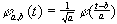 and the analyzed function :

Several conditions have to be satisfied by to be acceptable as an analyzing wavelet:
First, must be square integrable :
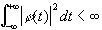
The second is the "admissibility" condition:
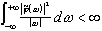
The last condition is the assumption that the mean value of the wavelet is zero.
If all these conditions are satisfied the so-called wavelet function is localized both in the time and the frequency domains.
In the TF plane, the wavelet localization may be represented by a rectangular window15. The length of the window corresponds to the time duration of the wavelet and the height to the frequency bandwidth (scale). The TF window area is the product of the length by the height and is constant and independent from the scale parameter . The ratio between the center frequency and the frequency bandwidth of the analyzing wavelet, usually called Q for a filter, is constant. The WT thus has the most desirable characteristic of a TF transformation, a theoretical "constant-Q" value. This explains why the WT is often considered as a fruitful alternative to the other signal processing tools for the analysis of the HR-ECG13-14-15.
In this study, we used the wavelet introduced by Morlet and Grossman, where  and
and  . For the Morlet wavelet, the "admissibility" condition is meet for any
  value defined between 5 and 620. The scaling factor was determined as
  , with m varying linearly between 1.96 and 4.20 by steps of 0.25. These
  values lead to a set of 10 analyzing wavelets scanning the frequency domain from 40 to 250 Hz. The time-frequency characteristics of the 10 analyzing wavelets are given in table 1.
Table 1: Time-frequency characteristics of the 10 wavelets used in this study.
|
Scale |
m value |
Low cut-off frequency (Hz) |
High cut-off frequency (Hz) |
Time duration (ms) |
|
1 |
1.96 |
184 |
250 |
11 |
|
2 |
2.21 |
155 |
211 |
13 |
|
3 |
2.46 |
131 |
178 |
16 |
|
4 |
2.71 |
110 |
150 |
19 |
|
5 |
2.96 |
91 |
125 |
23 |
|
6 |
3.20 |
78 |
106 |
27 |
|
7 |
3.45 |
66 |
88 |
33 |
|
8 |
3.70 |
55 |
74 |
39 |
|
9 |
3.95 |
47 |
62 |
46 |
|
10 |
4.20 |
40 |
52 |
55 |
Discrete wavelet transform
To implement the WT on computers, we have to consider the discrete notation of the wavelet transform. Let us note  the WT coefficient of patient
  from population
  at the time localization
  for the scale
  . Then the discrete WT of the HR-ECG is given by the equation:

where  is the discrete representation of the analyzing wavelet and
  the signal-averaged HR-ECG of patient
To minimize the computation time of the wavelet transform, the discrete wavelet transform is usually first computed in the frequency domain and then in the time-domain by means of the inverse Fourier operator  :
:

where  is the Fourier transform of the HR-ECG and
  the Fourier transform of the analyzing wavelet.
We computed the wavelet transforms of the three orthogonal leads X, Y and Z between the onset of the QRS complex minus 100 ms to the onset of QRS plus 250 ms and we independently analyzed each lead and the vector magnitude of the wavelet transforms calculated by the following formula:
 .
.
Figure 1 displays the so-called "scalogram" of a normal subject giving the energy  of the WT coefficients in mV�.
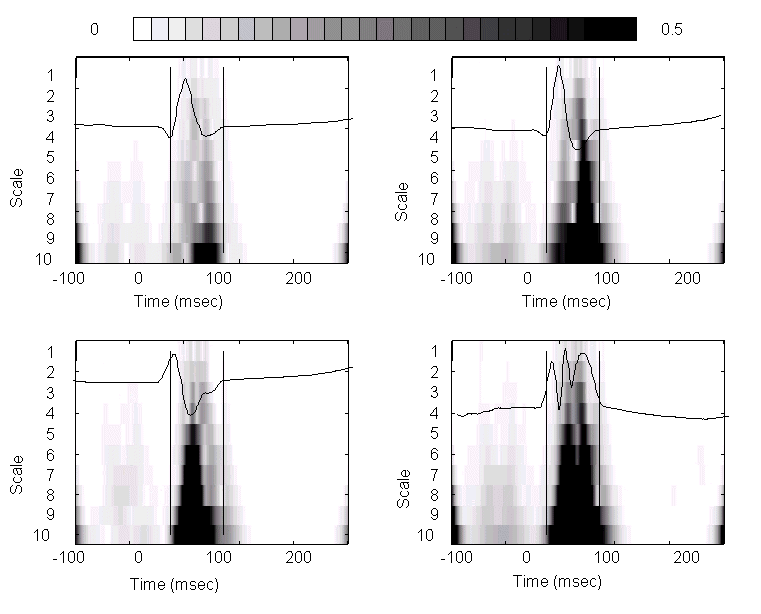
Figure 1:
Morlet wavelet transforms of the three orthogonal leads and the magnitude vector of a normal subject. HR-ECG signals plotted on the corresponding time-scale representations. The onset (0 ms) and the end (92 ms) of the QRS complex are delineated by vertical black lines.
Significant abnormality mapping of the HR-ECG
One of the main issues in high-resolution ECG analysis is to precisely localize the abnormal TF components contained in each lead of the HR-ECG signal to identify the time-frequency components that might characterize a given cardiac disease. We developed a method to compare the TS representations of the HR-ECGs of the studied populations to a reference population, usually but not exclusively formed of healthy subjects. The significant abnormality mapping is assessed by comparing the mean value of each of the WTs of the 2 studied populations by means of an one-way ANOVA technique using a F-test to test for the null hypothesis that means are equal.
Let us call  the population to be studied,
  the reference population and N1 and N2 their respective number of patients.
The level of significance of the energy measured at scale
s and sample n by each of the wavelet coefficients is assessed by comparing the means of the wavelet coefficient values
  in population and the means of the wavelet coefficients values
  in population
  .
.
Let us further call:
 the mean of the wavelet coefficients computed for all N=N1+N2 patients of groups g1 and g2.
  the mean square (MS) of wavelet coefficients at scale s and time location n between the groups g1 and g2.
  corresponds to the estimated variance, with a degree of freedom equal to 1, of the wavelet coefficients means between groups g1 and g2 .
the error mean square (EMS) of the wavelet coefficients at scale
s and time location n.Then the F value measuring the relevance of the difference between the means of the wavelet coefficients at scale
s and time location n for populations g1 and g2 is given by: 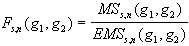
For each  value, we computed the classical probability value (p-value) of means to be equal. We noted the p-value
  . A small indicates that there is a small chance of making an error in estimating that
  and
and  are significantly different.
These values are computed for all
Two lines are displayed on each map indicating respectively the onset of the QRS complexes and the mean end of the unfiltered QRS complexes of the reference population.
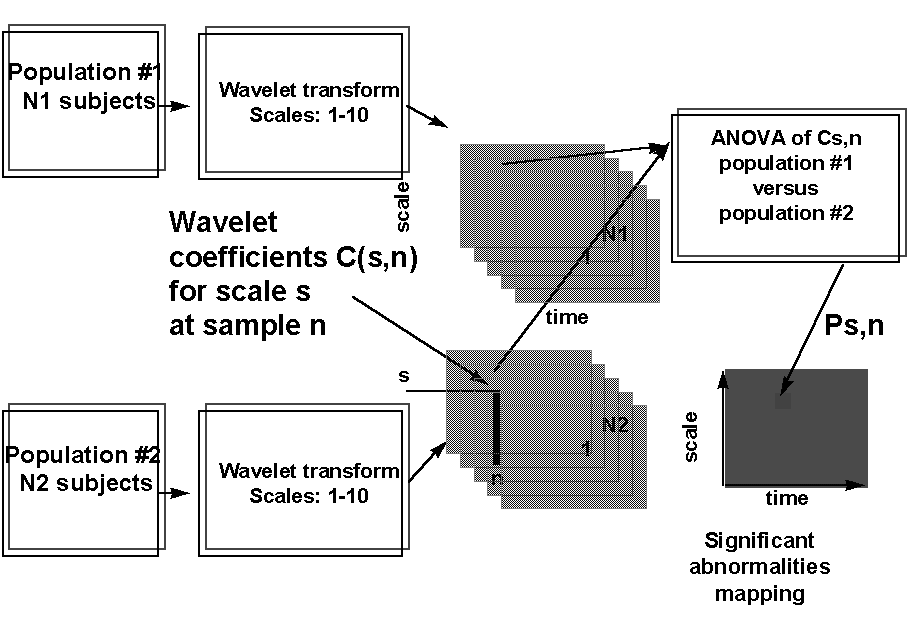
Figure 2:
Schematic representation of the time-frequency stratification method of the HR-ECG (see text).
Data acquisition and conventional time-domain analysis
Bipolar pseudo-orthogonal X, Y, and Z leads were acquired using an ART
ä 1200 EX (Arrhythmia Research Technology, Austin, TX) high-resolution signal-averaging system. The sampling rate was 1,000 samples/second with a resolution of 16 bits. The noise level and the standard time-domain parameters were determined from the 40-250 Hz filtered vector magnitude (table 2).We considered for detection of LPs the filtered QRS duration (fQRS), the root mean-square voltage of the terminal 40 ms of the filtered QRS (RMS40), and the amount of time that the filtered QRS complex remained below 40 �V (LAS40). LPs were identified in the HR-ECG according to the following conventional criteria: fQRS
� 114 ms, RMS40<20�V and LAS40� 38 ms.Mean magnitudes of the time-domain parameters were statistically assessed using the same ANOVA technique as described in section 2.3, with a significance level of p<10-3.
The wavelet analysis program and the statistical data analysis software were implemented using PC-MATLAB™ (The math-Works, Natik, MA).
Table 2. Summary characteristics (m
� s ) of the study populations.|
Groups |
MI+VT ant. |
MI+VT inf. |
MI-VT ant. |
MI-VT inf. |
Healthy #1 |
LQTS |
Healthy #2 |
|
N |
11 |
12 |
20 |
20 |
31 |
19 |
40 |
|
Age (yr) |
54 � 11 |
53 � 12 |
58 � 10 |
57 � 8 |
30 � 6 |
*43 � 16 |
29 � 6 |
|
sex (m/f) |
11/0 |
12/0 |
20/0 |
20/0 |
31/0 |
14/5 |
31/9 |
|
EF (%) |
25 � 8 |
31 � 13 |
37 � 9 |
49 � 10 |
/ |
/ |
/ |
|
Time domain |
|
|
|
|
|
|
|
|
noise (�V) |
0.33 � 0.1 |
0.35 � 0.1 |
0.35 � 0.1 |
0.3 � 0.1 |
0.43 � 0.2 |
*0.25 � 0.06 |
0.4 � 0.2 |
|
fQRS (ms) |
*131 � 33 |
*119 � 14 |
96 � 12 |
102 � 10 |
96 � 4 |
91 � 17 |
95 � 6 |
|
LAS40 (ms) |
*48 � 24 |
*47 � 14 |
29 � 9 |
*37 � 11 |
26 � 7 |
25 � 7 |
25 � 7 |
|
RMS40 (�V) |
*20 � 12 |
*13 � 5 |
45 � 30 |
33 � 23 |
62 � 38 |
73 � 53 |
67 � 45 |
|
StdQRS (ms) |
*104 � 7 |
*104 � 8 |
98 � 8 |
97 � 11 |
94 � 8 |
90 � 14 |
94 � 7 |
|
RMSQRS (�V) |
*47 � 15 |
88 � 42 |
70 � 24 |
89 � 28 |
117 � 52 |
117 � 59 |
111 � 49 |
* significant differences (p<10-3) in comparison with the mean values of the reference groups.
Standard time domain measurements were computed with filter settings between 40 and 250 Hz. fQRS: filtered QRS duration; LAS40: Signal duration under 40 �V in the terminal portion of the filtered QRS complex; RMS40: Root mean square of the last 40 ms of the filtered QRS complex; StdQRS: standard QRS duration.
MI ant. and MI inf. respectively yield for anterior and inferior wall infarction. For other abbreviations, see text.
Study populations
The study populations consisted in 2 post-infarction groups (patients with and without VT), a long QT syndrome group and a control group composed of ambulatory normal subjects. LPs were absent in all healthy subjects. Group comparisons were performed pairwise according to the method described in section 2.2 on the following three pairs of populations matched in percentage of women.
Post infarction patients versus Healthy #1
Several criteria have been used for the selection of post-infarction patients (MI) with and without ventricular tachycardia (VT):
(1) a standard QRS duration<120 ms; (2) no patient was receiving anti-arrhythmic drugs at the time of signal averaging; (3) for patients with VT, the HR-ECGs had to be recorded within one week following the arrhythmia; (4)
patients without VT had to be devoid of any VT within a minimum follow-up period of 3 years.According to these criteria we collected a series of 63 HR-ECGs of post-infarction patients. These patients were stratified into two separate groups, with (N1=23, mean age
� s =53� 12) and without VT (N2=40, mean age� s =58� 6), and also following the localization of their infarction, anterior (ant.) or inferior (inf.). Ejection fractions were 28� 11% for the MI+VT patients and 43� 10% in MI-VT patients. MI-VT patients were matched for an equal ratio of inferior and anterior wall infarctions. In the MI-VT group, patients were recorded 10-21 days after the infarction.All MI+VT patients were males. We thus matched the MI-VT group and the reference group (Healthy #1) by excluding females.
Table 2 describes the main characteristics of these 3 populations, including the mean values of the time domain parameters, and the root means square voltage of the entire QRS complex (RMSQRS).
Congenital long QT versus Healthy #2
The study populations consisted in patients with idiopathic long QT syndrome (LQTS: N1=19, mean age
� s =43� 16, 14 males, 5 females) and a healthy reference group matched in sex (Healthy #2: N2=40, mean age� s =29� 6, 31 males, 9 females). Healthy #2 differed from healthy #1 only by the inclusion of the 9 females.Among the 19 LQTS patients, 14 were symptomatic with episodes of syncope or aborted cardiac arrest and 5 were asymptomatic. No abnormalities could be detected by means of the standard time domain analysis of the HR-ECG.
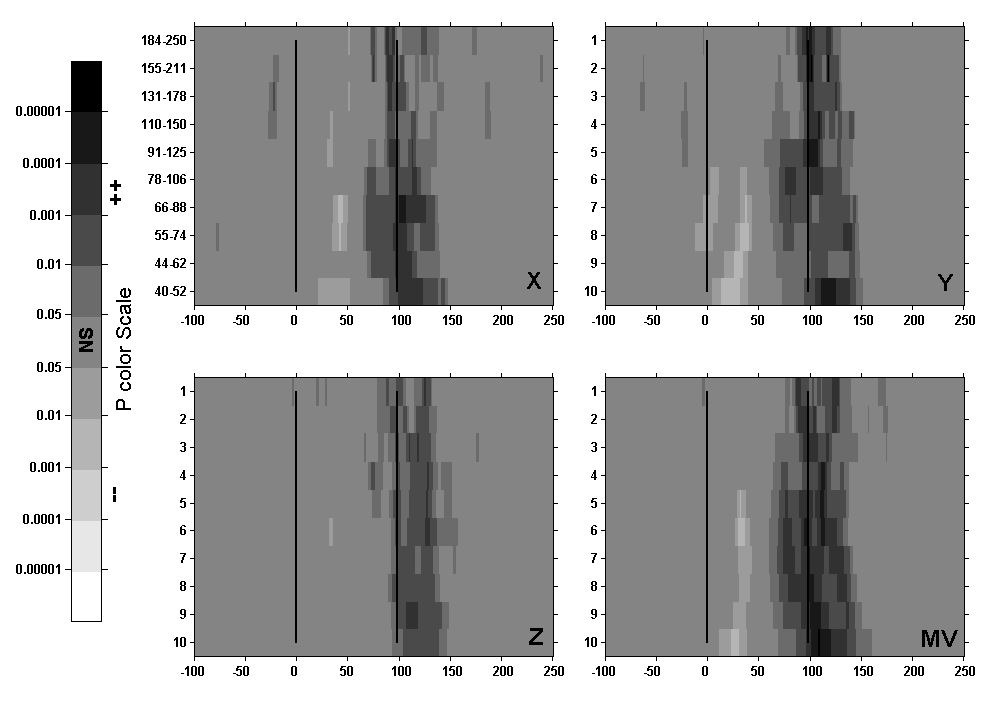
Figure 3:
3D mapping of the time-scale representation of MI+VT patients into the p-value axis with reference to MI+VT patients. Dark color yields for increased energy and light colors for depressed activity (see text).
Results
Post-myocardial patients with and without ventricular tachycardia
The analysis of standard time-domain parameters confirmed the presence of LPs in MI+VT patients. The filtered QRS duration and the LAS40 measurement were significantly increased (p<10-10 and p<10-5 respectively), and the RMS40 was significantly decreased (p<10-5). Applying the standard criteria described in section 2.4 resulted in sensitivities and specificities of respectively
70% and 75%. No LPs were detected in the Healthy #1 group.The mapping of the differences of the wavelet coefficients between the MI+VT and the MI-VT groups into the p-value axis (figure 3) clearly indicates the presence of LPs (p<10-4) but also highlights intra-QRS abnormalities (p<10-2) revealing a significant alteration of intra-QRS components. The latter are mainly localized in the lower frequencies range between 40 and 106 Hz around 25 ms after the QRS onset in the Y and the magnitude vector leads.
The main abnormal TF components are localized between 80 to 150 ms after the QRS onset in the 40 to 250 Hz frequency range, with a significance level varying from p<0.05 to p<10-5. The Z lead seems to be the less discriminant and the magnitude vector the most discriminant lead.
Figure 4 displays the mappings of the magnitude vectors for (a) the anterior MI+VT and (b) the inferior MI+VT groups versus healthy #1. The intra-QRS potentials of the anterior MI+VT patients are significantly depressed in the central part of the QRS complex. Large abnormal high-frequency potentials have appeared in the terminal part and well beyond the end of the QRS complex, from 90 ms up to 200 ms after the onset of QRS, spanning all over the 40 to 250 Hz analyzed frequency range. The patients with inferior MI display in comparison less significant intra-QRS abnormalities and less widespread late potentials appearing only after the end of QRS, between 100 and 150 ms after QRS onset.
Typical processing times for the four maps presented in figure 3 were less than 2 seconds per patient for the computation of the 14 000 wavelets coefficients and one hour for the calculation of the p-values on a 166 MHz PentiumTM based PC.
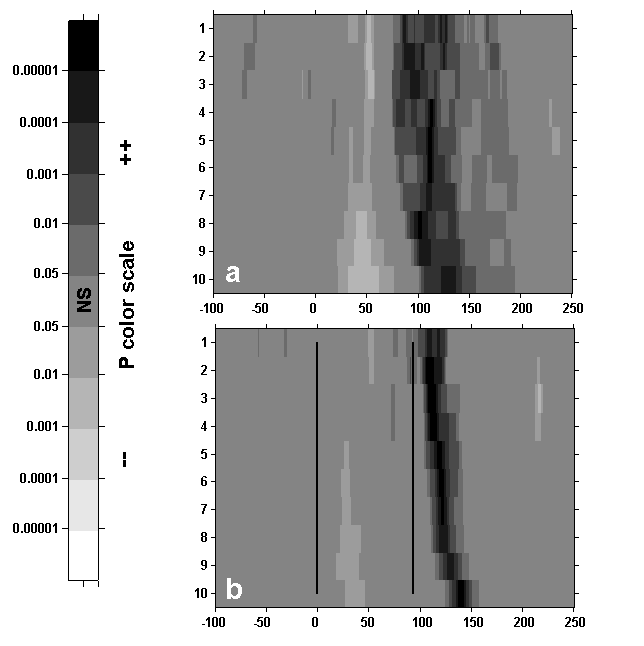
Figure 4:
Stratification of the changes of the Morlet wavelet transforms of the vector magnitude in (a) MI+VT patients with anterior wall infarction and (b) MI+VT patients with inferior wall infarction with reference to the healthy #1 population.
Patients with congenital long QT syndrome
In this test, we compared congenital LQTS patients versus healthy. The mapping results presented in figure 5 display two abnormal time-frequency areas in the HR-ECG of LQTS patients, one inside of the QRS complex and the other in the ST-T segment. In the ST-T segment, high frequency components were significantly decreased (p<10-2) between 131 and 250 Hz from 150 ms after the onset of the QRS complex up to the end of the analyzed time-window. These changes mainly appeared in the magnitude vector but may also be evidenced in the X, Y and Z leads but with varying time locations.
The most widespread intra-QRS abnormalities are localized in lead X between 25 and 50 ms after the onset of QRS (p<10-2) and in lead Z in the first 25 ms after the beginning of QRS. Frequency localizations are low and medium (40 to 125 Hz). In lead Y, only the high frequency components (91 to 250 Hz) are significantly increased (p<0.05) at the very onset of QRS. Similar results are highlighted by the magnitude vector.
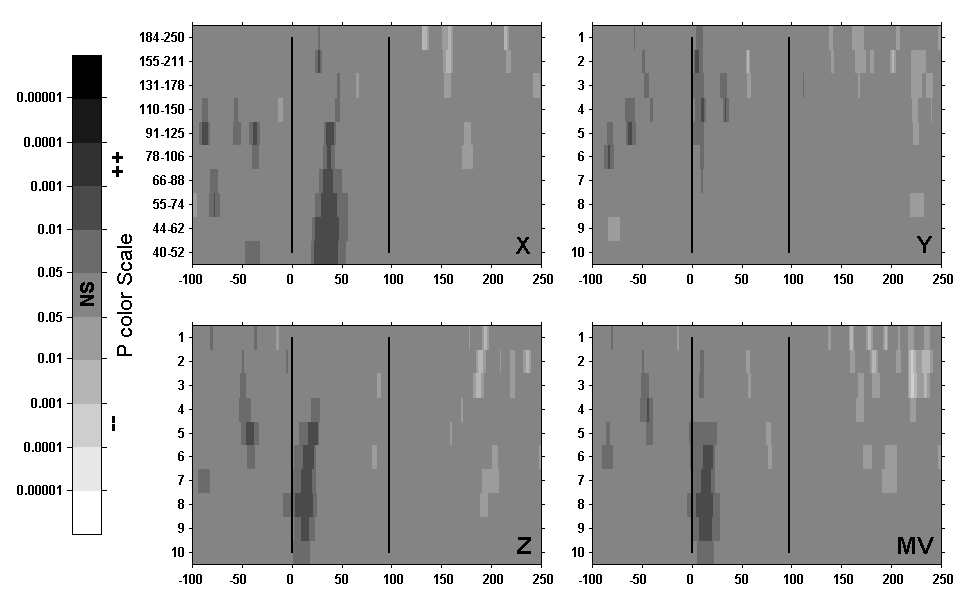
Figure 5:
Stratification of the changes of the Morlet wavelet transform of LQTS patients versus healthy #2.
Discussion
The main limitation of the methodology we have developed resides in the proper utilization of the ANOVA technique for the comparison of means between the wavelet coefficients. Indeed, the basic assumption underlying the standard ANOVA technique is the equality of variances in each considered group. This condition is usually assessed with a Levene test. In case of non equality of variances procedures such as Welch and Brown-Forsythe should be used. For populations with low numbers of patients non-parametric methods should be preferred. Typically methods are the test of Mann-Whitney or Kruskal-Wallis. In the actual version of our program, however, we have only implemented the standard ANOVA technique. Thus the results presented in the previous sections should be interpreted keeping these limitations in mind.
The MI+VT versus MI-VT p-value maps presented figure 3 clearly evidenced well known information5: presence of delayed and fractionated potentials in the terminal portion of the QRS complex and increased standard QRS duration.
These information are highlighted by the presence of abnormal TF components in the terminal portion of the QRS complex (figure 3), spanning over the total analyzed frequency bandwidth (40-250Hz). Increased low and medium frequency components reveal not only fractionated potentials but also morphological changes of the terminal portion of the QRS complex that could yield for the significant increase in QRS duration for MI+VT patients (table 2).
The assessment of the incidence of the localization of the infarct evidenced more significant and more widespread after potentials in patients with anterior wall infarction (figure 4a). This result confirms previous work of Reinhardt et al also describing larger TF alterations in anterior post-infarction patients than in inferior and is ascribable to a usually larger size of the myocardial scare. Figure 4a also highlights larger, depressed intra-QRS alterations especially in the low and the medium frequency domains that could be explained by important anatomical derangement.
These results are confirmed by the time-domain parameters (Table 2). In anterior MI+VT patients, the standard QRS duration is significantly increased (p<10-3) and late potentials are present. The total root mean square voltage of the entire QRS complex (RMSQRS) is significantly depressed (p<10-3). In inferior MI+VT, time domain parameters and standard QRS duration are also significantly increased but the RMSQRS is normal.
These findings suggest that the development of methods for the detection of patients prone to VT could benefit from prior information on the localization of the infarct.
The results of the mapping of the differences between patients with LQTS and healthy seems to be more fruitful than the standard time domain analysis which did not evidence any abnormal high frequency potentials. Figure 5 highlights an increase of the low and the medium frequency potentials at the very onset of the QRS onset complex that yields for a possible anomaly in the depolarization process. The origin of these intra-QRS abnormalities is unclear. An hypothesis is that these changes could be linked to the genetic heterogeneity of the cardiac cells. But further studies are necessary to uncover the relationship between the intra-QRS abnormalities and the fundamental mechanisms of the LQTS.
Even more difficult to interpret is the finding that the high frequency energy of the wavelet transform of the ST-T segment of the LQTS patients is significantly depressed (up to p<0.001) between 150 and 350 ms after the onset of QRS (figure 5). Given the low level of energies detected in the high frequency range, we assessed by an additional study the incidence of the differences in the noise levels between the congenital LQTS group and the Healthy #2 group (p<10-3, table 2). These differences accounted for the changes observed in scales 1 to 3. The PQ segment was not affected because of the shortness of the segment and the variability of the PQ potentials of the LQTS patients.
Alterations of low and medium frequency components of the T wave however are higher than the noise level and thus can only be explained by changes in the form and the duration of the QT interval. Indeed, delayed onsets of the T waves as can be found in the congenital LQTS patients should result in depressed low frequency energies if compared to normals. Similarly, prolonged QT durations should result in increased low and medium frequency content beyond the standard QT duration. Limitations of the recording equipment and border effects in the computation of the wavelet transforms did not allow to validate this assumption. Further studies with improved recording equipment are thus necessary to confirm these findings.
Conclusion
The method we have developed has resulted in a valuable tool for the characterization of time-frequency abnormalities of the HR-ECG. Firstly it allows to precisely localize the abnormalities of the HR-ECGs simultaneously in the time and the frequency domains and secondly to stratify the significance of this information. Applying this method on the HR-ECGs of post-infarction patients with ventricular tachycardia permitted to validate our method for a well known ventricular arrhythmia. Analyzing each lead independently confirmed that the magnitude vector yields for better results for the detection of late potentials in post-infarction patients than each lead separately5,14. Our method further allowed to uncover unexplained intra-QRS abnormalities in LQTS patients.
We intentionally limited the evaluation studies to the MI
� VT and the LQTS patients but this technique could be used to characterize any other cardiac disease.Methods used to detect abnormal features in time-frequency representations are usually specific to the time-frequency transformation and thus are difficult to compare. Our method can also be applied for the comparison of time-frequency representations. Visual comparison of the mapping results of different time-frequency representations applied to the sane study populations will allow to evaluate the performance of the different signal processing tools used for the analysis of signal-averaged HR-ECG.
The method could also be used to select the most relevant WT coefficients for the development of decision criteria and algorithms for the detection of life threatening arrhythmias.
References
(sorry the references did not appear in the text, yet)